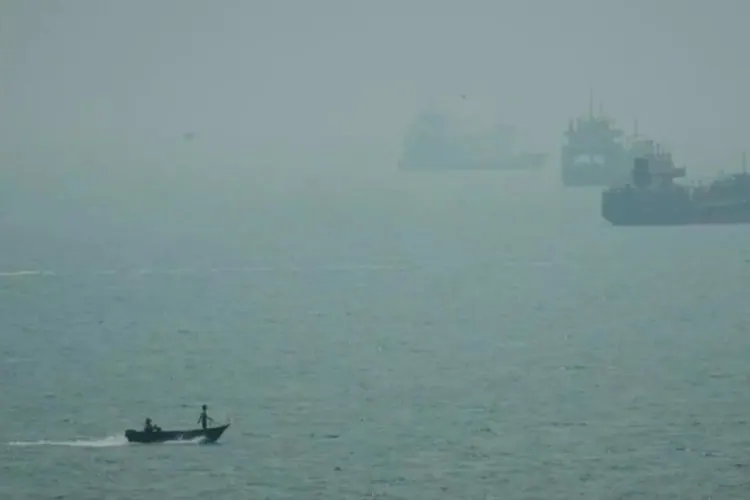
US President Donald Trump stated that America is controlling the Hormuz Strait in a substantial way. He mentioned that in the past three days, the highest amount of oil had been shipped through the strait in its history. This comes amid reports that Iran is continuing to threaten the closure of the Hormuz Strait. Trump's comments were made during a ceremony in Washington celebrating the US Heritage Month of Southern and Northern American descendants.
The developments occurred as negotiations between Washington and Tehran regarding the reopening of the strait continue. Iran reportedly received a response from the US on September 30 regarding its request to reopen the Hormuz Strait, according to RFI. Despite ongoing negotiations, Iran appears to have lost one of its key bargaining points as oil shipments have increased significantly. Although the Hormuz Strait has not been completely closed, the Kpler oil tracking agency reported that nearly 13 million barrels of oil are passing through the strait daily.
This represents only a slight decrease from the pre-closure levels in March 2026. However, RFI reported that the increased oil flow has not led to a decrease in oil prices on the market. The global oil reserves have been impacted by the seven-month conflict between America and Iran, leading to a need for replenishment. Additionally, the oil refining capacity in Gulf countries has been severely damaged during the conflict.
Despite efforts by international industries to compensate for the loss and ensure a steady supply of gasoline and diesel, the market remains uncertain. The fluctuating oil output from the Hormuz Strait has contributed to this uncertainty. RFI reported that some ships are being escorted by US naval forces to ensure safe passage through the strait.
The situation in the Hormuz Strait remains a critical issue, with ongoing negotiations between the US and Iran. The strait's significance as a major oil shipping route makes its stability crucial for global energy markets. The international community is closely monitoring the developments, and any further escalation could have far-reaching consequences.
The US and Iran have been engaged in a tense standoff, with the US imposing sanctions on Iran and Iran threatening to block the Hormuz Strait. The strait is a vital waterway for oil exports, and any disruption to oil flows could have significant economic implications. The global economy remains uncertain, and the situation in the Hormuz Strait is a major concern.
The US naval presence in the region aims to ensure the free flow of oil and maintain stability in the region. The situation remains volatile, and any further developments could impact global energy markets. Key players, including the US, Iran, and other regional countries, must navigate this complex situation carefully to avoid escalating tensions.
Key points
- The US is controlling the Hormuz Strait in a substantial way, according to President Donald Trump.
- Oil shipments through the Hormuz Strait have increased significantly despite ongoing tensions between the US and Iran.
- The global economy remains uncertain due to the situation in the Hormuz Strait and its potential impact on oil prices.