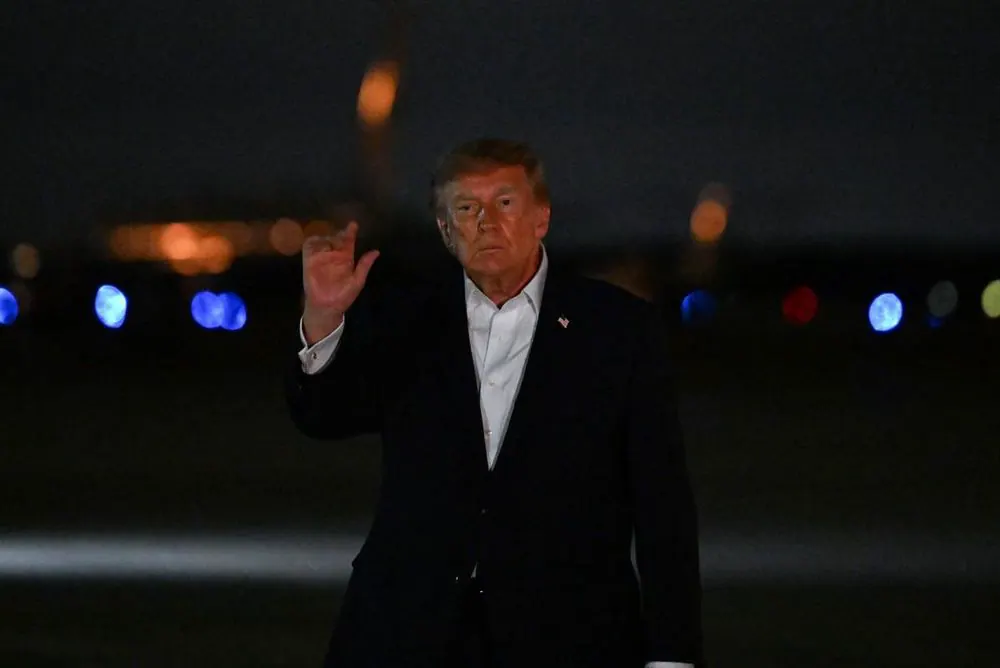
The US will go to the polls on November 3 for the midterm elections, which will shape the final two years of President Donald Trump's presidency. Although Trump will not be on the ballot, the elections will determine control of Congress and thousands of state-level offices. A Democratic takeover of either chamber would constrain Trump's agenda and bring greater congressional scrutiny of his administration. Conversely, Republican victories would preserve the party's control in Washington.
The midterm elections will see all 435 seats in the House of Representatives contested, with 218 being the magic number for a majority. Democrats need to gain a net of three seats from the 2024 election result to take control. Currently, Republicans hold a 218-214 majority, with one independent and two vacancies. For Republicans, a net loss of two seats is survivable, but a loss of three would hand control to the Democrats.
In the Senate, 35 seats are being contested, including special elections in Florida and Ohio. Republicans hold a 53-47 advantage in the 100-seat chamber, counting two independents who vote with the Democrats. Democrats need a net gain of four seats to reach the 51 required for control. A 50-50 tie would be broken by Republican Vice President JD Vance. Additionally, 36 states will elect governors, and 6,139 state legislative seats will be contested.
Recent polls suggest that Democrats have an advantage over Republicans among registered voters. A PBS News/NPR/Marist poll conducted on September 14-15 found that Democrats led by 53-41 percent. The same survey found Democrats ahead among independent voters by 57 percent to 32 percent. Trump's approval rating has been in the range of 32-41 percent in several major September surveys.
The midterm elections are expected to be highly expensive, with around $12 billion forecast to be spent on advertising. Ad-tracking company AdImpact forecasts $11.6 billion, while Kinetiq Political Insights estimates $11.96 billion. The California governor's primary alone is expected to see $330 million in advertising spending, making it the most expensive gubernatorial race on record.
A record number of candidates ran in US congressional primaries this year, with 2,497 candidates contesting seats. Of these, 2,232 were chasing House seats. There will be 44 House races on November 3 that are rematches between the same major-party candidates who fought for the seat in 2024. In total, there are 474 electoral rematches nationwide.
The outcome of the midterm elections will have significant implications for Trump's presidency and the balance of power in Washington. If Democrats gain control of either chamber, they will have greater oversight of Trump's administration and may be able to block some of his policies. Conversely, if Republicans retain control, Trump will have more freedom to pursue his agenda.
Key points
- Democrats need to gain a net of three seats in the House of Representatives to take control.
- Republicans hold a 53-47 advantage in the Senate, but Democrats need a net gain of four seats to take control.
- The midterm elections are expected to see a record $12 billion spent on advertising.