In a historic move, King Mohammed VI of Morocco has appointed Fatima Ezzahra El Mansouri as the country's first female head of government. This appointment marks a significant milestone in Morocco's journey towards gender equality in politics. El Mansouri's appointment is not an isolated incident, but rather the culmination of a long historical and legal trajectory. Morocco has a rich history of women playing important roles in politics and governance.
Women have played a significant role in Moroccan politics and governance throughout history. In the seventh century, the Amazigh queen Dihya wielded considerable political and military power in North Africa during the Arab conquest. Other notable women include Kenza al-Awrabiya, who played a considerable political role in the early days of the Idrissid dynasty, and Zaynab an-Nafzawiyya, who played a decision-making role in the consolidation of the Almoravid Empire in the eleventh century.
In recent years, Morocco has made significant progress in increasing women's representation in politics. The introduction of legislative quotas in 2002 led to a significant increase in female representation in Parliament, from 0.6% to over 10%. The 2011 Constitution enshrined the principle of parity in the constitutional framework. By 2024, women held 24% of ministerial positions and 26% of parliamentary seats. The appointment of El Mansouri as head of government is a culmination of these efforts.
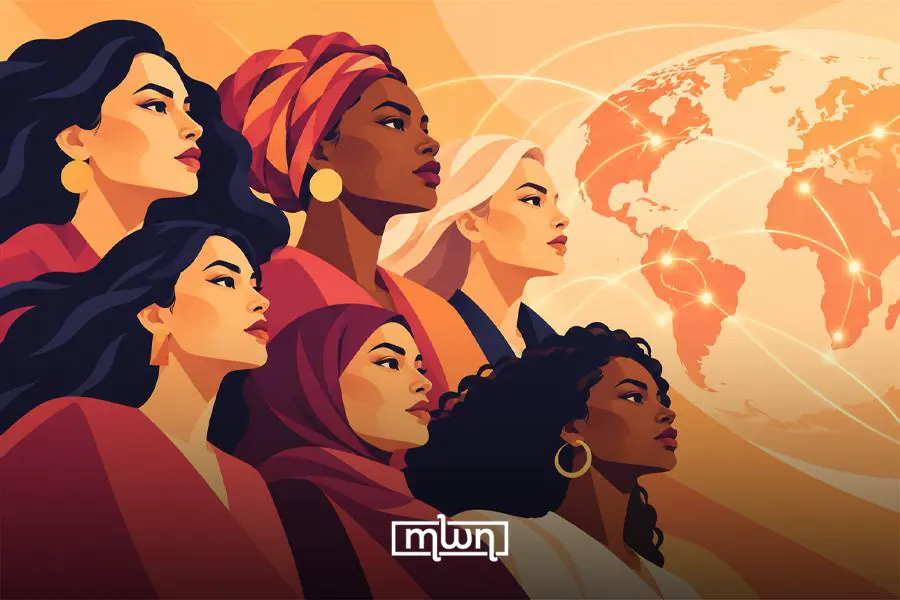
The appointment of El Mansouri is part of a global trend towards increasing women's representation in government. According to data from the University of Oslo's Who Gov dataset, the global share of women ministers has increased from 6% in 1990 to 23.3% in 2024. However, the pace of progress has slowed in recent years, and parity at the top of the world executive is not expected to be achieved until after 2070.
The use of quotas has been a key factor in increasing women's representation in government. Between 1995 and 2010, over 100 countries adopted quotas, leading to a significant increase in women's representation. However, the momentum has slowed in recent years, and some countries have even seen a decrease in women's representation. Hungary, for example, has gone from 10% to 5% of women ministers between 2010 and 2024.
The feminization of government elites is a global phenomenon, but it has been particularly significant in Muslim countries. The proportion of women ministers in Muslim countries has increased from 2.1% to 11.1% between 1990 and 2024. However, this still lags behind the global average, and the gap has increased over the years. The true measure of transformation will be whether women's progress is accompanied by increased access to sovereign ministries and decision-making mechanisms.
Women's paths to breaking the political glass ceiling follow two distinct trajectories. In some countries, the impetus comes from above, with elites imposing quotas or reforms for strategic reasons. In others, the dynamic is born from below, with social mobilizations and feminist movements pushing women into politics. Morocco's appointment of El Mansouri is an example of the former, with the government opening up spaces for women's representation to display modernization.
Key points
- King Mohammed VI appoints Fatima Ezzahra El Mansouri as Morocco's first female head of government
- Morocco has made significant progress in increasing women's representation in politics, with women holding 24% of ministerial positions and 26% of parliamentary seats by 2024
- The global share of women ministers has increased from 6% in 1990 to 23.3% in 2024, but parity at the top of the world executive is not expected to be achieved until after 2070