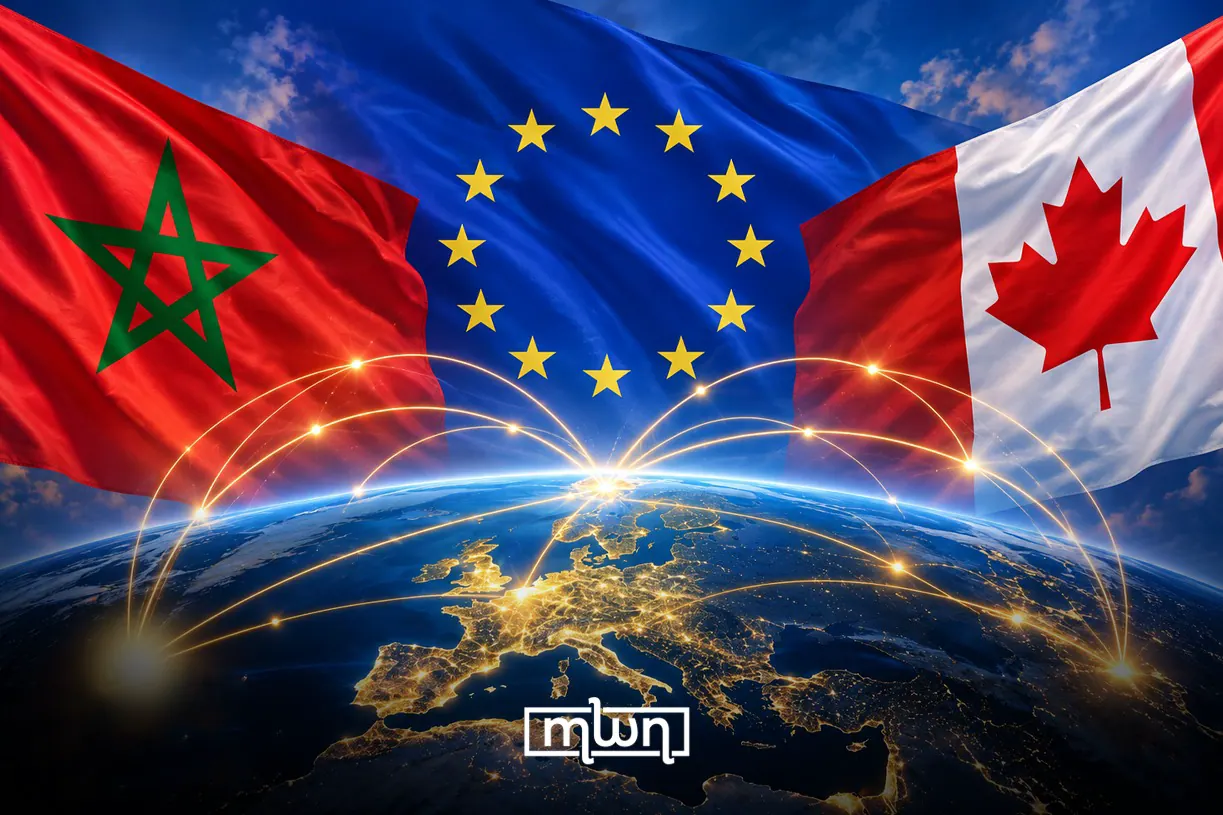
The European Union's proposal to make Canada its "first associate member" has raised questions about its partnership with Morocco. In January and April, the EU and Morocco described their ties as a "partnership of equals." However, the EU's offer to Canada has sparked concerns about the asymmetry in its relationships with countries on either side of the Mediterranean. Morocco applied to join the European Communities in 1987 but was rejected due to its non-European location.
The EU's relationship with Morocco is built on a deep history of cooperation, with trade in goods reaching a record €62.2 billion in 2025. The EU accounts for 33.7% of Morocco's goods trade, with machinery and transport equipment making up more than half of EU imports from Morocco. Morocco has also been a key partner in managing migration, thwarting 73,640 irregular migration attempts in 2025. Despite this, the relationship is not free of friction, particularly in trade and agriculture.
The EU's offer to Canada is a political proposal rather than a decision, with unclear legal implications. European Commission President Ursula von der Leyen wants Canada to become the EU's "first associate member," a category not found in any EU treaty. This has sparked concerns that the EU is bending its rules for Canada while maintaining a strict approach to Morocco's membership bid. Canada is not applying for accession, with Prime Minister Mark Carney speaking of a "unique alliance."
Morocco's King Hassan II once described Morocco as a tree whose roots reach deep into African soil while its leaves breathe the winds of Europe. However, the EU's approach suggests that it prioritizes geography over deep-rooted relationships. Morocco was granted "advanced status" in 2008, but the terminology still falls short of "member." The EU's comprehensive partnership with Morocco is expected to be finalized by the end of the year, with a focus on industry, energy, research, and mobility.
The appointment of Fatima Ezzahra El Mansouri to form Morocco's next government has created an opportunity for a new approach to the EU-Morocco partnership. El Mansouri's domestic agenda focuses on economic modernization, jobs, housing, and public services, which aligns with areas where Europe is already investing heavily. The monarchy retains a dominant role in foreign affairs, but the new government's priorities create room for a broader relationship with the EU.
The EU's approach to Morocco and Canada has sparked concerns about its commitment to equal partnerships. A partnership built mainly around borders and migration management would confirm Rabat's suspicions about the EU's priorities. In contrast, a partnership built around industry, energy, research, and mobility would be a new and more equal approach. The EU owes Morocco a clear answer about its intentions and why it offered associate membership to Canada before defining the status.
As Morocco and the EU move forward with their comprehensive partnership, the test will come in the coming months. The EU's actions will speak louder than words, and Rabat will be watching closely. The question is what Brussels brings to the table and whether it will prioritize a true partnership of equals with Morocco.
Key points
- The EU's offer of associate membership to Canada has raised questions about its commitment to equal partnerships with Morocco.
- Morocco's relationship with the EU is built on deep cooperation, but the EU's approach has sparked concerns about asymmetry and unequal treatment.
- The EU's comprehensive partnership with Morocco is expected to be finalized by the end of the year, with a focus on industry, energy, research, and mobility.