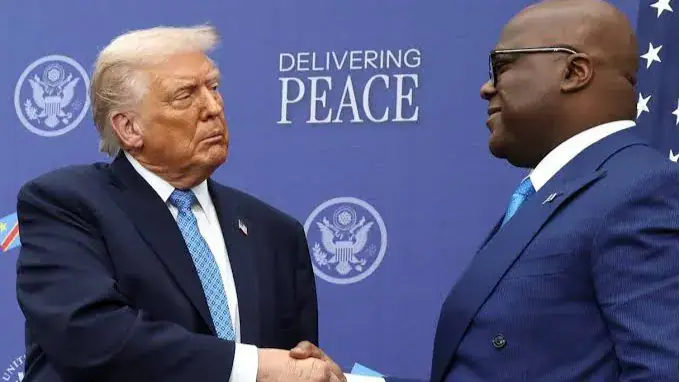
The recent US midterm elections have resulted in a substantial loss for President Donald Trump and the Republican Party. Democrats have secured a majority in the House of Representatives, surpassing the threshold of 218 seats, and have also consolidated their control of the Senate. This shift in power will take effect in January 2027, with both chambers falling under opposition control. According to a report by Ouragan.cd, this development constitutes a major political setback for a president whose party previously held both chambers.
In response to the elections, President Trump acknowledged that the war in Iran had partly contributed to the Republican defeat, while also praising the Democrats' campaign, which he deemed effective. He attributed some responsibility for the loss to high fuel prices and Fox News' coverage. Meanwhile, concerns have been raised regarding the Washington agreement, which has been contested by Democrats. In August 2026, 54 Democratic representatives, led by Linda Sánchez, Jared Huffman, and Jonathan Jackson, expressed serious concerns about recent international agreements on critical minerals, including those with the Democratic Republic of Congo.
The Democratic representatives highlighted several issues with the agreements, including insufficient transparency, weak Congressional oversight, and inadequate protection of labor, human rights, and the environment. They also noted that the partnership agreement with the DRC involves extensive changes to the Congolese Constitution and grants US companies a right of first refusal on mining concessions. These concerns are at the heart of Democratic objections to the agreement. The new Congress will have greater scrutiny powers over the agreement, which could impact its implementation and financing.
With the Democratic majority, the House and Senate committees will be able to examine the US-DRC mining agreements, summon administration officials, request documents, and demand explanations for their implementation. The new Congress will have significantly more oversight power than the previous Republican majority. The Democratic position focuses on ensuring transparency in mining agreements, respecting human rights, and protecting the environment. For Kinshasa, the direct consequence is that the agreement can continue to exist, but its implementation, financing, and political presentation in the US will be subject to Democratic scrutiny.
The US has maintained pressure on Rwanda, which has been accused of supporting the M23 rebel group in the DRC. On October 28, 2026, the US Department of State announced sanctions against the Rwandan Ministry of Defense and the Zigama Credit and Savings Society, citing their support for destabilizing activities in eastern DRC. Additionally, on November 2, 2026, the US Trade Representative announced plans to exclude Rwanda and South Africa from the African Growth and Opportunity Act, effective January 1, 2027, due to practices deemed incompatible with program eligibility criteria.
Despite the midterm election losses, President Trump retains significant leverage, including the ability to impose sanctions, negotiate with Kigali and Kinshasa, and utilize diplomatic and financial tools. He also holds the veto power, which would require a two-thirds majority in both chambers to override. However, the president has lost a crucial shield in the form of a supportive Congress. Economist and Congolese MP Godé Mpoy believes that the Washington agreement will continue to apply regardless of the election outcome, citing the president's constitutional powers and the fact that the agreement was signed without Congressional approval.
The shift in Congressional control may not necessarily spell the end of the Washington agreement, but it does complicate its execution and could ease pressure on Rwanda. Kinshasa will need to navigate two fronts: maintaining dialogue with the Trump administration while courting the new Democratic majority, which will have significant diplomatic leverage over security, sanctions, and mineral tracing. The imperative remains that economic benefits must not precede tangible progress on the ground, particularly regarding the withdrawal of Rwandan forces.
Key points
- The US midterm elections have given Democrats control of the House of Representatives and Senate, which could impact the implementation of the Washington agreement with the Democratic Republic of Congo.
- The Democratic-controlled Congress will have greater scrutiny powers over the agreement, which could lead to changes in its implementation and financing.
- The US has maintained pressure on Rwanda, which has been accused of supporting destabilizing activities in eastern DRC.