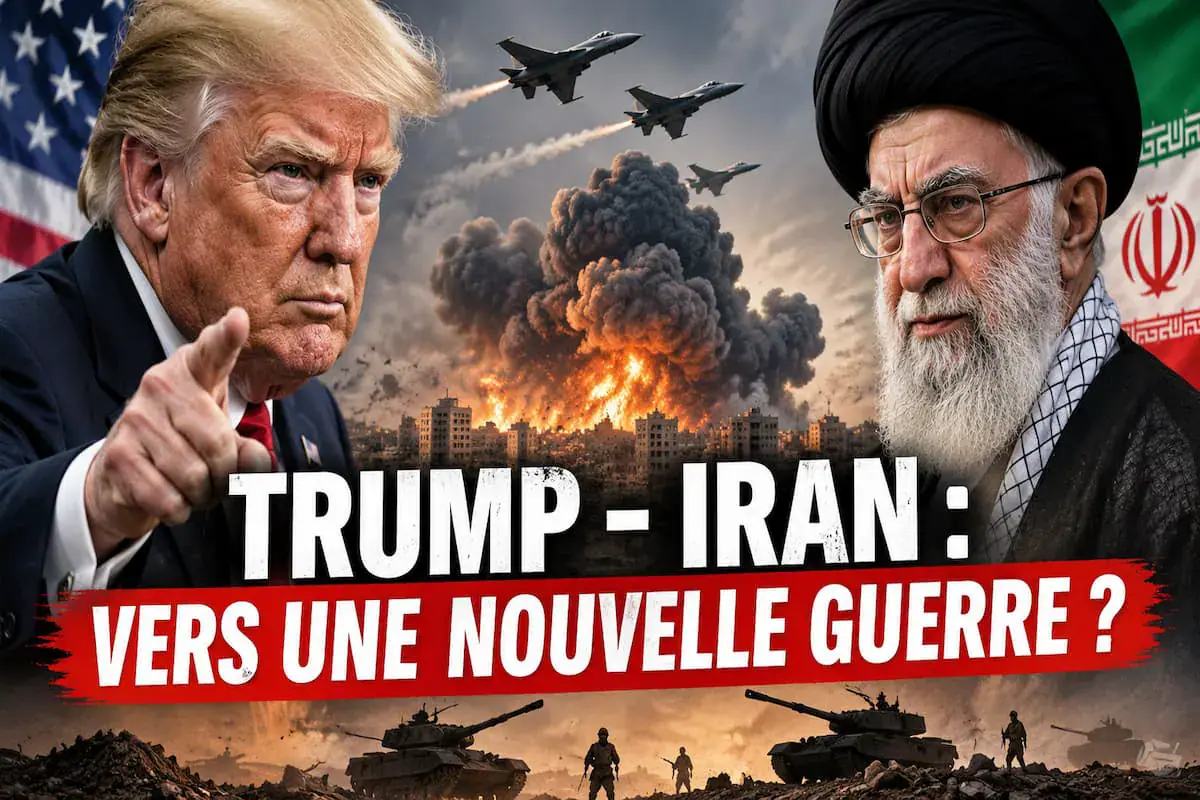
US President Donald Trump has hinted at launching a new military campaign against Iran following the US midterm elections on November 3. In a recent statement, Trump said the US should "give Iran a knockout blow" at some point. This has prompted a warning from Tehran that any renewed hostilities could lead to a war "longer than the previous one." There are also rumors of a potential nuclear confrontation. Previous US military interventions have resulted in strategic impasses, highlighting the limitations of US military power.
The previous military confrontation between Iran and the US-Israel coalition involved two major sequences. The first occurred in June 2025, when Israel launched airstrikes against Iranian nuclear facilities, aiming to prevent Tehran from acquiring nuclear capabilities. The second, more extensive operation began in February 2026, resulting in the death of Iran's Supreme Leader Ali Khamenei and several high-ranking officials. However, the Iranian regime did not collapse, and its military capabilities were not neutralized. The Strait of Hormuz, a critical waterway for global hydrocarbon trade, remains blocked.
The US-Israel coalition underestimated Iran's resilience, and the conflict exposed the limitations of US military power. Tehran demonstrated its ability to disrupt maritime navigation in the Strait of Hormuz, revealing a significant pressure point and deterrent. Despite extensive destruction, Iran preserved a substantial part of its strategic capabilities. The war did not lead to a change in regime in Tehran, but it did modify the internal balance of power, strengthening the military and security apparatus.
The conflict has reinforced the influence of the Islamic Revolutionary Guard Corps (IRGC) within the Iranian regime. In the long term, this could lead to a transformation of the regime's nature. However, in the context of prolonged low-intensity confrontation, the Iranian regime might struggle to withstand a US naval blockade, which could lead to economic asphyxiation. A renewed conflict would likely have severe consequences for regional petromonarchies, which have already been heavily affected by the war.
The petromonarchies, already vulnerable due to the war, would likely be severely impacted by a new conflict. Their economic and development models, based on stability, openness, and financial attractiveness, have been severely shaken. The US military's inability to protect these states has exposed their fragilities. A new operation would aim to correct the shortcomings of the previous campaign and achieve unfulfilled objectives.
A new military operation would aim to destroy remaining Iranian nuclear and military installations, prevent the reconstitution of ballistic capabilities, and reduce Tehran's retaliatory capabilities. The goal would be to impose a more favorable balance of power before any renewed negotiations. Additionally, the operation would seek to restore US credibility, which has been questioned due to its inability to secure a political capitulation from Tehran.
The credibility of the US relies on its ability to enforce its red lines and deter adversaries from challenging them, particularly in protecting Israel in the Middle East. A new conflict would have significant implications for regional stability and global security. All parties involved must carefully consider the potential consequences of their actions.
Key points
- US President Donald Trump threatens military action against Iran
- Previous US military interventions in Iran have resulted in strategic impasses
- A new conflict would have severe consequences for regional petromonarchies and global security