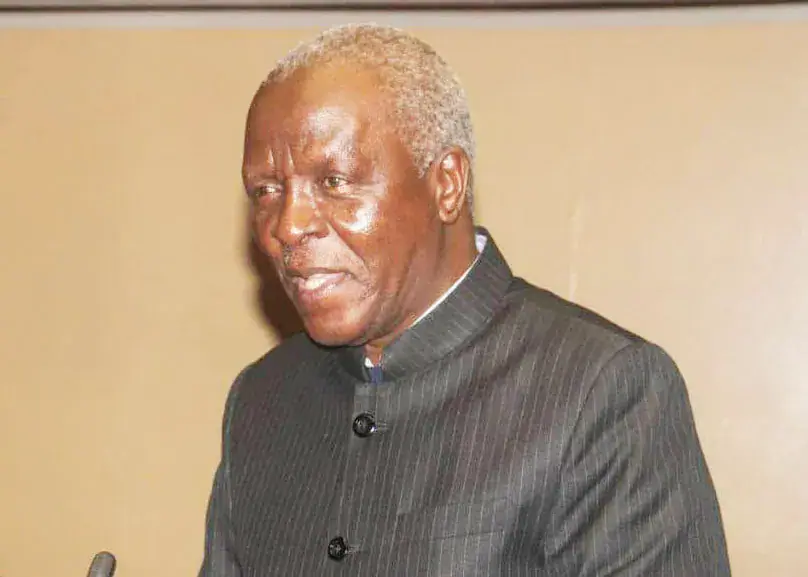
Eswatini's Judiciary is facing an uncertain situation following the passing of Chief Justice Bheki Maphalala two months ago. The lack of clarity on the appointment of an acting CJ has created four camps, each with its own candidate for the position. This has caused concerns about the effectiveness of the Judiciary. Mbabane East MP, Welcome Dlamini, has called for clarity on the matter, questioning why the government had not publicly clarified the arrangements for the leadership of the Judiciary.
Dlamini acknowledged Maphalala's contribution to the country and the Judiciary, despite disagreements with some of his decisions. He emphasized that the death of the CJ had left a significant gap that needed to be addressed. The MP questioned the interpretation of Section 153 of the Constitution, which relates to the most senior judge of the Supreme Court assuming the duties of chief justice when the substantive office-holder is unable to perform those duties.
According to Dlamini, the constitutional provision appears to provide for an automatic arrangement, without requiring consultation with or approval from the appointing authority. However, the confusion stems from disagreements over how seniority among the judges should be determined. Different judges are reportedly relying on different considerations, including age, the date of their appointment to the High Court, and the order in which they were appointed to the Supreme Court.
The MP explained that some judges consider themselves senior because they are older, while others base their claims on having been appointed to the High Court first. Others argue that their seniority should be determined by the order in which they joined the Supreme Court. Dlamini called on the Minister for Justice and Constitutional Affairs, Prince Simelane, to seek clarification from the Attorney General's Office on the matter.
Dlamini also questioned who was currently overseeing the performance of judges in the absence of a substantive chief justice. He argued that the registrar of the Supreme Court could not be expected to supervise judges and direct their work, as the judges might not regard the registrar as having the authority to do so. The lack of clarity and government silence on the matter are creating uncertainty within the Judiciary.
Minister Prince Simelane responded by distancing himself from the appointment of an acting CJ, explaining that the responsibility did not fall under his ministry. He stated that the matter was within the mandate of the Judicial Service Commission (JSC), which is responsible for dealing with matters relating to the appointment of judicial office-holders.
The issue of compensation for the family of the late CJ following the burning of his property during the political unrest was also raised. Dlamini appealed to Prince Simelane to follow up on the matter to ensure that the family of the late CJ was compensated for the loss. The minister's response and further actions on the matter remain to be seen.
Key points
- The vacant Chief Justice post in Eswatini has created confusion, with four camps emerging, each with its own candidate.
- The situation has raised concerns about the effectiveness of the Judiciary.
- The Minister for Justice and Constitutional Affairs has distanced himself from the appointment of an acting CJ, citing it as the responsibility of the Judicial Service Commission.