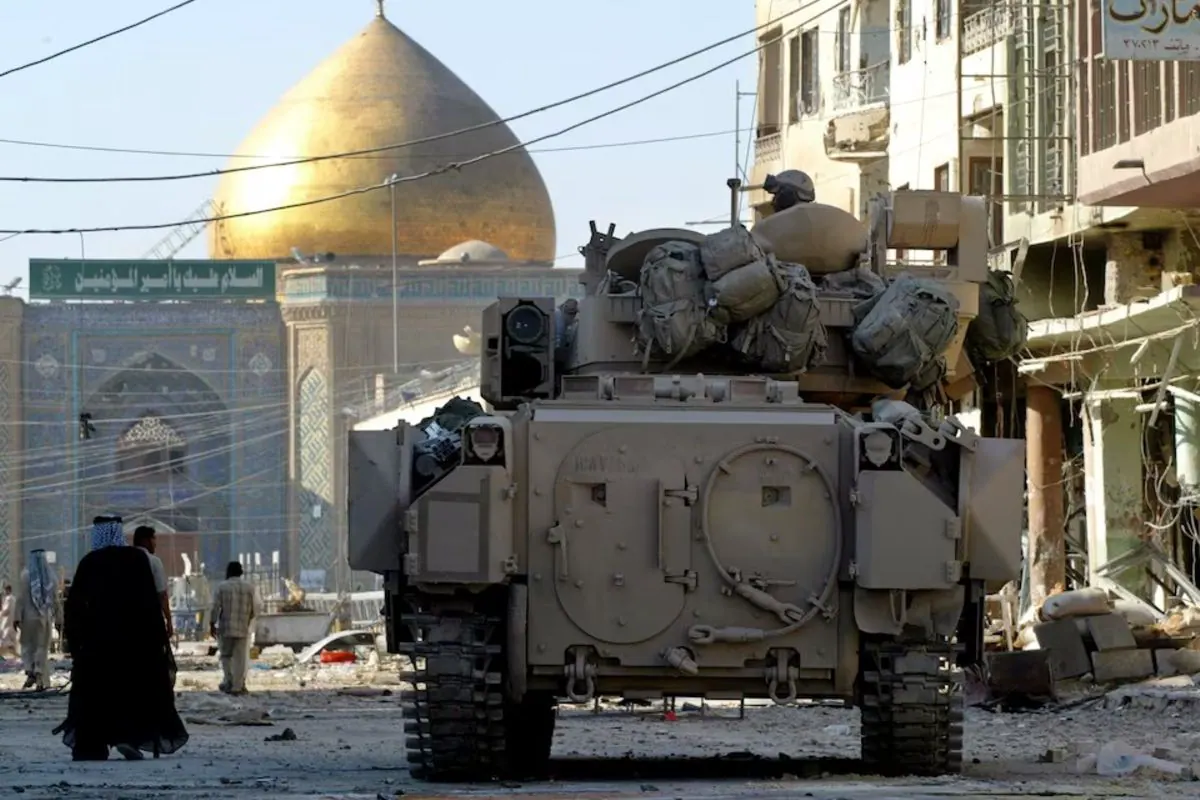
The United States is set to withdraw its forces from their last bases in Iraq by Wednesday, marking the end of a two-decade presence. This departure has been celebrated as a victory by Iran and its allies, who have deep influence in the country. During the war, 4,500 American lives were lost. Iraqi security experts warn that the withdrawal could give Tehran and its powerful allies free rein, while also allowing other US enemies, including Islamic State, to stage a comeback.
Iraqi security analyst Jasim al-Bahadli notes that Iran stands to benefit strategically from the coalition's departure, as it removes a military presence that acted as a counterweight to Tehran's influence in Iraq. He predicts that pro-Iranian militia groups will portray the departure as a victory for their movement and seek to translate that momentum into greater influence over security and political decision-making. Abu Mojtaba al-Yasiri, a commander in the Islamic Resistance in Iraq, described the US withdrawal as a "historic victory for the Iraqi Islamic resistance groups and honorable Iraqis."
While the eventual departure of US forces is broadly popular among Iraqis, some worry that the withdrawal is premature. Abdulrahman al-Zobaie, a Sunni tribal leader in Fallujah, expressed concerns that Iraq is still not fully ready to take over the security file. He fears that the US-led coalition leaving in this way and creating a vacuum is what all Iraqis fear. American forces invaded Iraq in 2003 to topple Saddam Hussein and occupied the country, installing a Shi'ite-led government and fighting a years-long counterinsurgency.
The US withdrawal has been welcomed by Iran, which casts it as a victory for its "axis of resistance" of allied armed groups across the region. Amir Hayat Moqaddam, deputy chairman of the National Security Commission of Iran's Parliament, said lasting security will prevail in Iraq once the Americans leave the country and the region. Iran "welcomes the withdrawal of American troops from Iraq and will undoubtedly support it," he told Iran's parliamentary news service.
However, some Iraqi security officials warn that the US pullout also risks giving new life to Islamic State fighters, who retain a sleeper cell network despite their defeat nearly a decade ago. Kurdish commander Sirwan Barzani noted that a lack of US intelligence, logistical support, and drones will give Islamic State a chance to regroup. He reported noticing movement by Islamic State sleeper cells after the announcement of the US withdrawal.
Iraqi security forces have also expressed concerns about Islamic State's capabilities, citing a suspected plot to launch suicide attacks to coincide with the pullout. Colonel Khalid al-Bayati, a senior security official in Kirkuk, said Islamic State "is seeking to send a message that the group is still powerful and capable of launching bloody attacks." This highlights concerns that the militant group remains capable of exploiting security gaps.
The US withdrawal from Iraq marks a significant shift in the country's dynamics, with potential implications for the region. The Baghdad government says it is trying to curb the influence of Iran-backed militia groups, which Washington accuses of playing a role in the wider Middle East conflict. As the US exits, Iraq faces challenges in maintaining security and stability, with concerns about the resurgence of Islamic State and the growing influence of Iran.
Key points
- The US withdrawal from Iraq may give Iran and its allies greater influence in the country.
- The departure could also allow Islamic State fighters to regroup and launch new attacks.
- The withdrawal marks a significant shift in Iraq's dynamics, with potential implications for the region.