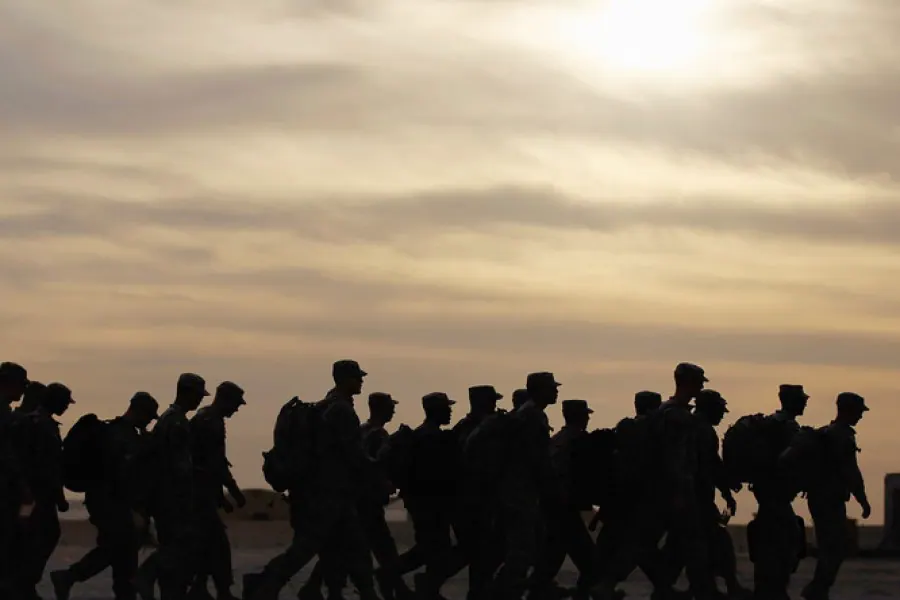
The United States has finished withdrawing its troops from Iraq, ahead of the official deadline of September 30. According to an Iraqi official cited by the DPA news agency, US combat and logistical support forces have left the country. However, Washington has not yet confirmed the complete end of the operation. This departure marks the end of the international coalition's mission against the Islamic State, as per the 2024 agreement between Washington and Baghdad.
The withdrawal comes after a 23-year presence that started with the 2003 invasion of Iraq, which led to the overthrow of Saddam Hussein. The US military had previously left Iraq in 2011 but returned in 2014 at Baghdad's request to combat the expansion of the Islamic State. Recently, around 2,500 US military personnel were stationed in Iraq, primarily in advisory, training, and support roles.
The withdrawal has been accelerated, particularly from installations in the Iraqi Kurdistan region, in September. For the government of Prime Minister Ali al-Zaidi, September 30 symbolizes Iraq's return to full military sovereignty. However, the US departure presents new challenges for Baghdad, including managing powerful Shiite armed factions with close ties to Tehran.
The US military presence in Iraq has been a significant aspect of the country's security landscape for over two decades. The invasion in 2003 and subsequent occupation led to widespread instability and sectarian violence. The US withdrawal in 2011 allowed Iraq to take greater control of its security, but the return of US troops in 2014 helped combat the Islamic State's rapid expansion.
Despite the end of the US combat mission, the US and Iraq are expected to maintain a cooperative relationship in areas such as counter-terrorism and security. This cooperation is anticipated to continue under new arrangements. The Iraqi government will now need to address several pressing security concerns, including the presence of Islamic State cells and the disarmament of Shiite militias.
The Kurdistan region of Iraq has expressed concerns about the US withdrawal, citing the potential loss of protection, particularly in terms of air defense capabilities deployed in Erbil. The region has faced numerous missile and drone attacks, highlighting the ongoing security challenges in the area.
The US withdrawal from Iraq marks a significant shift in the country's security dynamics. As Iraq assumes greater responsibility for its security, the international community will be watching closely to see how the country navigates these new challenges. The US-Iraq relationship is expected to evolve, with a focus on cooperation in areas such as counter-terrorism and security.
Key points
- The US has completed its troop withdrawal from Iraq, marking the end of a 23-year military presence.