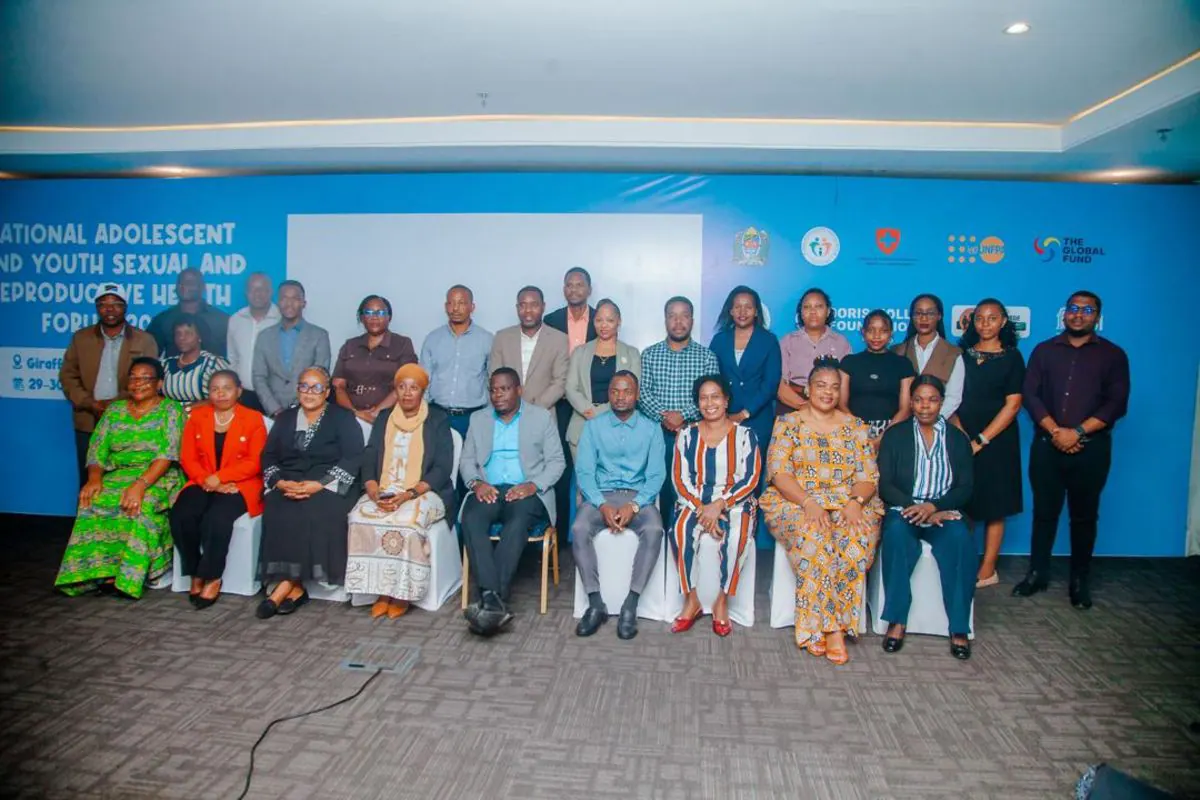
Health stakeholders in Tanzania have identified five major threats to the health and wellbeing of young people and adolescents, including HIV, teenage pregnancies, sexually transmitted infections, gender-based violence, and mental health challenges. They have called for reproductive health information and services to reach young people on time and in forms that respond to their needs. This was during a two-day Adolescent and Youth Sexual and Reproductive Health meeting held in Dar es Salaam from September 29 to 30, 2026.
The meeting, organised by the Ministry of Health in collaboration with the Doris Mollel Foundation, brought together stakeholders to identify health challenges facing young people and develop a joint 2026/27 plan to improve reproductive health services for the group. According to the Ministry of Health, young people account for an estimated 31 per cent of Tanzania's population, yet many continue to face health and economic challenges, including those related to reproductive health.
Ministry of Health Adolescent Reproductive Health Coordinator Gerald Kihwele said an assessment of young people's health had identified barriers preventing some from accessing reproductive health services, including HIV and sexually transmitted infection services and contraception. He said it was possible that education had been provided, but the environment at health facilities had not been youth-friendly, which is why young people themselves were involved to hear their voices and understand what needs to be improved.
Mr Kihwele said involving young people was important because Tanzania has a large youth population, making investment in their health, education, and skills essential to the country's development. He said the goal was to have young people who are healthy and have the right education and skills, as a country that wants to develop must invest in its young people.
Doris Mollel Foundation Reproductive Health Officer Brian Kilenzi said the organisation was implementing two interventions, including helping girls who are out of school return to the education system and linking survivors of gender-based violence with safe shelters. He said implementation of the interventions had shown that a significant gap remained in communities, with the number of young people requiring support exceeding the organisation's planned reach.
Christian Social Services Commission representative Subira Lyimo said cooperation between the Government and stakeholders was necessary to address existing gaps because different organisations work with different groups of young people. She said combining their experience and interventions could improve efforts to address challenges facing young people.
Ministry of Health statistics show that young people make up an estimated 31 per cent of Tanzania's population, but the group continues to face health and economic challenges, including reproductive health concerns. The figures show that about 22 per cent of girls aged 15 to 19 have begun childbearing, while HIV prevalence is estimated at 4.6 per cent.
Key points
- Young people account for 31% of Tanzania's population and face significant health and economic challenges.
- The main health threats to young people in Tanzania are HIV, teenage pregnancies, sexually transmitted infections, gender-based violence, and mental health challenges.
- Stakeholders are calling for cooperation and a joint plan to improve reproductive health services for young people.