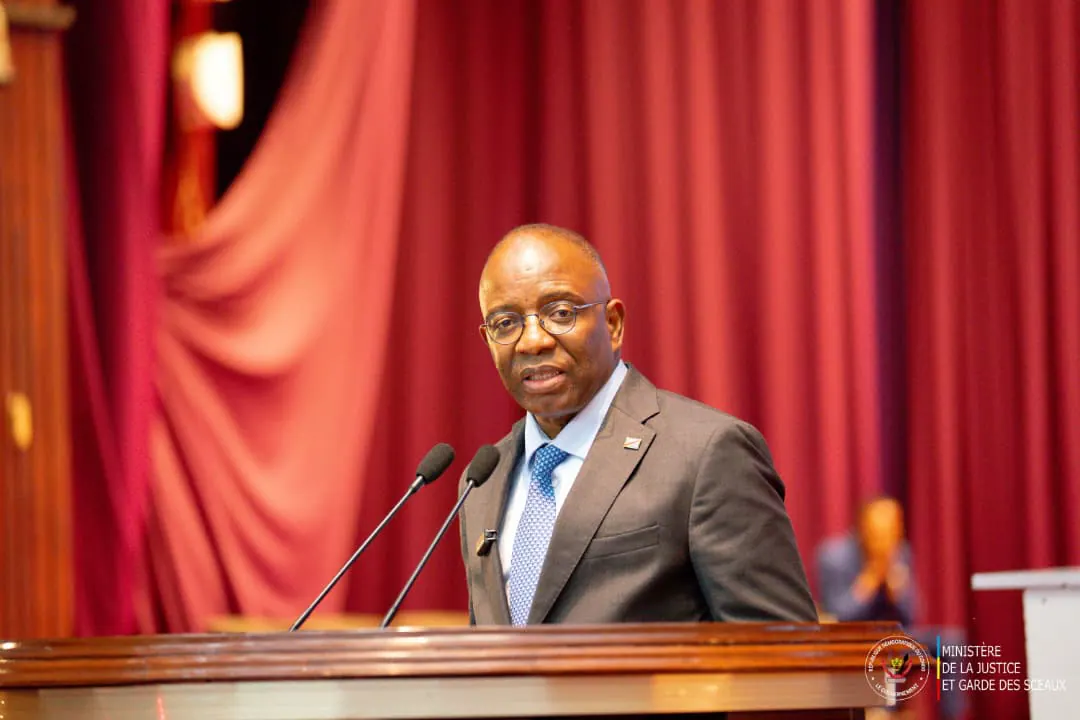
The Democratic Republic of the Congo is taking steps to bolster its anti-corruption efforts with a new bill. The National Assembly has declared the anti-corruption bill receivable, which was presented by Minister of State and Minister of Justice Guillaume Ngefa on September 28, 2026. The bill aims to modernize the country's legal framework to prevent, detect, and punish corruption, allowing the state to recover illicitly acquired assets.
The bill, adopted by the Council of Ministers on June 26, focuses on four main areas: prevention, detection, sanctions, and asset recovery. It seeks to enhance transparency in public markets and revise rules on asset declarations to minimize diversion risks and promote better accountability in public affairs management. The bill also provides for new investigative tools for detectives to identify corruption acts and strengthened protection for witnesses, victims, experts, and whistleblowers.
The proposed legislation introduces new corruption-related offenses and stiffer penalties, including the possibility of holding legal persons accountable for corruption. One of the bill's key features is the recovery of assets acquired through corruption. It provides for the freezing, seizure, and confiscation of illicitly acquired assets, which will be returned to the state through a specialized service.
During the general debate, several lawmakers emphasized the need to strengthen control institutions, ensure better protection for magistrates, and improve mechanisms for recovering diverted assets. The bill's reception was positive, with many seeing it as a crucial step towards addressing corruption, which is considered a major obstacle to good governance and public trust in institutions.
The bill has been referred to the Political, Administrative, and Juridical Commission, which will examine it in-depth and incorporate observations from lawmakers before returning it to the plenary session for further legislative action. This process is expected to lead to a more comprehensive and effective anti-corruption law.
The DR Congo government's efforts to combat corruption have been ongoing, with the goal of improving governance and public trust. The country's anti-corruption efforts have been supported by international partners, including the European Union, which has reaffirmed its support for judicial reform in the DR Congo.
The passage of this bill is seen as a significant step towards addressing corruption in the DR Congo. Its implementation will depend on effective enforcement and the government's commitment to holding accountable those involved in corrupt activities. The bill's success will also depend on the government's ability to strengthen institutions and ensure better protection for those involved in reporting corruption.
Key points
- DR Congo's National Assembly has declared an anti-corruption bill receivable, aiming to strengthen prevention, detection, and punishment of corruption.
- The bill focuses on four main areas: prevention, detection, sanctions, and asset recovery.
- The legislation introduces new corruption-related offenses and stiffer penalties, including the possibility of holding legal persons accountable for corruption.