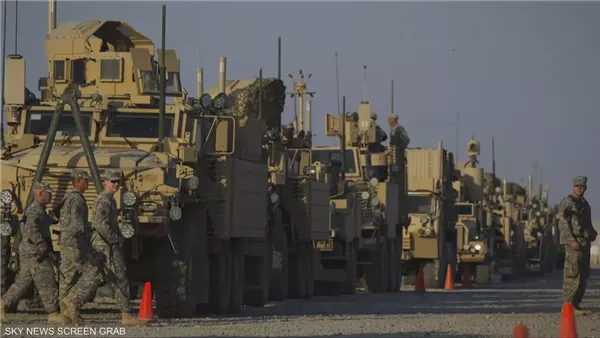
The US military is set to withdraw from its last remaining base in Iraq on Wednesday, September 30. This withdrawal, announced by President Joe Biden in 2024, marks the end of a 23-year military presence in the country. The US has spent $1.7 trillion on its military operations in Iraq. The withdrawal comes amid an ongoing conflict between the US and Iran, which began in February.
The decision to withdraw was initially made by former President Donald Trump in July, when he met with Iraqi Prime Minister Ali Al-Zaydi at the White House. Trump stated that the US no longer needed a military presence in Iraq, citing the emergence of a "new champion." Al-Zaydi, a 41-year-old businessman, had been given a deadline of September 30 to disarm Iranian-backed militias.
However, the withdrawal has raised concerns about the stability of the region. The Wall Street Journal reported that Iranian-backed militias have launched over 600 attacks on US diplomatic and military facilities in Iraq during the first two months of the conflict. These militias have been bolstered by Iranian support since the US began its campaign against Iran in February.
The US withdrawal has been widely supported by Iraqis, but some have expressed concerns about the ability of the country's security forces to protect the nation. A total of 4,500 US military personnel were killed during the 20-year conflict. The US has trained and funded Iraq's security forces, but they remain under-equipped to deal with the threats facing the country.
The US Embassy in Baghdad has issued repeated security warnings to American citizens and others in Iraq, citing the risk of kidnapping by armed militias. A team of journalists from the Wall Street Journal was forced to leave Baghdad this month due to security concerns. US officials have confirmed that the threat was related to the risk of kidnapping by militias.
Iran has continued to support the militias in Iraq, despite the US campaign against it. A US official has reported that the flow of light arms, drones, and short-range missiles from Iran had slowed initially but has since increased. The official noted that recent attacks have involved longer-range missiles and drones, indicating a concerning development in Iran's arsenal.
The US withdrawal from Iraq marks a significant shift in the country's security landscape. While some have welcomed the move, others have expressed concerns about the potential for further instability. The US will continue to maintain a diplomatic presence in Iraq, but the withdrawal of its military forces is expected to have far-reaching consequences for the region.
Key points
- The US has spent $1.7 trillion on its military operations in Iraq over the past 23 years.
- The withdrawal comes amid an ongoing conflict between the US and Iran, which began in February.
- The US Embassy in Baghdad has issued repeated security warnings to American citizens and others in Iraq, citing the risk of kidnapping by armed militias.