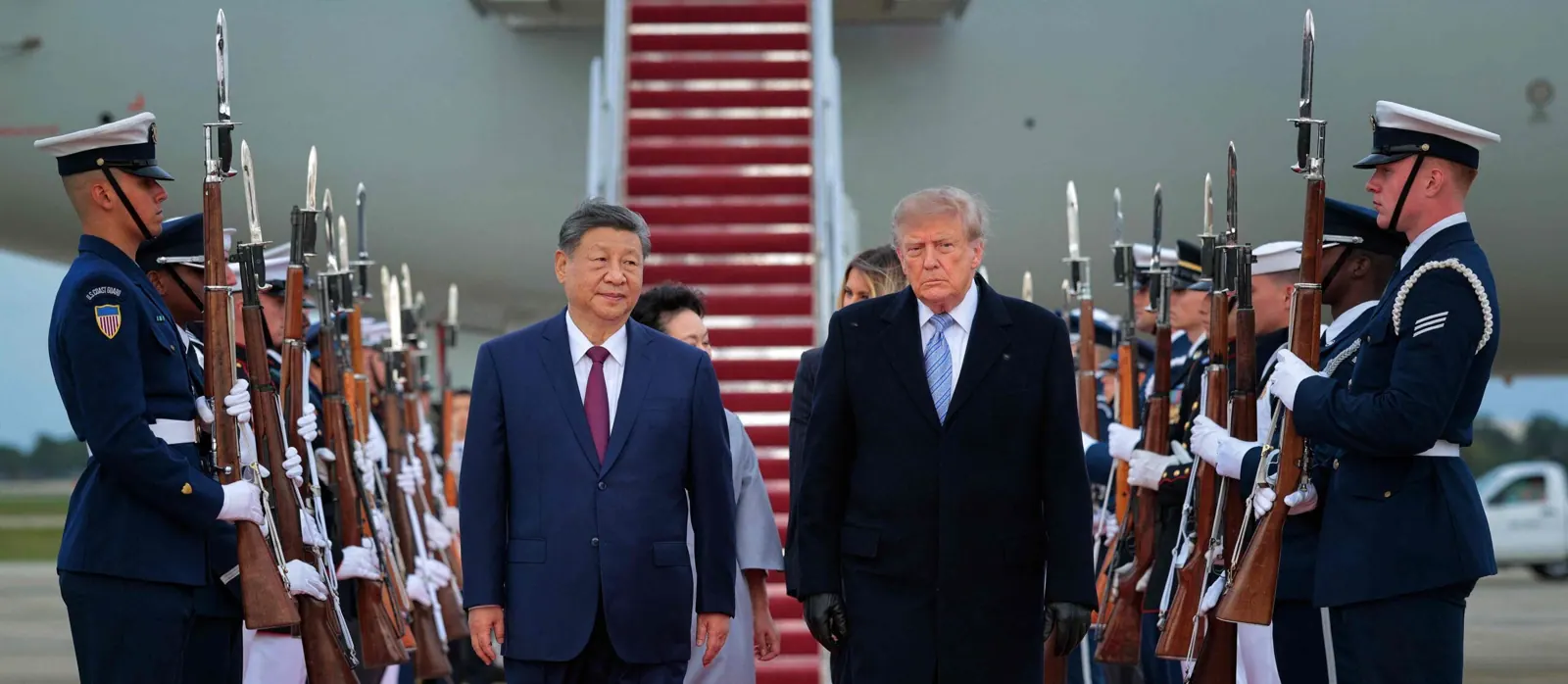
US President Donald Trump welcomed Chinese President Xi Jinping to Washington for a three-day state visit, which began with the announcement of a two-month extension of their trade truce. The truce, set to expire on November 10, will now last until January 10. The extension was announced by US Treasury Secretary Scott Bessent. This truce had been in place for 11 months and provided temporary relief from reciprocal tariffs.
The meeting between Trump and Xi Jinping was marked by a ceremonial welcome at Andrews Air Force Base, where Trump personally greeted the Chinese leader. This level of protocol is rare, with no US president having extended such a welcome to a foreign leader in 11 years. The event featured a flyby of a B-1 bomber. According to China's state news agency, Xi Jinping stated that China's national rejuvenation and America's regained greatness can complement each other and benefit the world.
The state visit comes amid significant global issues, including trade negotiations, tensions over Taiwan, cooperation on artificial intelligence, and the conflict between the US, Israel, and Iran. The latter issue gives the meeting broader implications, as China is the world's largest importer of crude oil and a major market for Persian Gulf exports. China's relationship with Iran provides it with leverage that the US does not possess.
The meeting between the two leaders will also feature a dinner with technology sector leaders, as well as visits to the White House and the National Archives. A specialist in Sino-American relations noted the unprecedented nature of the two leaders' reciprocal visits within a single year. This meeting represents a significant diplomatic effort by both countries to manage their complex relationship.
The two-month extension of the trade truce has been interpreted by experts as a sign that broader negotiations are ongoing, rather than a final resolution. The original truce had provided temporary relief from reciprocal tariffs, which had been a major point of contention between the two nations. Further details on the negotiations and agreements are not yet available.
The US-China relationship has significant implications for global trade and geopolitics. As the world's two largest economies, their interactions have far-reaching consequences. The current meeting aims to stabilize and potentially advance the relationship, addressing several key areas of cooperation and contention.
The discussions between Trump and Xi Jinping are set against a backdrop of complex global challenges. The outcomes of these talks could influence not only US-China relations but also have broader impacts on international trade, security, and diplomacy. The meeting's results will be closely watched by global markets and policymakers.
Key points
- The US and China have extended their trade truce until January 10.
- The meeting between Trump and Xi Jinping includes discussions on trade, Taiwan, artificial intelligence, and the US-Israel-Iran conflict.
- The two leaders' reciprocal visits within a year are seen as unprecedented.