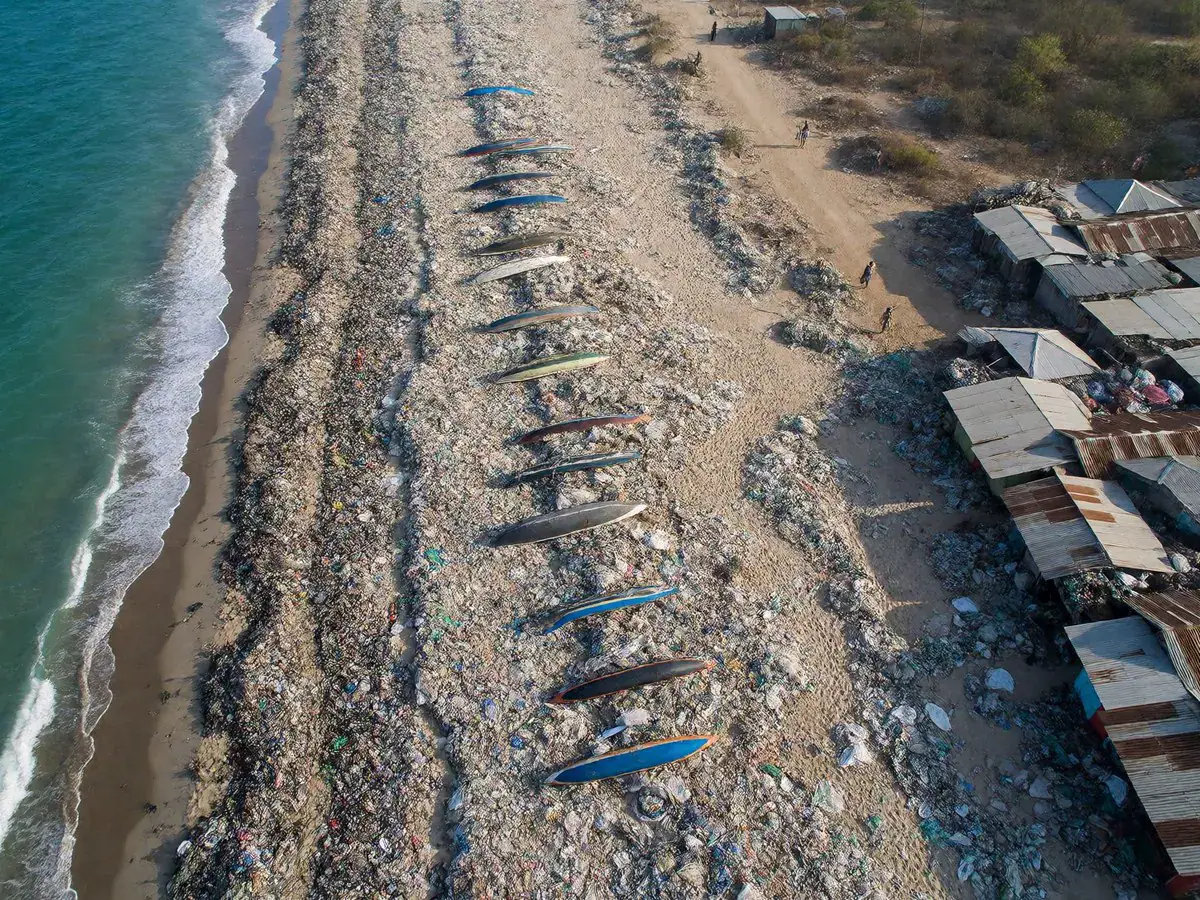
The James Town Fishing Harbour in Ghana is facing a severe plastic pollution crisis, with plastic waste outnumbering fish in the nets of local fishermen. Fishermen such as 37-year-old Sammy Okine have to mend their nets multiple times a week due to heavy plastic clogging the gear. This has resulted in diminishing returns, making it difficult for families to get enough fish to eat or sell. The beach is also filled with large drifts of crushed water sachets, single-use grocery bags, and tangled fishing nets.
According to Nuumo Kwaa Mensah III, the Nae Wulomo, the plastic pollution is so severe that deploying 20 canoes might not even yield one tonne of fish. He notes that the people of James Town do not manufacture plastics, and the waste arrives from markets and other places as part of a chain that must be viewed holistically. This pollution directly threatens the livelihoods of hundreds of fishermen, fish processors, and traders who depend on the sea.
A report by the Ghana Environmental Protection Authority reveals that the country generates over one million tonnes of plastic waste annually, yet less than 10 per cent is collected or recycled. Most of this waste spills into drains and rivers before reaching the ocean. A study by the Council for Scientific and Industrial Research-Water Research Institute (CSIR-WRI) found that 80 to 93 per cent of beach plastic is "land-based" in origin.
The microplastics in the ocean are not only affecting the fishing economy but also posing significant health risks. A study by CSIR-WRI found that microplastic levels in fish from Accra coastal communities, including James Town, exceed international safety limits by dozens of times. Dr. Pennante Naa Ayikailey Bruce-Vanderpuije, a Senior Research Scientist at CSIR-WRI, explains that consuming fish gills and guts carries significant health risks as these small particles absorb toxic contaminants.
The Ghana National Canoe Fishermen Council (GNCFC) President, Nana Joojo Solomon, says over 140,000 artisanal fishermen across 320 coastal communities contribute to the pollution. He emphasizes that if 14,000 canoes carry 10 bags of sachet water for fishing and fail to bring the waste back, the ocean is "angry with us." The situation is further exacerbated by climate change, as degrading plastic under tropical ultraviolet radiation releases methane and ethylene.
Experts warn that microplastic exposure can have severe health consequences, including suppressing gut immune function, causing lung inflammation, triggering oxidative stress, disrupting hormones, damaging the liver and kidneys, and contributing to bioaccumulation. Dr. Godfred K. Teye, a specialist in environment and climate change, notes that microplastics on the ocean surface absorb heat and disrupt marine carbon sequestration, intensifying ocean warming and acidification.
To address this crisis, Dr. Bruce-Vanderpuije recommends implementing the mandatory Extended Producer Responsibility framework to force plastic producers and importers to fund the collection and recycling of their packaging. She also suggests a policy restricting single-use plastic items, a deposit-refund system, and investment in alternatives. The Environmental Protection Authority must take immediate action to address this issue and prevent further damage to the livelihoods and health of the people in James Town.
Key points
- The Ghana Environmental Protection Authority reports that the country generates over one million tonnes of plastic waste annually.
- Microplastic levels in fish from Accra coastal communities exceed international safety limits by dozens of times.
- The United Nations Environment Programme warns that plastic waste in marine ecosystems could nearly triple by 2040.
Reporting sources
- Plastic pollution threatens livelihoods and health in James Town · The Statesman Newspaper