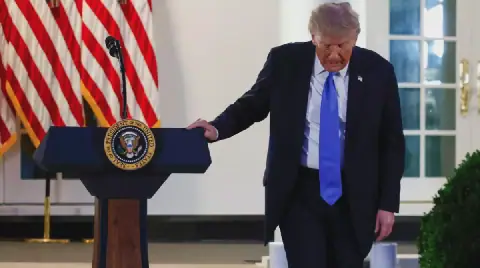
The recent meeting between US President Donald Trump and Chinese President Xi Jinping in Washington was more than just a political encounter between the world's two largest economies. It was a test of the future of the trade truce that has kept the trade war between Washington and Beijing under control over the past few months. The two leaders agreed to continue trade talks, with US Treasury Secretary Scott Pesenti announcing an extension of the trade truce until January 2027.
The trade truce, which was set to expire on November 10, has given both sides additional time to negotiate outstanding issues, primarily related to tariff levels. The US and China had entered into a broad trade confrontation last year, with reciprocal tariffs on some goods reaching over 100%. The temporary truce has brought some relief, but a comprehensive trade agreement has yet to be reached. The two nations are discussing a framework for reducing tariffs on certain products.
One of the key issues on the US agenda is access to rare earth minerals and critical minerals, which are crucial for various American industries, including electric vehicles, electronics, and defense. China controls around 70% of global rare earth mineral mining and 85% of refining capacity. The US wants to ensure a more stable supply of these materials to American companies. In return, China is pushing for relief from US restrictions on Chinese access to advanced technology.
The US is also seeking greater access to the Chinese market for American agricultural products, such as soybeans. Trump has indicated progress in opening up the Chinese market to US agricultural and food products. Additionally, the two sides are discussing non-tariff barriers that hinder US products from entering the Chinese market. The US wants to maintain restrictions on advanced technology, particularly those with potential military applications.
The talks have expanded beyond tariffs to include artificial intelligence and managing associated risks. Despite ongoing technological competition between the two nations, Trump and Xi have opened the door for cooperation in this area. The outcome of the meeting was not a comprehensive trade agreement but rather a temporary reprieve. The US and China have agreed to continue negotiations on tariffs, rare earth minerals, market access, and agricultural products.
The bigger test will come after January: can Washington and Beijing convert this temporary truce into a long-term trade agreement, or will tariffs reignite the economic competition between the world's two largest economies? The equation currently is one of temporary calm in exchange for negotiated concessions: China wants stable access to technology and markets, while the US wants access to critical minerals and increased Chinese purchases of American goods.
The trade truce has provided some relief to markets, but concerns remain about the potential for renewed tensions. The US and China have made some progress, but significant issues remain unresolved. The temporary agreement has delayed, rather than resolved, the trade tensions between the two nations.
Key points
- The US and China have agreed to extend a temporary trade truce until January 2027.
- The truce has given both sides time to negotiate outstanding issues, primarily related to tariff levels and access to rare earth minerals.
- A comprehensive trade agreement has yet to be reached, leaving the potential for renewed trade tensions after January.