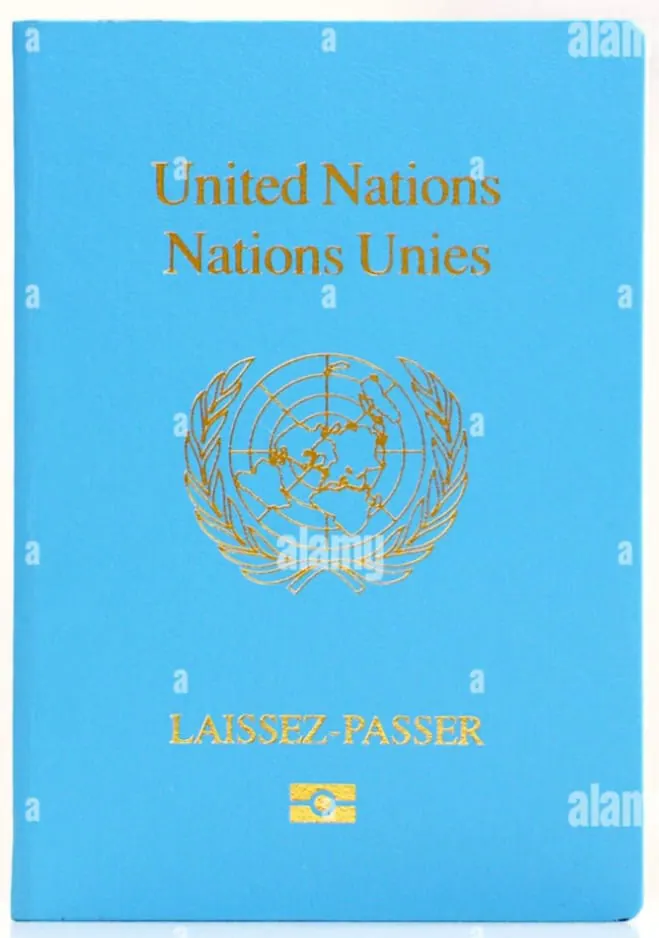
The United Nations laissez-passer, commonly referred to as the "blue passport," is a genuine travel document created in the early years of the organization. Its primary purpose is to facilitate travel for individuals working on official UN missions. According to the 1946 Convention on the Privileges and Immunities of the United Nations, the organization can issue these laissez-passers to its officials, and member states are required to recognize them as valid travel documents.
The blue color of the laissez-passer originates from its historical appearance, with early American documents describing a blue leather-bound pass with the UN emblem in 1947. Initially, it was intended for officials of the Secretariat and individuals performing official functions for the organization. The laissez-passer is not a national passport and does not grant the holder any nationality or replace their national passport.
A UN official remains a citizen of their country, with the associated rights and obligations. The document was created to simplify professional travel for international officials, particularly during a time when obtaining or renewing a national passport could be challenging. The laissez-passer system aimed to enable international officials to travel on behalf of the organization without relying on their national government.
While the laissez-passer facilitates travel, it does not automatically grant the right to enter all countries without a visa. The 1946 Convention requires states to recognize the document and facilitate official travel for its holders. It also provides for special treatment for visa applications from individuals traveling on UN business. The UN system also includes a red laissez-passer for certain high-ranking officials.
The color of the laissez-passer corresponds to different categories of functions within the international system. However, the color alone does not determine the privileges or immunities enjoyed by the holder. For politicians, obtaining a UN laissez-passer is not straightforward. A president, minister, or member of parliament would not normally receive a laissez-passer simply due to their political position.
A politician may become eligible for a UN travel document if they are appointed to an official position within the organization, such as a special representative or envoy. In this case, the function performed for the organization justifies the issuance of the document. However, for politicians who are persecuted or threatened in their home country, the rules governing the laissez-passer do not provide for its issuance solely for protection.
The UN has other documents, such as certificates attesting to a mission, which can facilitate travel for certain individuals. These documents should not be confused with the badge issued to authorized personnel for access to UN premises, which serves as identification and access control. The term "blue passport" is a colloquialism, while in official texts, it is referred to as a laissez-passer, a travel document for individuals working with the United Nations or associated international organizations.
Key points
- The UN laissez-passer is a travel document issued to certain officials working for the organization, allowing them to travel more easily on official missions.
- The laissez-passer is not a national passport and does not grant the holder any nationality or replace their national passport.
- The document's color, blue or red, corresponds to different categories of functions within the international system, but does not alone determine the privileges or immunities enjoyed by the holder.