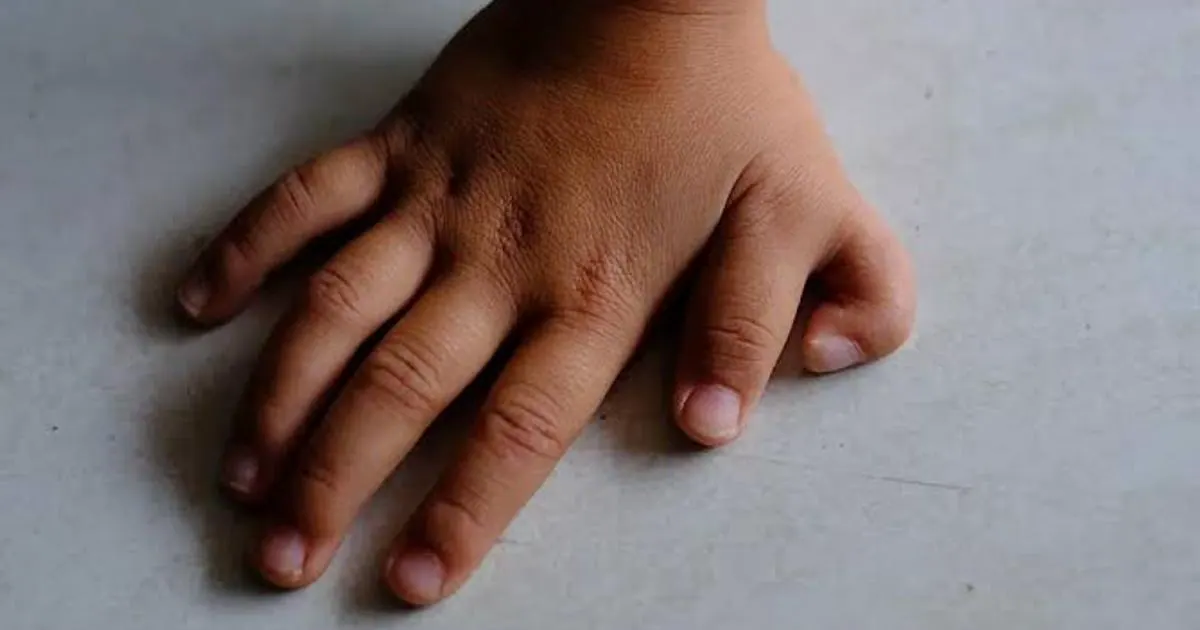
Polydactyly is a congenital condition in which someone is born with extra fingers or toes. An extra finger can range from a small piece of tissue to a fully developed digit with bones, joints, and a nail. This condition develops before birth while a baby's hands and feet are forming. Normally, the hand develops five separate digits, but with polydactyly, an additional digit develops. The appearance of the extra digit can vary considerably.
There are different forms of polydactyly, depending on where the extra digit appears. When an extra finger develops on the thumb side of the hand, it is known as preaxial polydactyly. An extra digit on the little-finger side is called postaxial or ulnar polydactyly, while an extra digit in the middle of the hand is much less common. Preaxial polydactyly can involve anything from a partially developed extra digit to a more complete duplication of the thumb or another digit.
Interestingly, postaxial polydactyly is actually significantly more common in populations of African descent, while preaxial polydactyly is more common in Asian and Caucasian populations. Polydactyly can run in families, but it can also occur in someone with no previous family history of the condition. Certain genetic changes can affect how the hands and feet develop in the womb.
Polydactyly can also occur as part of some genetic syndromes, although it can occur on its own without another underlying disorder. Doctors can usually identify polydactyly through a physical examination. Depending on the appearance of the extra digit and the person's medical and family history, further tests such as an X-ray or genetic testing may be considered.
Is having six fingers dangerous? Not necessarily. For some people, polydactyly is simply a difference in the way their hand developed and may not cause any other health problems. In other cases, an extra digit can interfere with movement, become painful, or cause practical difficulties, depending on how it is attached and developed.
An extra finger can therefore look very different from one person to another. Yes, but whether treatment is necessary depends on the individual case. If an extra digit causes discomfort, interferes with hand function, or creates other problems, doctors may recommend surgery to remove it. The procedure depends on how developed the digit is and how it connects to the rest of the hand.
For some people, however, the extra digit may not cause enough problems to require treatment. So while six fingernails may look extraordinary at first glance, the phenomenon has a name and a biological explanation. Preaxial polydactyly is one of several ways the human hand can develop an additional digit before birth, and its appearance can range from a tiny extra piece of tissue to a surprisingly complete sixth finger.
Key points
- Polydactyly is a congenital condition that can cause extra fingers or toes, and it can occur in various forms.
- The condition can run in families, but it can also occur in someone with no previous family history.
- Treatment for polydactyly depends on the individual case and whether the extra digit causes discomfort or interferes with hand function.