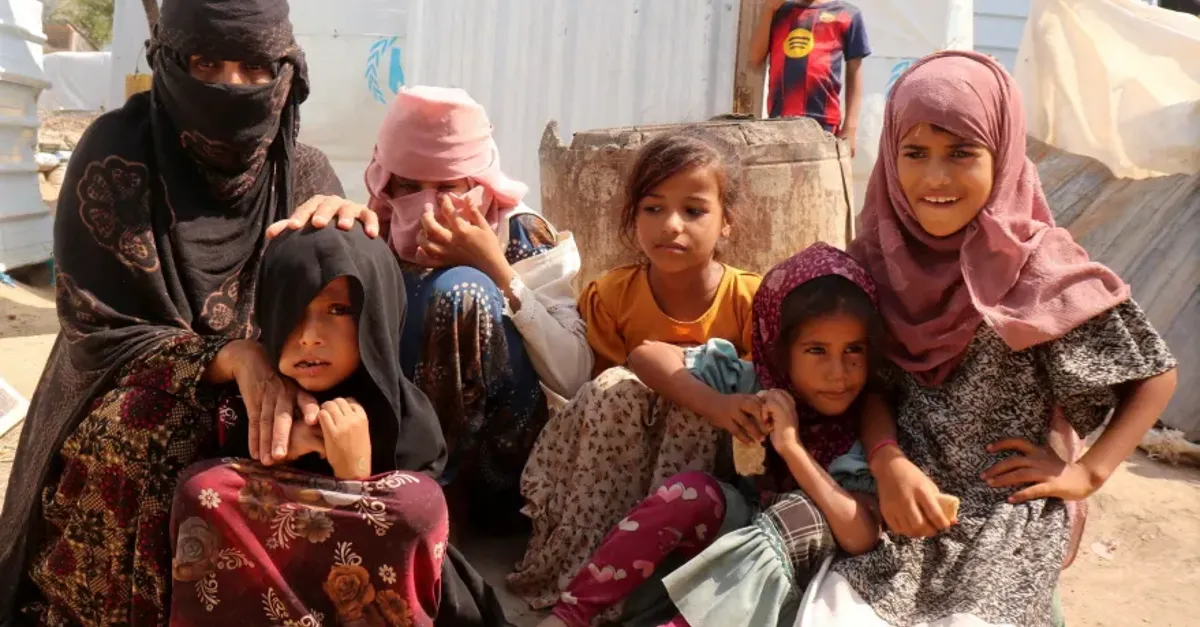
The United Nations High Commissioner for Refugees (UNHCR) has warned that the number of internally displaced persons (IDPs) in Yemen could rise to 230,000 in the coming months due to renewed fighting between Houthi rebels and government forces backed by Saudi Arabia. This is an increase from the current 130,000 displaced people. The UNHCR spokesperson, Babar Baloch, stated that the number of refugees fleeing to Djibouti across the Red Sea could also increase from 3,000 to 10,000 during the same period.
The UN has expressed concern over the deteriorating humanitarian crisis in Yemen, with a recent wave of displacement leading to the flight of around 126,000 people, equivalent to 21,000 families, between August 1 and September 19. This has put a strain on the already limited resources and services of host communities. The UN Office for the Coordination of Humanitarian Affairs (OCHA) in Yemen has highlighted that the recent military developments have imposed additional needs on an already protracted crisis.
According to Ibrahim Al-Haddad, head of the Information Analysis and Communication Unit at OCHA in Yemen, the displacement has pushed the most vulnerable populations to the brink, with 18 million people suffering from severe food insecurity and 2.2 million children under five suffering from malnutrition. Many families have had to reduce their consumption to less than one meal a day. The UN has also noted that 68% of the recently displaced people have moved within their original governorates, while 32% have fled to other governorates and alternative shelters.
The UNHCR and OCHA have emphasized the need for humanitarian assistance to be scaled up to support the displaced and refugee populations. However, the response efforts are facing significant challenges, including a large funding gap. The 2026 Humanitarian Response Plan, which aims to assist 12 million people, requires $2.16 billion in funding, but only 20% of this amount has been covered so far.
The closure of roads and field disruptions due to the escalation have prevented relief teams from directly reaching affected families. OCHA has allocated $9 million from the Central Emergency Response Fund to address the current emergency needs. So far, humanitarian organizations have managed to provide emergency assistance to 13,000 families out of 21,000 displaced families.
Yemen was already hosting around 5.2 million IDPs before the recent escalation. The UN has stressed that the recent displacement has added to the existing humanitarian needs, with many families relying on limited services and resources in host communities. The situation is expected to worsen if the fighting continues, leading to further displacement and humanitarian needs.
The UN and humanitarian organizations are working to respond to the crisis, but the scale of the needs is vast, and the funding gap is significant. The situation in Yemen remains a major concern, with the humanitarian crisis expected to worsen in the coming months if the fighting persists.
Key points
- Up to 230,000 people expected to be displaced within Yemen due to renewed fighting.
- 18 million people suffering from severe food insecurity and 2.2 million children under five suffering from malnutrition.
- Humanitarian response efforts face significant challenges, including a large funding gap.