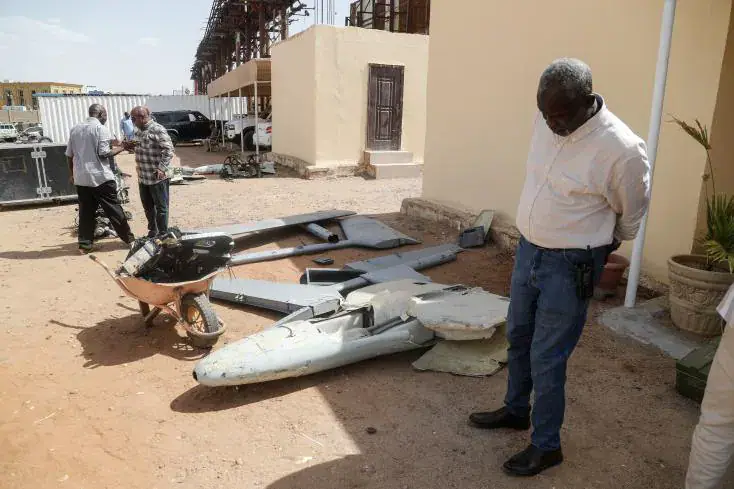
The United Nations has reported that drone strikes in Sudan have resulted in the deaths of nearly 1,630 civilians between January and October 2026. According to the UN, these strikes are responsible for almost three-quarters of the total civilian casualties recorded during this period. The use of drones has increased the risk to urban areas and humanitarian installations, including in the capital city of Khartoum.
On Sunday, drone strikes hit several residential neighborhoods in Khartoum, damaging a building occupied by United Nations employees. The UN Office for the Coordination of Humanitarian Affairs (OCHA) reported that there were no casualties, but the incident highlights the growing threat to humanitarian personnel and facilities. The OCHA did not identify the perpetrators of the attack.
Denise Brown, the UN's humanitarian coordinator in Sudan, expressed her concerns over the incident, stating that it is unacceptable for humanitarian personnel and facilities to be exposed to such dangers. She emphasized that humanitarian personnel and goods are protected under international humanitarian law. The incident occurred amid escalating aerial combat between the Sudanese army and the Rapid Support Forces (RSF), which have been at war since April 2023.
Despite the Sudanese army regaining control of Khartoum in March 2025, the capital remains vulnerable to long-range military actions. The threat is not limited to Khartoum, as other cities in the country are also affected. On Thursday, drone strikes targeted the Almazad neighborhood in Nyala, South Darfur, near humanitarian organization locations.
A report by the UN High Commissioner for Human Rights, released on November 17, highlighted the devastating impact of the conflict. The report documented at least 2,230 civilian deaths between January and October 2026, with over 1,630 of those deaths attributed to drone strikes. While these numbers do not provide an exhaustive account of the conflict's victims, they illustrate the increasing role of drones in violence targeting civilian populations.
The use of drones allows both sides to strike beyond their controlled territories and front lines, particularly in the Darfur and Kordofan regions. This has resulted in a significant increase in civilian casualties. The UN's findings underscore the need for all parties involved to adhere to international humanitarian law and protect civilians and humanitarian personnel from harm.
The situation in Sudan remains volatile, with ongoing clashes and humanitarian concerns. The international community continues to monitor the situation closely, calling for a peaceful resolution to the conflict. The UN and other humanitarian organizations are working to provide assistance to those affected by the violence, while emphasizing the importance of protecting civilians and humanitarian workers.
Key points
- Drone strikes have caused nearly 1,630 civilian deaths in Sudan between January and October 2026.
- The use of drones has increased the risk to urban areas and humanitarian installations in Sudan.
- The conflict in Sudan has resulted in at least 2,230 civilian deaths between January and October 2026.
Reporting sources
- WalFadjri · WalFadjri