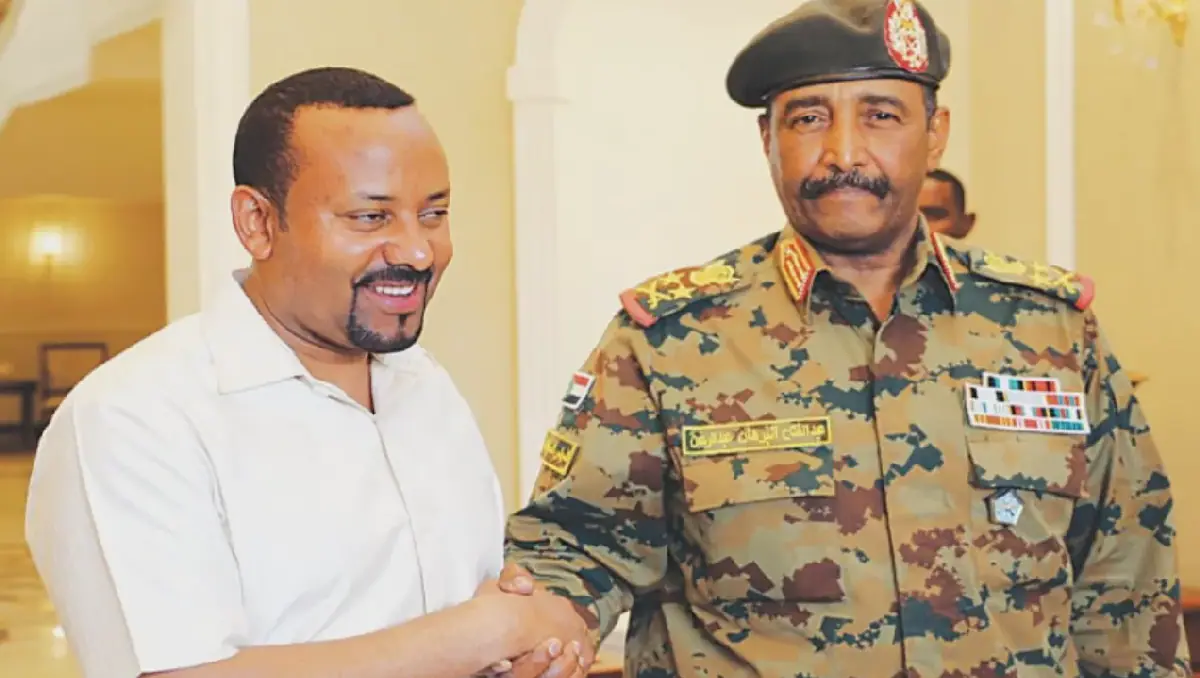
Sudan's government has rejected Ethiopia's offer to host peace talks aimed at ending the country's war, citing concerns over Ethiopia's neutrality. The government, aligned with the Sudanese army, accused Ethiopia of supporting the Rapid Support Forces (RSF) and allowing drones to be launched from its territory to attack Sudan. This development highlights the divisions over Ethiopia's proposed mediation role in the conflict.
Ethiopian Prime Minister Abiy Ahmed had invited Sudanese military, political, and civilian groups to participate in an inclusive dialogue hosted and facilitated by Ethiopia. The initiative aims to end the conflict and pave the way for a broadly accepted national unity government. However, Sudan's government stated that Ethiopia does not meet the neutrality requirements needed to host or facilitate the dialogue.
In contrast, the Transitional Peace Government established by the RSF-led Tasis alliance welcomed Abiy's invitation. The administration's information minister, Khalid Ahmed Danaa, expressed readiness to engage constructively with the proposed dialogue. He praised Ethiopia's government and people for their solidarity with Sudan and said the initiative demonstrates their commitment to the country's unity, sovereignty, and stability.
The civilian coalition, the Civil Democratic Alliance of Revolutionary Forces (Somoud), led by former Sudanese Prime Minister Abdalla Hamdok, also welcomed Abiy's proposal. The coalition described the initiative as a positive contribution to efforts to end the conflict and praised Ethiopia's emphasis on Sudanese ownership of the peace process.
The dispute over Ethiopia's proposed mediation role comes amid worsening relations between the two neighbors, which have exchanged accusations of supporting armed groups operating in each other's territories. Sudan accuses Ethiopia of providing support to the RSF and allowing its territory to be used for drone attacks, allegations Addis Ababa denies.
The war between Sudan's army and the RSF erupted in April 2023 over a dispute about integrating the paramilitary force into the regular military. The conflict has killed tens of thousands of people, displaced millions, and triggered one of the world's worst humanitarian crises. The international community is closely watching the developments, with the African Union and other regional and international actors urged to play a role in resolving the conflict.
The rejection of Ethiopia's offer by Sudan's government and the welcome from the RSF and civilian coalition have highlighted the complexities of the conflict and the challenges of finding a peaceful resolution. The situation remains volatile, with the need for a comprehensive and inclusive dialogue to address the root causes of the conflict and pave the way for sustainable peace and stability in Sudan.
Key points
- Sudan's government rejects Ethiopia's offer to host peace talks due to concerns over neutrality.
- The Rapid Support Forces and a civilian coalition welcome Ethiopia's initiative to host peace talks.
- The conflict between Sudan's army and the RSF has resulted in tens of thousands of deaths, millions displaced, and a severe humanitarian crisis.
Reporting sources
- Sudan divided over Ethiopia’s offer to host peace talks · Radio Tamazuj