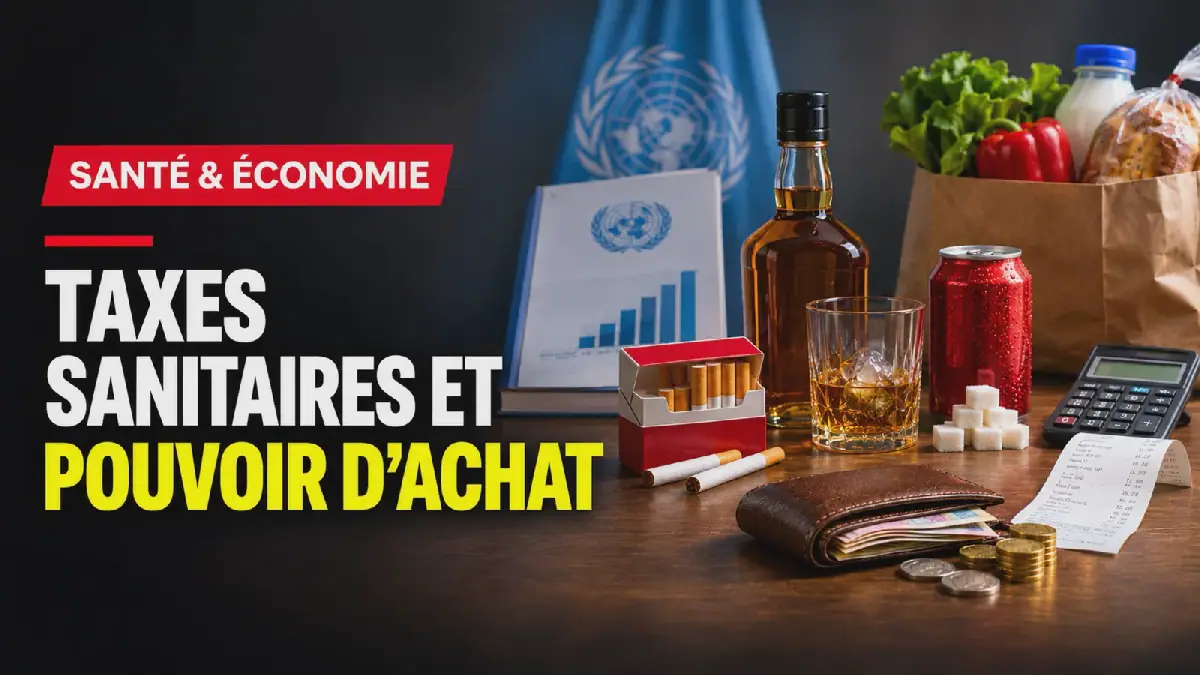
The United Nations has published a manual to guide developing countries in designing taxes on products such as tabac, alcohol, sugary drinks, and certain foods considered detrimental to health. The document, presented by the UN's Financing for Development Office on November 23, provides a framework for public policy but does not introduce new taxes or automatically modify existing levies in Mauritius.
The manual was developed by members of the UN Committee of Experts on International Cooperation in Tax Matters from 2021 to 2025. Its primary goal is to assist countries in creating effective tax policies that can reduce consumption of harmful products and generate revenue for public policies. Health taxes typically aim to make harmful products less affordable and create public revenue.
According to the UN, the effectiveness of health taxes depends on several factors, including the tax rate applied, the tax structure, inflation, and the administration's ability to combat evasion and illicit trade. The manual combines expertise in taxation and public health, covering topics such as excise duty design, administration, potential impacts on employment and farmers, equity issues, and risks of illegal trafficking.
A poorly designed tax can lose its intended effect, the UN warns. A fixed tax that is not regularly revised can be eroded by inflation, while a sudden increase without sufficient control can encourage parallel circuits or shift consumption to other products. The manual recommends examining the taxable base, the level of levy, adjustment frequency, traceability, and administrative means.
For Mauritius, which faces a high burden of non-communicable diseases, a debate on health taxes should consider the impacts on households, price structures, importers, producers, illicit trade, and revenue use. The UN manual does not prescribe a single rate and does not replace a Mauritian impact study, nor does it confirm the introduction of a new tax in the next budget.
Transparency on revenue use will be crucial for the acceptability of any reform. Authorities should clarify whether revenue funds prevention, healthcare, screening, or the general budget. The UN manual is a technical resource, and its application in Mauritius would require a national decision, a legal framework, and consultation with concerned parties.
The UN's proposal aims to support countries in designing effective health taxes, but its implementation in Mauritius depends on various factors, including the country's specific needs and priorities. The manual provides a framework for informed decision-making, emphasizing the importance of careful consideration and consultation.
Key points
- The UN manual provides guidance on designing taxes on harmful products to reduce consumption and generate revenue for public policies.