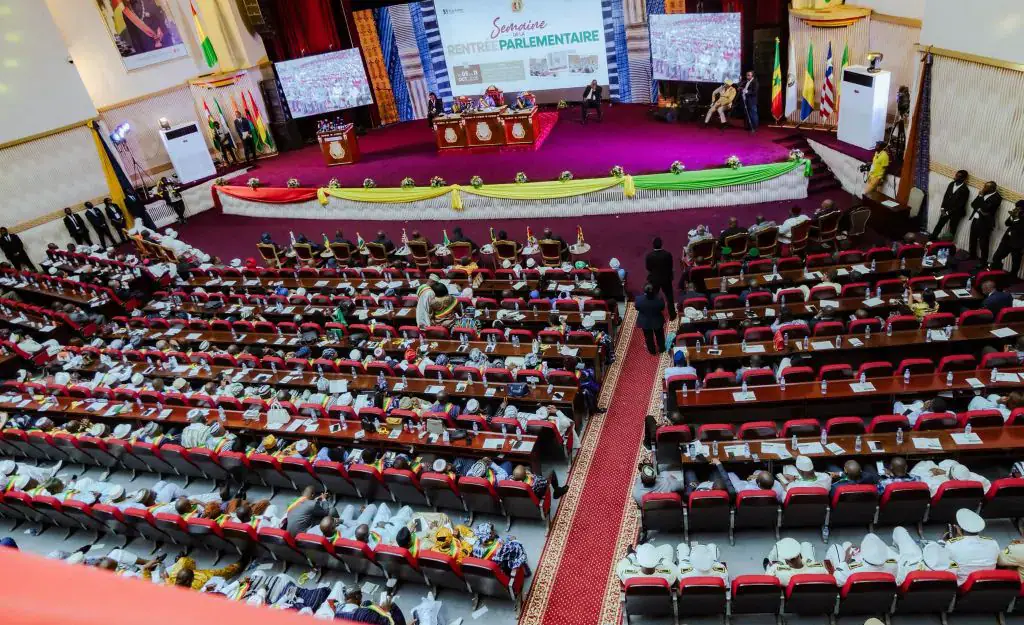
The Guinean parliament has adopted a law creating a sovereign fund to manage revenue from the Simandou region. The fund will be initially capitalized with $1 billion over five years. According to the law, 30% of public revenue from Simandou will be allocated to the fund. This move aims to stabilize the economy during crises and save for future generations.
The sovereign fund will be created for a duration of 99 years, renewable in accordance with OHADA law. It will be financed by 30% of fiscal and non-fiscal revenue from Simandou and 5% of public revenue from extractive projects that commence after the law comes into effect. The Commission des lois proposed maintaining these rates, which were initially suggested by the government.
To accumulate the initial $1 billion, the commission recommends increasing state payments to the fund to $150 million per year for the first two years, then $200 million per year for the next three years. This will cover $900 million, with the remaining $100 million to be paid by the end of the fifth year. The fund will be managed by a nine-member council, with seven independent members.
At least 40% of the fund's resources will be dedicated to development, including financing investments in strategic sectors alongside private investors. A minimum of 20% will be allocated to economic stabilization, while 20% will be reserved for future generations. The council will decide annually on the allocation of remaining resources among these three objectives.
In times of crisis, the state can only withdraw from the stabilization reserve, starting from the fourth year. Any withdrawal will require authorization from a finance law and will be capped at 30% of the reserve's assets per year, for a maximum of two consecutive years. The fund's assets for future generations will be protected from state withdrawals.
The commission recommends that the fund's creation preserves mining revenue for local authorities and priority social spending. It also requests that the budget ministry publishes annual information on amounts due to the fund, amounts allocated, and amounts effectively transferred. The fund will be subject to parliamentary and Court of Accounts oversight, annual external audits, and publication of financial statements.
The public will have access to quarterly updates on investments realized, ongoing investments, and abandoned projects. The fund will be fully owned by the state and managed by a council with nine members, seven of whom will be independent. This setup aims to ensure transparency and accountability in managing the country's natural resources.
Key points
- The fund will be capitalized with $1 billion over five years.
- At least 40% of the fund's resources will be dedicated to development.
- The fund will be managed by a nine-member council with seven independent members.