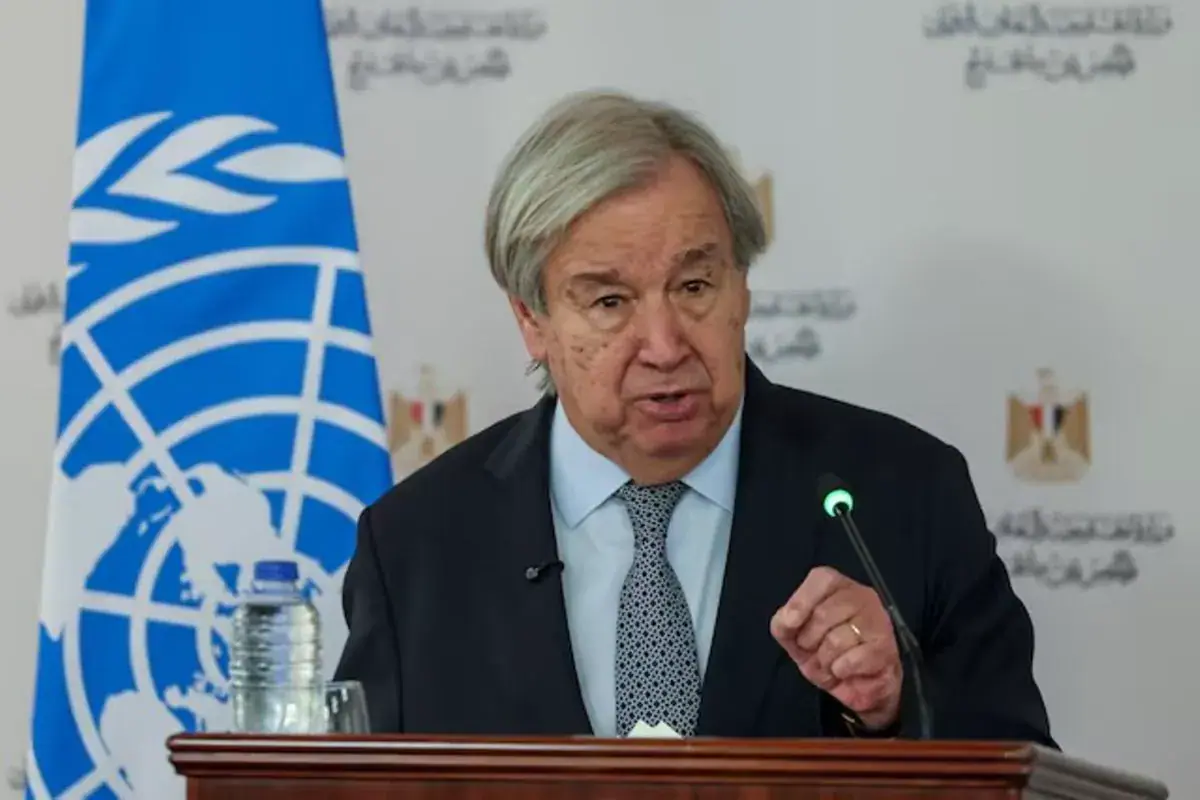
The United Nations peacekeeping mission in Western Sahara, known as MINURSO, will come to an end after 35 years, following the failure of the Security Council to renew its mandate. UN chief Antonio Guterres announced the decision, stating that November 1 would mark the start of the "liquidation phase" of the mission. During this phase, assets will be transported back to troop-contributing countries. The mission has been in place since a UN-brokered ceasefire in 1991.
The Polisario Front, which has been seeking an independent state in Western Sahara since former colonial power Spain left in 1976, expressed concern over the end of the peacekeeping mission. The front is backed by Algeria, which also voiced its regret over the non-renewal of the mission. Algeria's Foreign Ministry blamed the "excessive bias" of the US towards Morocco's position for the decision.
Morocco, which claims Western Sahara as its own, welcomed the decision to end the peacekeeping mission. Morocco's Foreign Minister Nasser Bourita told state media that the mission's reference to a referendum was an "anachronism". Rabat had been informed that Russia was going to block the US-drafted resolution, but saw it as "an opportunity to review certain rules of the game".
The end of the peacekeeping mission comes a year after the UN Security Council adopted a US-drafted resolution that accepted Rabat's plan to give the territory autonomy under Moroccan sovereignty as the "most feasible" solution to the conflict. However, Russia, which abstained in last year's vote, vetoed another US-backed resolution this year that would have cemented the UN's preference for the Moroccan plan while scaling back the peacekeeping force.
The Security Council then defeated a competing Russian resolution, leaving the mission to expire without a new mandate. MINURSO was tasked with monitoring the ceasefire and organizing a referendum that has never taken place due to disagreements over voter eligibility. The mission's mandate was set to expire, and the UN chief stated that its termination would mark a significant change in the region.
Morocco's royal palace had said that the non-renewal of the mission was a "significant development" towards withdrawing the Western Sahara issue from consideration by the Security Council. The Moroccan government has long claimed sovereignty over Western Sahara, while the Polisario Front continues to push for independence.
The liquidation phase of the mission will see assets transported back to troop-contributing countries. The end of the peacekeeping mission marks a new chapter in the region, with Morocco and the Polisario Front set to navigate the future of Western Sahara without the presence of UN peacekeepers.
Key points
- The UN peacekeeping mission in Western Sahara ends after 35 years.
- Morocco welcomes the decision, while the Polisario Front and Algeria express concern.
- The future of Western Sahara remains uncertain, with Morocco claiming sovereignty and the Polisario Front pushing for independence.