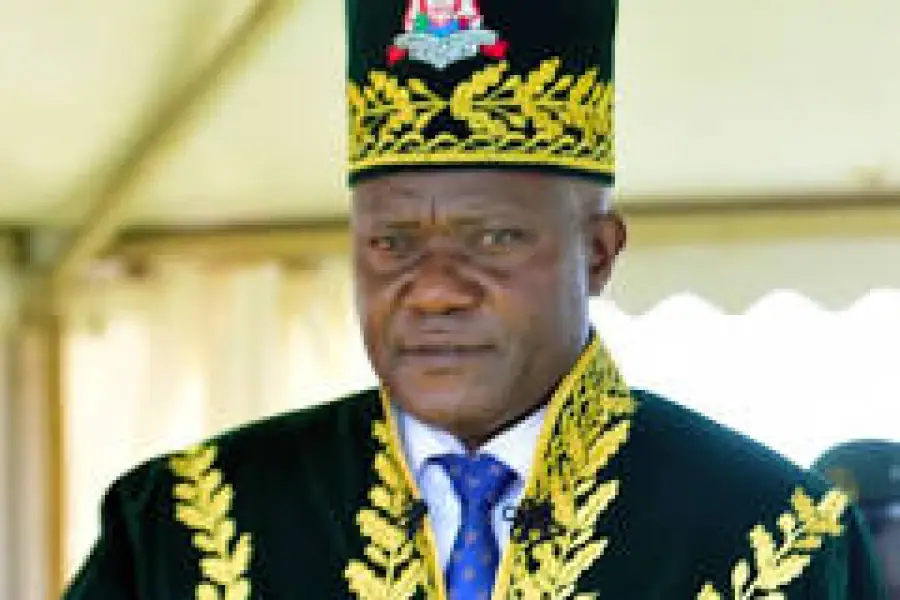
The Umukuuka of Bugisu, HRH Sir Jude Mike Mudoma III, has petitioned President Yoweri Kaguta Museveni to introduce a three-year rehabilitation fund worth Shs9 million per household for families relocated from landslide-prone areas of the Bugisu sub-region. This proposal aims to address the economic, social, and psychological challenges associated with relocating entire families from high-risk areas on the slopes of Mount Elgon. Mudoma's memorandum, dated October 22, 2026, suggests that the government retain the existing Shs18 million one-off relocation package and provide an additional Shs750,000 per household every quarter for three years.
Mudoma acknowledged the government's intervention through the Cabinet and the launch of a Shs62 billion resettlement exercise, describing the Shs18 million package as an important first step towards helping affected households acquire land in safer locations. However, he argued that the one-off payment may not be sufficient to guarantee long-term survival, particularly when families must spend much of the money purchasing land and are left with limited resources to construct homes, establish new sources of income, and meet their basic needs.
The proposed framework for the rehabilitation fund involves every eligible household receiving Shs750,000 quarterly for 36 months, translating into Shs3 million annually and a total of Shs9 million over the three-year period. The additional funding would be structured around three phases intended to help families transition from emergency relocation to economic independence. This includes a post-shock stabilisation phase, livelihood reactivation, and achieving greater self-reliance.
During the first year, the proposed Shs3 million would help households meet food requirements, healthcare expenses, and other immediate needs while adjusting to their new surroundings and preparing land for cultivation. In the second year, the focus would be on livelihood reactivation, supporting small-scale commercial farming, vocational activities, agricultural inputs, livestock acquisition, and working capital for small enterprises.
Mudoma raises concerns over relying exclusively on a one-time cash payment, citing risks such as vulnerable households struggling to allocate the funds effectively, the cost of acquiring land consuming the entire package, and households facing prolonged economic hardship being tempted to sell their newly acquired properties and return to landslide-prone areas. A predictable stream of financial assistance would help reduce these risks by giving families time to establish themselves economically in safer locations.
To promote accountability and ensure that the proposed money serves its intended purpose, Mudoma has recommended a joint monitoring arrangement involving government technical officers and clan leaders. This would verify that beneficiaries have permanently vacated high-risk slopes before quarterly payments are processed and link subsequent payments to evidence of livelihood recovery.
The proposal places particular emphasis on agriculture, reflecting the importance of farming and land-based livelihoods to communities in the Bugisu region. The cultural institution's concern that resettlement should preserve community relationships is also reflected in the proposed involvement of clan leaders in the monitoring process, ensuring transparency, improving beneficiary verification, and helping to ensure that public funds reach the intended households.
Key points
- Mudoma proposes a Shs9 million rehabilitation fund per household for three years to support landslide victims in Bugisu sub-region.
- The fund aims to address economic, social, and psychological challenges associated with relocating families from high-risk areas.
- A joint monitoring system involving government officials and clan leaders is recommended to ensure accountability and effective use of funds.