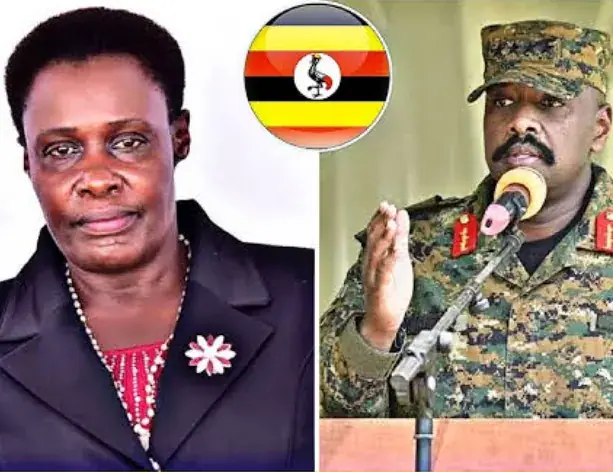
Uganda's political landscape has been thrown into turmoil following a series of explosive social media posts by Chief of Defence Forces (CDF) Gen. Muhoozi Kainerugaba. On November 9, 2026, Muhoozi took to X and called on Vice President Jessica Alupo to leave office, questioning her loyalty. He revived controversial claims linking her to retired Gen. Peter Elwelu and former Prime Minister Amama Mbabazi. The posts have raised questions about the relationship between two senior figures in President Yoweri Museveni's government.
The timing and nature of Muhoozi's remarks attracted significant attention, particularly because they targeted a sitting Vice President. However, the controversy took another unexpected turn on November 10, when Muhoozi's X account became unavailable. No official explanation was provided for the disappearance, leaving unanswered questions about whether the account had been deactivated, suspended or affected by another development. Alupo has not publicly responded to the remarks, adding another dimension to the unfolding political drama.
The constitutional implications of Muhoozi's actions have also been questioned. According to Article 108 of Uganda's Constitution, the Vice President is appointed by the President, subject to parliamentary approval. The constitutional framework does not give the CDF authority to appoint or dismiss the Vice President. This means that, regardless of the political pressure or public statements circulating on social media, Alupo remains legally Uganda's Vice President unless the constitutional procedures for leaving office are followed.
Alupo is an experienced politician and military officer. Born on May 23, 1974, in Katakwi District, she graduated from Makerere University in 1997 before joining the Uganda People's Defence Forces in 1999. During her military career, she worked in training and military intelligence before retiring at the rank of Major. She subsequently entered elective politics, becoming Katakwi District Woman MP in 2001.
Alupo has held several prominent positions in government. Between 2011 and 2016, she served as Minister of Education and Sports, a period associated with the introduction of Uganda's university students' loan scheme. President Museveni appointed her Vice President in June 2021, and Parliament approved her reappointment in May 2026. Her experience and credentials have made her a significant figure in Ugandan politics.
The controversy has sparked concerns about the growing influence of social media in Uganda's politics and security affairs. Muhoozi's use of social media to publicly criticize a senior government official has raised questions about the role of social media in political discourse. The incident has also highlighted the potential for social media to be used as a tool for political pressure and influence.
The confrontation between Muhoozi and Alupo has left many questions unanswered. Why did Muhoozi publicly demand Alupo's departure? What prompted the references to Elwelu and Mbabazi? And does the episode expose tensions within Uganda's political establishment? Until the individuals involved or the government provide clear explanations, the controversy remains a political storm with more questions than answers.
Key points
- The constitutional framework does not give the CDF authority to appoint or dismiss the Vice President.
- Alupo remains legally Uganda's Vice President unless the constitutional procedures for leaving office are followed.
- The controversy has sparked concerns about the growing influence of social media in Uganda's politics and security affairs.