The Uganda National Liberation Front (UNLF) was formed in 1979 after the ousting of Idi Amin, with the Moshi Conference bringing together over two dozen groups to forge a common civilian front. The conference, held from March 24-26, 1979, was attended by various factions, including armed outfits like Kikosi Maalum, FRONASA, and the Save Uganda Movement, as well as traditional parties like the UPC and DP. Professor Yusuf Lule was chosen as the compromise leader, with no guerrilla army or partisan baggage, and was seen as a neutral figure.
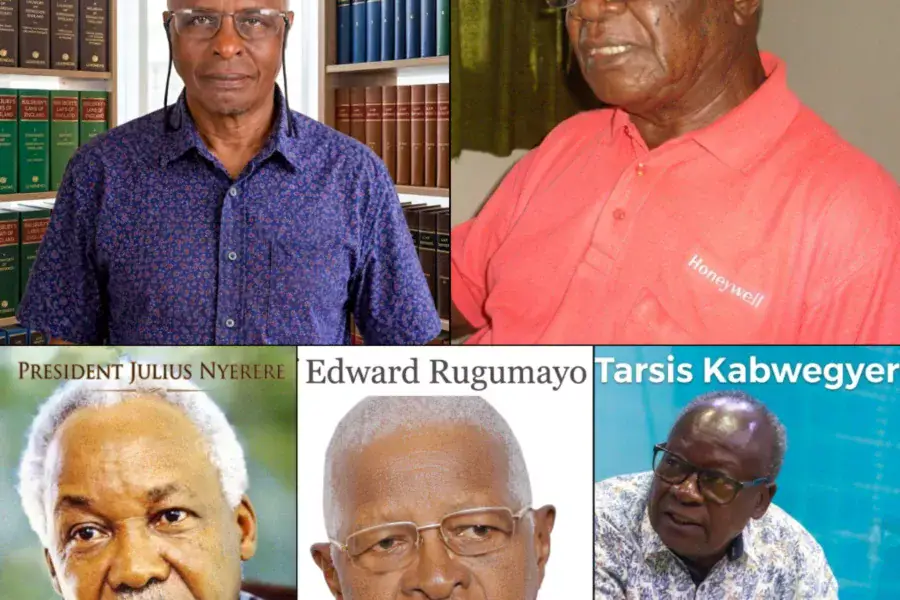
The selection of Lule as the leader of the UNLF was a result of a deadlock among the delegates, with various contenders being rejected due to their affiliations or lack of cross-factional support. Paulo Muwanga, carrying the UPC banner, was rejected by Buganda and anti-Obote delegates, while Andrew Adimola lacked the necessary support. Sharp left-wing ideologues like Professor Dan Wadada Nabudere and Edward Rugumayo avoided contesting the presidency, knowing they could not command broad consensus. Lule's appointment was seen as a compromise, with Muwanga handed the chairmanship of the Military Commission and Yoweri Museveni as his deputy.
The UNLF government, led by Lule, survived for just 68 days, from April 13 to June 20, 1979, before collapsing due to an irreconcilable legal clash between two competing sources of constitutional authority. On one hand stood the 1967 Republican Constitution, formally restored through Legal Notice No. 1 of 1979 as the supreme law of the land. However, this constitution was contested, having been drafted by Dr. Apollo Milton Obote's government. On the other hand stood the UNLF Constitution, which subordinated the Executive Council to the interim legislature, the National Consultative Council (NCC).
The conflict between the two constitutions led to Lule's downfall, as he governed as an executive president under the 1967 text, bypassing the NCC and expanding his cabinet without parliamentary vetting. This move was seen as a unilateral hijacking of a collective victory by the liberation fighters and left-wing intellectuals. The NCC, which had the power to ratify cabinet and military appointments, felt threatened by Lule's actions.
The role of the civilian intellectual wing, later dubbed the "Gang of Four," was significant during this period. Comprising Professor Dan Wadada Nabudere, Prof. Edward Rugumayo, Prof. Yash Tandon, and Prof. Omwony Ojwok, this bloc commanded the institutional machinery of the UNLF. Professor Dan Wadada Nabudere, as Chairman of the Political and Diplomatic Commission, was the primary architect of the Front's ideology.
The collapse of the UNLF government led to Lule's ousting in a bloodless vote of no confidence on June 20, 1979. The NCC, backed by Tanzanian President Julius Nyerere, affirmed that the Moshi Agreement was supreme, and Lule's legal defense evaporated. This event marked a significant turning point in Uganda's history, highlighting the challenges of building a stable government in the aftermath of a brutal regime.
The legacy of the UNLF and the Moshi Conference continues to be felt in Uganda, with some elements of the UNLF Constitution being adopted in the 1995 constitution. The experience serves as a reminder of the importance of constitutional clarity and the need for inclusive and representative government. The story of the UNLF's collapse serves as a cautionary tale for leaders and politicians, highlighting the dangers of compromise without clear constitutional frameworks.
Key points
- The UNLF government collapsed due to a constitutional clash between the 1967 Republican Constitution and the UNLF Constitution.
- The civilian intellectual wing, known as the "Gang of Four," played a significant role in shaping the UNLF's ideology and institutional machinery.
- The experience of the UNLF serves as a reminder of the importance of constitutional clarity and inclusive government.
Reporting sources
- Uganda’s UNLF Ghosts of Moshi 1979:... · nilechronicles.com