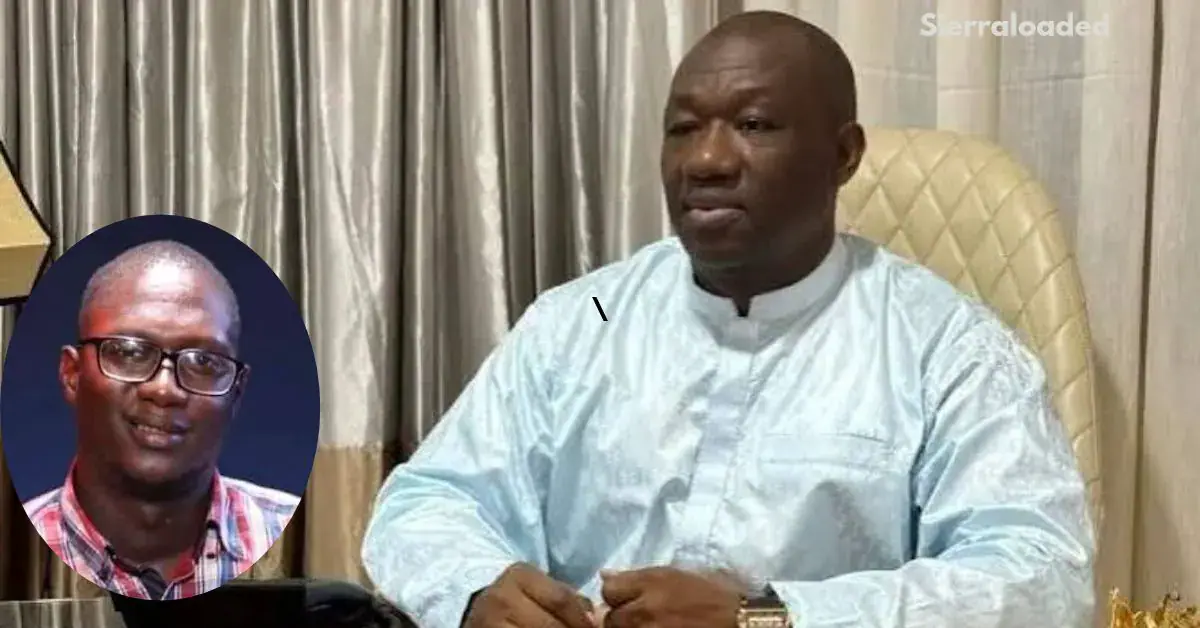
Journalist and social commentator Thomas Dixon has warned the ruling Sierra Leone People's Party (SLPP) against underestimating the political influence of Musa Tarawally. Tarawally's recent statements have sparked a public dispute with the SLPP leadership, which has challenged his membership status. Dixon argues that the party's senior leadership should have addressed the issue internally before allowing it to escalate into a public confrontation.
Tarawally has stated that he may leave the SLPP or form another political party if the dispute is not resolved. He has also called for dialogue with the party's leadership. Dixon emphasizes that the possibility of Tarawally forming or joining another party should not be taken lightly, given Sierra Leone's constitutional right to associate with and participate in political organizations.
The dispute has moved beyond a personal disagreement, with the SLPP challenging Tarawally's membership status and Tarawally insisting he remains a legitimate member. The Political Parties Regulation Commission (PPRC) is examining the controversy. Dixon describes Tarawally as representative of a wider grassroots political constituency, warning that established parties can underestimate the influence of individual figures who do not control major party structures.
Dixon notes that electoral politics can be decided by relatively small shifts in voter support, making it risky for parties to underestimate emerging movements or dissatisfied supporters. The commentator also questions the broader implications of the dispute for the SLPP as it prepares for the 2028 general elections. Tarawally's comments followed a public disagreement with the SLPP leadership over an alleged approach to extend President Julius Maada Bio's tenure to 2030.
The SLPP has not publicly confirmed that President Bio authorized such an approach. Dixon urges political leaders to consider examples of rivals maintaining relationships across party lines, citing Ghana's President John Dramani Mahama and former President Nana Akufo-Addo. He argues that political competition does not have to produce permanent hostility between leaders or their supporters.
For Dixon, the Tarawally controversy represents more than an individual party-membership dispute. He advises the SLPP leadership to address internal grievances carefully to prevent them from developing into wider political challenges ahead of 2028. The SLPP has maintained its position on Tarawally's membership, while the dispute remains unresolved. The PPRC has not yet issued a final determination on his status.
The outcome of the dispute may have significant implications for Sierra Leone's political landscape. As the SLPP prepares for the 2028 general elections, the party's handling of the Tarawally controversy may influence voter perceptions and the party's overall performance. The situation remains a closely watched development in Sierra Leonean politics.
Key points
- Thomas Dixon warns SLPP against underestimating Musa Tarawally's influence.
- Tarawally's dispute with SLPP may have implications for 2028 general elections.
- Dixon cites examples of maintaining relationships across party lines.