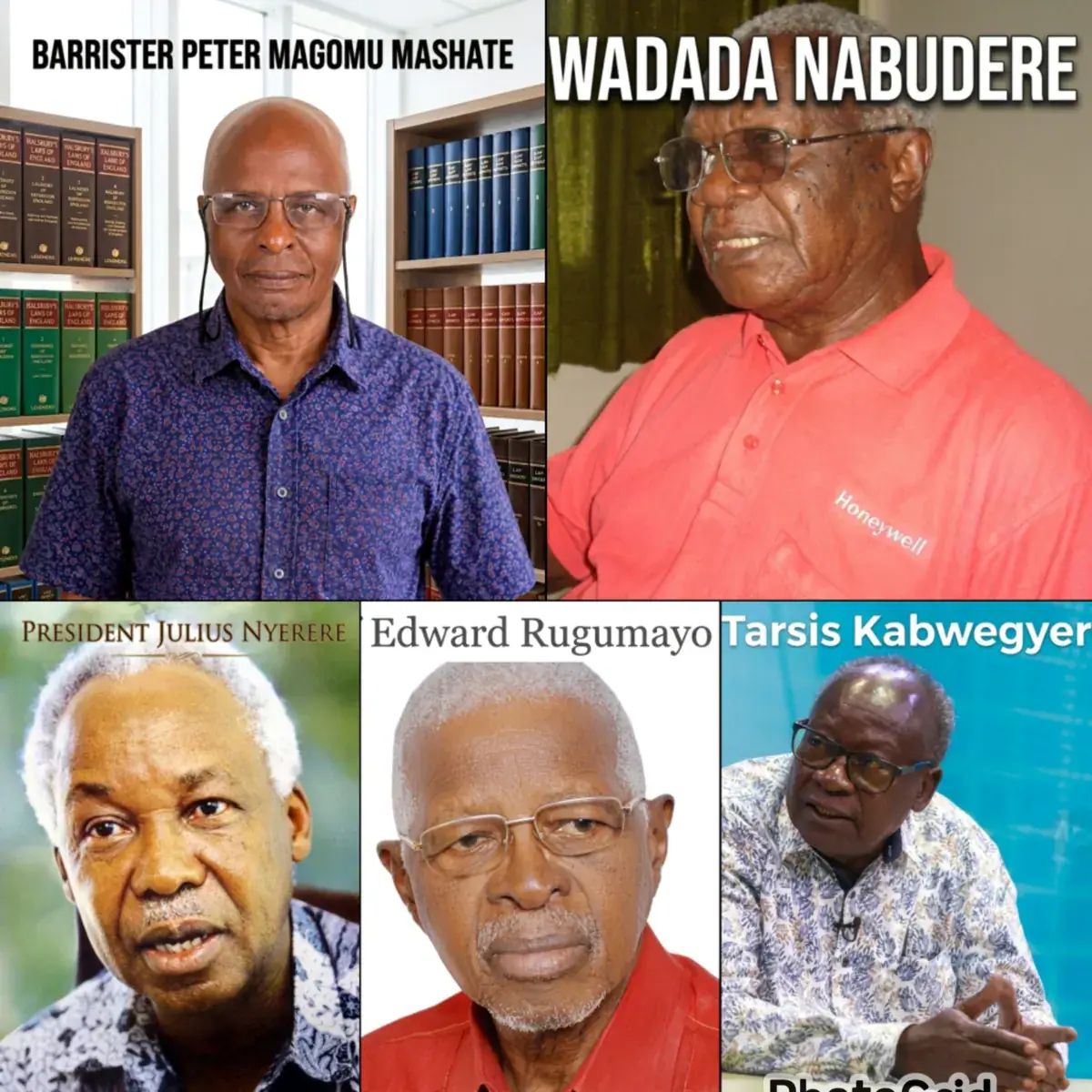
The Uganda National Liberation Front (UNLF) was formed in 1979 after the fall of Idi Amin's regime. The Moshi Conference, held from March 24-26, 1979, brought together over two dozen groups to form a common civilian front. The conference was attended by various factions, including armed groups like Kikosi Maalum and FRONASA, as well as traditional parties like the UPC and DP. Tanzanian President Julius Nyerere and figures like Professor Tarsis Kabwegyere and Professor Dan Wadada Nabudere played a key role in organizing the conference.
The UNLF faced an immediate legitimacy crisis when selecting a leader acceptable to both armed liberation factions and the southern electorate. Dr. Apollo Milton Obote was advised by Nyerere to stay away from the conference to avoid derailing the talks. Several candidates, including Paulo Muwanga and Andrew Adimola, were rejected due to their perceived ties to Obote or lack of cross-factional support. Ultimately, Professor Yusuf Lule, a former Makerere University Vice-Chancellor, was chosen as the compromise candidate due to his perceived neutrality.
Lule's government was formed with Muwanga as the chairman of the Military Commission and Yoweri Museveni as his deputy. However, this compromise proved to be unstable, as Lule's presidency was based on the 1967 Republican Constitution, while the UNLF had its own constitution. The 1967 constitution gave Lule executive authority, but the UNLF constitution subordinated the Executive Council to the National Consultative Council (NCC). This contradiction would eventually lead to Lule's downfall.
Lule governed as an executive president under the 1967 constitution, bypassing the NCC and expanding his cabinet without parliamentary vetting. This move was seen as a unilateral hijacking of power by the liberation fighters and left-wing intellectuals. When Nyerere summoned both sides to Mwanza and affirmed that Tanzania recognized the Moshi Agreement as supreme, Lule's legal defense evaporated.
On June 20, 1979, the NCC ousted Lule in a bloodless vote of no confidence. The civilian intellectual wing, known as the "Gang of Four," played a significant role in the UNLF's ideology and organizational structure. This group, comprising Professor Dan Wadada Nabudere, Prof. Edward Rugumayo, Prof. Yash Tandon, and Prof. Omwony Ojwok, commanded the institutional machinery of the UNLF.
Professor Dan Wadada Nabudere was the primary architect of the Front's ideology and organizational structure. He introduced the "Mayumba Kumi" administrative model, which was copied from Tanzania's Chama Cha Mapinduzi (CCM) "Tawi/branches" model. Nabudere effectively acted as the de facto Prime Minister and Foreign Minister of Uganda under the UNLF pact.
The collapse of the UNLF government serves as a lesson in the importance of constitutional clarity. The compromise between different factions and the lack of a clear constitutional framework ultimately led to the government's downfall. The experience would later influence the creation of the 1995 constitution, which incorporated some of the elements of the UNLF pact.
Key points
- The UNLF government collapsed due to a constitutional crisis stemming from the contradiction between the 1967 Republican Constitution and the UNLF constitution.