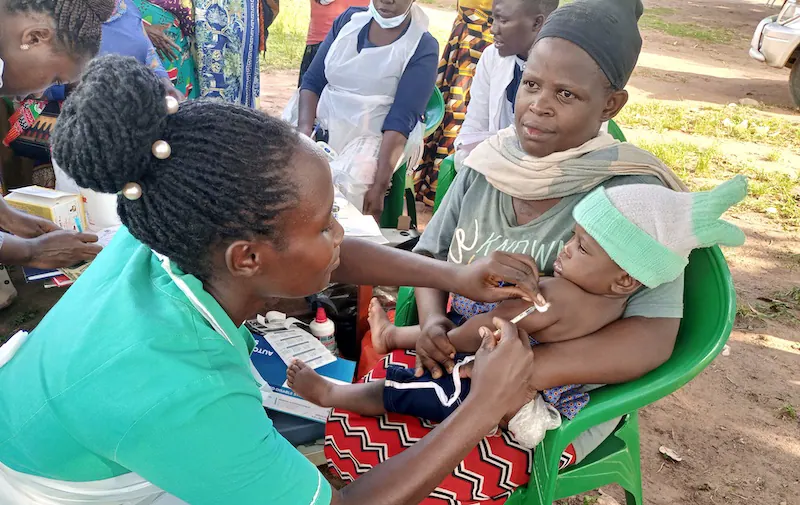
The Ugandan government has initiated a five-day measles-rubella vaccination campaign, aiming to immunize 7.47 million children aged nine to 59 months. The campaign, which started on October 1, seeks to address the resurgence of measles outbreaks recorded in 66 districts in 2025 and an additional 18 districts this year. This effort is crucial in preventing the spread of the disease and protecting vulnerable children.
The vaccination campaign is a response to the weakened immunity of children due to COVID-19 disruptions, refugee inflows, and declining donor support. As a result, Uganda is racing to rebuild immunity lost when children missed routine vaccination. A mass campaign can close an immediate gap, but it cannot substitute for a dependable health system. The government hopes to reach all eligible children, emphasizing that even those previously immunized should receive the vaccine.
According to Dr. Michael Baganizi of the Uganda National Expanded Programme on Immunization, the campaign complements the routine immunization schedule administered at nine and 18 months. The distinction between emergency drives and routine services is crucial, as the latter depends on reliable vaccine supplies, functioning cold chains, trained health workers, accurate records, and sustained community engagement. When these foundations weaken, children disappear from the system until an outbreak makes them visible again.
Measles is a highly contagious disease that can have severe complications, including pneumonia, persistent diarrhea, blindness, and neurological impairment. Rubella, another disease targeted by the campaign, carries the risk of miscarriage or lifelong disabilities in unborn children if infection occurs during early pregnancy. The World Health Organization advises caregivers to remain at vaccination sites for 30 minutes and seek medical attention if fever persists beyond three days.
Vaccine confidence is critical, and officials must address parents' concerns honestly, monitor adverse reactions, and confront misinformation with evidence. Dr. Annet Kisakye of the World Health Organization emphasizes the importance of practical guidance for caregivers, including warnings against applying ice to injection sites. Every vaccination team should communicate such guidance clearly to ensure a smooth and safe vaccination process.
The campaign's cost, Shs 21.8 billion, is being shared by the government and international partners, including Gavi. While donor support is essential, Uganda's children remain vulnerable to decisions made in distant capitals due to donor dependence. To address this, parliament and the executive must progressively establish protected domestic financing for immunization and publish district-level coverage and expenditure data.
Ultimately, Uganda must make vaccination a permanent national obligation, not a recurring rescue mission. The government must strengthen follow-up for missed children and make routine vaccination accessible in underserved communities. By doing so, Uganda can ensure that its children receive the protection they need, and the country can credibly claim to value its future.
Key points
- The Ugandan government has launched a mass vaccination campaign targeting 7.47 million children aged nine to 59 months to address the resurgence of measles outbreaks.
- The campaign's success depends on addressing the weakened immunity of children due to COVID-19 disruptions, refugee inflows, and declining donor support.
- Uganda must establish protected domestic financing for immunization and make routine vaccination accessible in underserved communities to ensure long-term protection for its children.