The University of Cape Town (UCT) is spearheading a four-year, pan-African research programme worth approximately R95m to combat deadly infectious diseases. The openScopes Advancing Infectious Disease Discovery Research in Africa programme (AIDDiA) will provide African scientists with advanced imaging technology to study diseases such as tuberculosis (TB), malaria, and Buruli ulcer. Funded by the Wellcome Trust, the programme aims to strengthen infectious disease research on the continent.
TB will be one of the programme's first major tests, given South Africa's high burden of the disease. According to TB HIV Care, the country records an estimated 249,000 new TB cases and 54,000 deaths annually. In the Western Cape, over 17,100 people started TB treatment within seven days of diagnosis between April and August this year. The provincial health department reported that more than 205,600 TB tests were conducted during the first five months of the 2026/27 financial year.
Under the new programme, researchers in countries including South Africa and Kenya will use imaging technology to study drug-resistant TB directly in patient samples. By examining mycobacteria at the single-cell level and within host tissues, scientists hope to gain a better understanding of how the pathogen responds to treatment and immune pressures. This knowledge could help improve approaches to combating the disease.
The infectious diseases targeted by the programme account for over 292-million cases and 1.7-million deaths globally, with more than 90% of cases occurring in Africa. However, scientists working on these diseases often have limited access to advanced imaging equipment and the expertise required to use it. Commercial microscopy systems can be costly and difficult to maintain, limiting local scientific capacity.
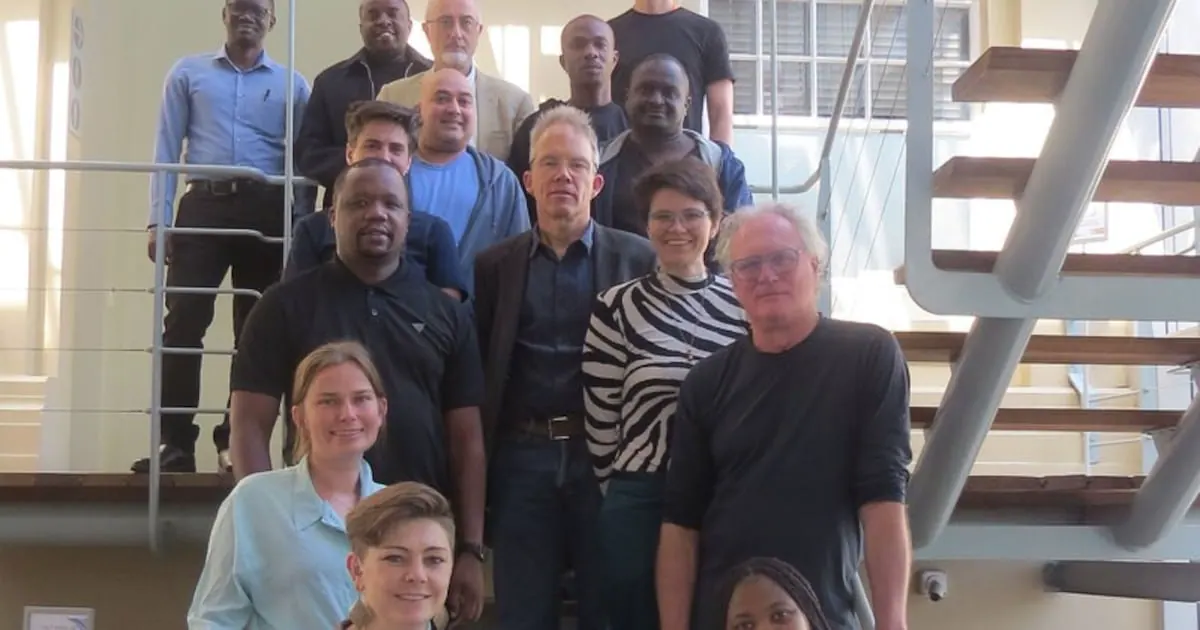
The openScopes AIDDiA programme aims to address this by establishing a network of microscopes that can be built, maintained, and repaired locally. This will allow African researchers to examine pathogens in greater detail without relying on laboratories outside the continent. The five-country consortium brings together UCT, the Kenya Medical Research Institute (KEMRI), Mbarara University of Science and Technology in Uganda, the Centre Suisse de Recherches Scientifiques en Côte d'Ivoire, and Imperial College London.
Dr. Caron Jacobs, co-leader of the consortium, stated that the project is designed around diseases that disproportionately affect communities where sophisticated research tools are often least accessible. The programme will develop and deploy two open-source microscopy platforms, including mobile "travellerScopes" that will move between research sites, extending access to advanced imaging beyond major national research centres.
The programme's innovative approach and international team have earned it recognition in a highly competitive funding round. Viv Goossens, research manager for Discovery Research at Wellcome, noted that openScopes AIDDiA stands out for its multi-pronged approach and the strength of its international team, which will address challenges faced by researchers across Africa.
Key points
- The programme aims to strengthen infectious disease research on the continent by providing access to advanced imaging technology.
- The programme targets diseases that disproportionately affect communities with limited access to sophisticated research tools.
- The open-source microscopy platforms developed through the programme can be built, maintained, and repaired locally, promoting sustainability and local scientific capacity.