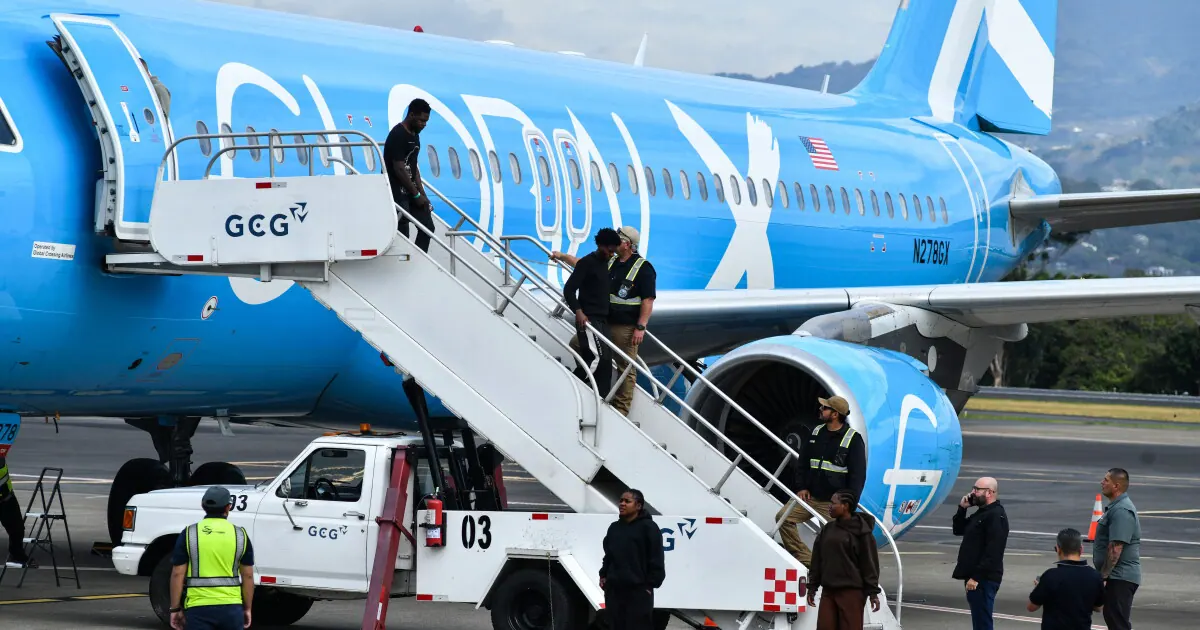
The U.S. Supreme Court has allowed the Trump administration to resume deportations of migrants to countries not identified in their removal orders. This decision is a victory for President Trump in his aggressive immigration agenda. The court's brief order did not provide a reason for staying a lower-court order that had blocked these deportations. The case will be argued in full in December.
The Supreme Court's decision was not unanimous, with three liberal justices objecting to staying the order. The court's conservative supermajority has recognized the president's substantial authority over the border. This decision marks the third time the justices have rejected efforts by U.S. District Judge Brian Murphy in Boston to pause the deportations.
The Trump administration has used the third-country deportation policy to deport tens of thousands of noncitizens to countries in Africa and Latin America. The administration argues that this policy is an essential tool to remove certain aliens, including those convicted of serious crimes. Solicitor General John Sauer stated that the policy is necessary to remove aliens who pose a threat to the nation.
The National Immigration Litigation Alliance, representing migrants facing deportation, argued that their clients face significant harms. These harms include prolonged detention, beatings, and sexual assault in countries where they could be sent. The alliance stated that the record shows that class members removed without meaningful notice or an opportunity to present protection claims have faced severe consequences.
U.S. District Judge Brian Murphy had ruled that the deportations violate due process rights and fail to give detainees meaningful notice. The judge's rulings had created a logistical nightmare for the Department of Homeland Security, including canceled flights and potential diplomatic clashes. The administration argued that if a country has assured Secretary of State Marco Rubio that it will not engage in persecution or torture, that should be enough to deport a noncitizen.
The Supreme Court's decision is a significant development in the ongoing debate over immigration policy. The court's conservative supermajority has recognized the president's substantial authority over the border. Last summer, the court ruled that President Trump has sweeping power to end the temporary protected status program for people who can't return to their home countries due to wars and natural disasters.
The case will be argued in full in December, with the court set to consider whether lower courts had the jurisdiction to rule on the issue and order nationwide relief. The court will also consider whether the Trump policy is legal or whether it violated the due process clause or conventions against torture. The administration's policy has been met with significant opposition from immigrant rights groups and some lawmakers.
Key points
- The U.S. Supreme Court has allowed the Trump administration to resume deportations of migrants to countries not identified in their removal orders.
- The court's decision marks the third time the justices have rejected efforts by U.S. District Judge Brian Murphy in Boston to pause the deportations.
- The case will be argued in full in December, with the court set to consider the legality of the Trump policy and the jurisdiction of lower courts.