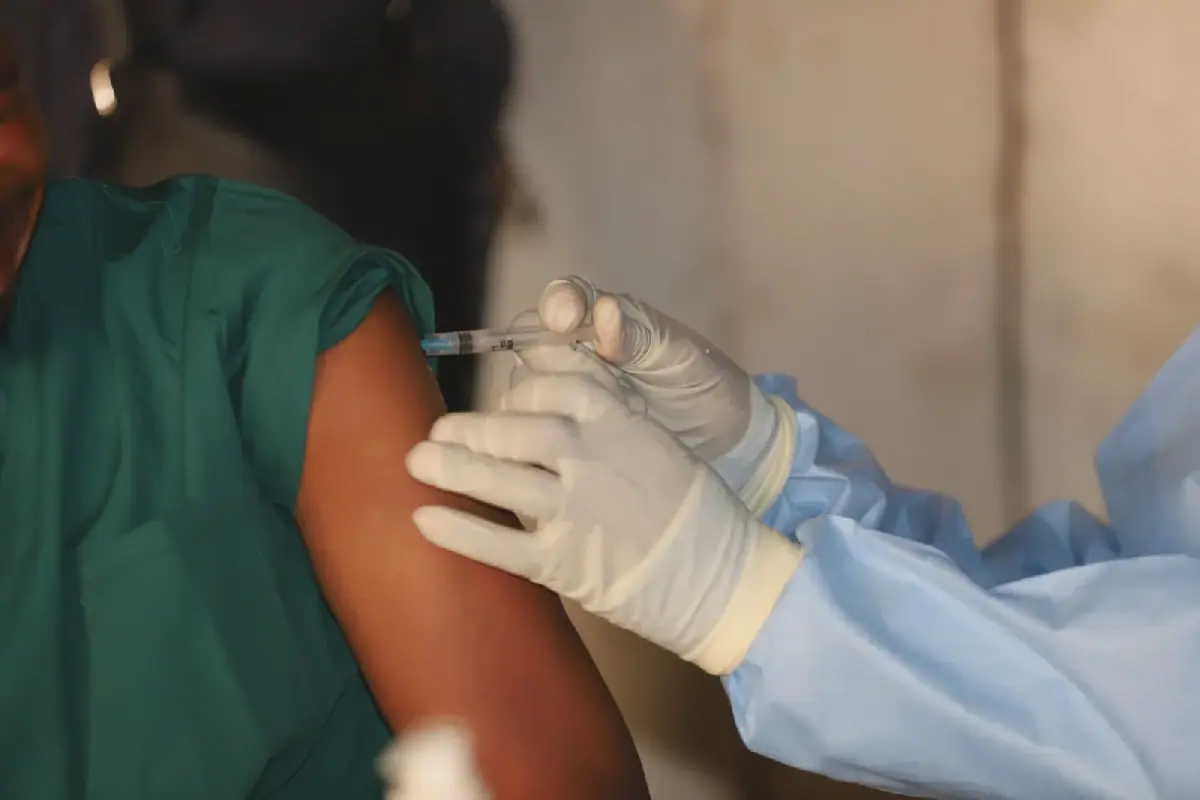
The World Health Organization (WHO) has announced that two new vaccines, ChAdOx1 and mRNA-1469, will soon be integrated into a clinical trial in the Democratic Republic of Congo to combat the ongoing Ebola outbreak. The outbreak, which has been ongoing for nearly six months, has resulted in over 5,000 deaths and 10,532 confirmed cases, primarily in the eastern part of the country. The WHO's decision to add these vaccines to the trial comes as the situation continues to deteriorate, with eight provinces affected and the Ituri province being the hardest hit.
The two vaccines, specifically designed to combat the Bundibugyo strain of the Ebola virus, were chosen after a review of initial scientific data by a group of independent experts convened by the WHO. The ChAdOx1 vaccine was developed by the University of Oxford in collaboration with the Serum Institute of India, while the mRNA-1469 vaccine was developed by the American laboratory Moderna. The inclusion of these vaccines in the trial is subject to approval by Congolese health authorities. WHO Director-General Tedros Adhanom Ghebreyesus said that while vaccines are crucial, they will not be enough to end the epidemic on their own.
The clinical trial, dubbed "Tumaini," or "hope" in Swahili, began on October 23 in Bunia, the capital of the Ituri province, which has recorded over 7,400 cases and nearly 3,500 deaths. The trial uses a "ring vaccination" strategy, targeting individuals who have come into contact with confirmed patients. This approach has been successful in previous Ebola outbreaks, including a trial in Guinea that demonstrated the effectiveness of the Ervebo vaccine against the Zaire strain of the virus. However, the effectiveness of Ervebo against the Bundibugyo strain remains uncertain.
The urgency of the situation cannot be overstated, with the conflict-ridden eastern DRC, access difficulties, and mistrust of health authorities complicating the response efforts. The outbreak has also spread to other African countries, including Kenya and Nigeria. In addition to the Tumaini trial, the WHO is supporting another clinical trial, PARTNERS, which aims to evaluate several experimental treatments, including the antiviral remdesivir and monoclonal antibodies.
According to the WHO, nearly one in two patients has died from the disease, highlighting the need for effective treatments. The inclusion of the ChAdOx1 and mRNA-1469 vaccines in the trial offers hope that the spread of the disease can be contained. The WHO's efforts to combat the outbreak are being supported by various partners, including the Congolese government and international health organizations.
The DRC's Ebola outbreak has become the largest and most complex in the country's history, with widespread transmission and a high case fatality rate. The WHO has declared the outbreak a public health emergency of international concern, highlighting the need for a coordinated global response. The organization's efforts to develop and test new treatments, including vaccines, are critical to controlling the outbreak and preventing further spread.
As the situation continues to evolve, the WHO and its partners are working tirelessly to respond to the outbreak. The addition of the ChAdOx1 and mRNA-1469 vaccines to the clinical trial is a significant step forward in the fight against Ebola. With the support of the Congolese government and international partners, the WHO remains committed to controlling the outbreak and saving lives.
Key points
- Two new vaccines, ChAdOx1 and mRNA-1469, will be tested in a clinical trial in the DRC to combat the Ebola outbreak.