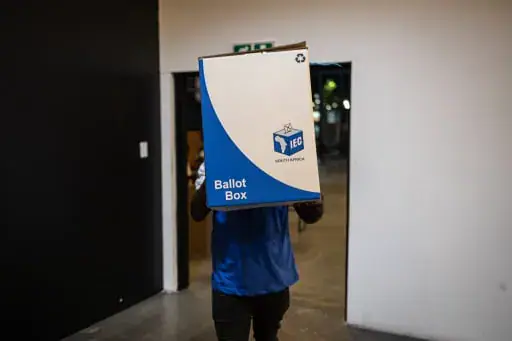
The African National Congress (ANC) has suffered its worst-ever municipal election result, securing 30.76 percent of votes in the recent municipal elections. This dramatic reversal for the party of late liberation icon Nelson Mandela marks a significant decline in support. The ANC has dominated South African politics since the end of apartheid but has struggled with declining support amid high unemployment, crime, and corruption scandals.
The liberal Democratic Alliance (DA) emerged as the ANC's closest challenger, securing around a quarter of the vote. With no party winning outright in many municipalities, complex coalition negotiations are set to govern several major cities. Voter turnout reached 52 percent, up six percentage points from the Covid-affected 2021 municipal elections. Electoral Commission of South Africa Chairperson Mosotho Moepya noted that one municipality will rerun its vote after party supporters stormed a polling station and destroyed ballot papers.
The ANC's decline in support can be attributed to various factors, including unemployment levels exceeding 34 percent, persistent crime, and corruption scandals. Water shortages, electricity outages, and poor service delivery were among the key issues dominating the ballot. Voters assessed the performance of parties governing their towns and cities, leading to a significant shift in support. The ANC won nearly two-thirds of the vote in South Africa's first democratic elections in 1994 but has seen steady decline in support since.
ANC Secretary-General Fikile Mbalula described the results as "catastrophic," acknowledging that the party had fallen short in delivering services to communities. He emphasized that the party would not dispute the results and would work to address the concerns of voters. President Cyril Ramaphosa urged political parties to prioritize communities during coalition negotiations, warning that critical services must not be held hostage to political disagreements.
The results have set the stage for potentially difficult coalition negotiations, with more than half of South Africa's 213 councils failing to produce outright majorities. Previous coalition governments have often been plagued by infighting and shifting alliances, leaving local administrations paralyzed and essential services neglected. The parties now face a tight timetable, with newly elected councils required to hold their first meetings within 14 days of the formal declaration of results.
All but one of South Africa's eight major cities face coalition negotiations, with the DA securing the only outright majority in Cape Town. The DA was also leading in Johannesburg, the country's economic hub, where it fielded 75-year-old veteran politician Helen Zille. Centre-right party ActionSA, founded by former Johannesburg mayor Herman Mashaba, finished fifth nationally but could hold the balance of power in several major metropolitan areas.
The ANC's poor performance has significant implications for the country's governance and service delivery. As the country's largest party, the ANC must work with other parties to form governing coalitions and deliver essential services to communities. The results mark a significant shift in the country's politics, with the ANC's dominance being challenged by other parties.
Key points
- ANC secures 30.76% of votes, its worst electoral performance on record
- Coalition negotiations to govern several major cities
- Voter turnout reaches 52%, up six percentage points from 2021 municipal elections
Reporting sources
- ANC Suffers Worst-Ever Mu... · ModernGhana