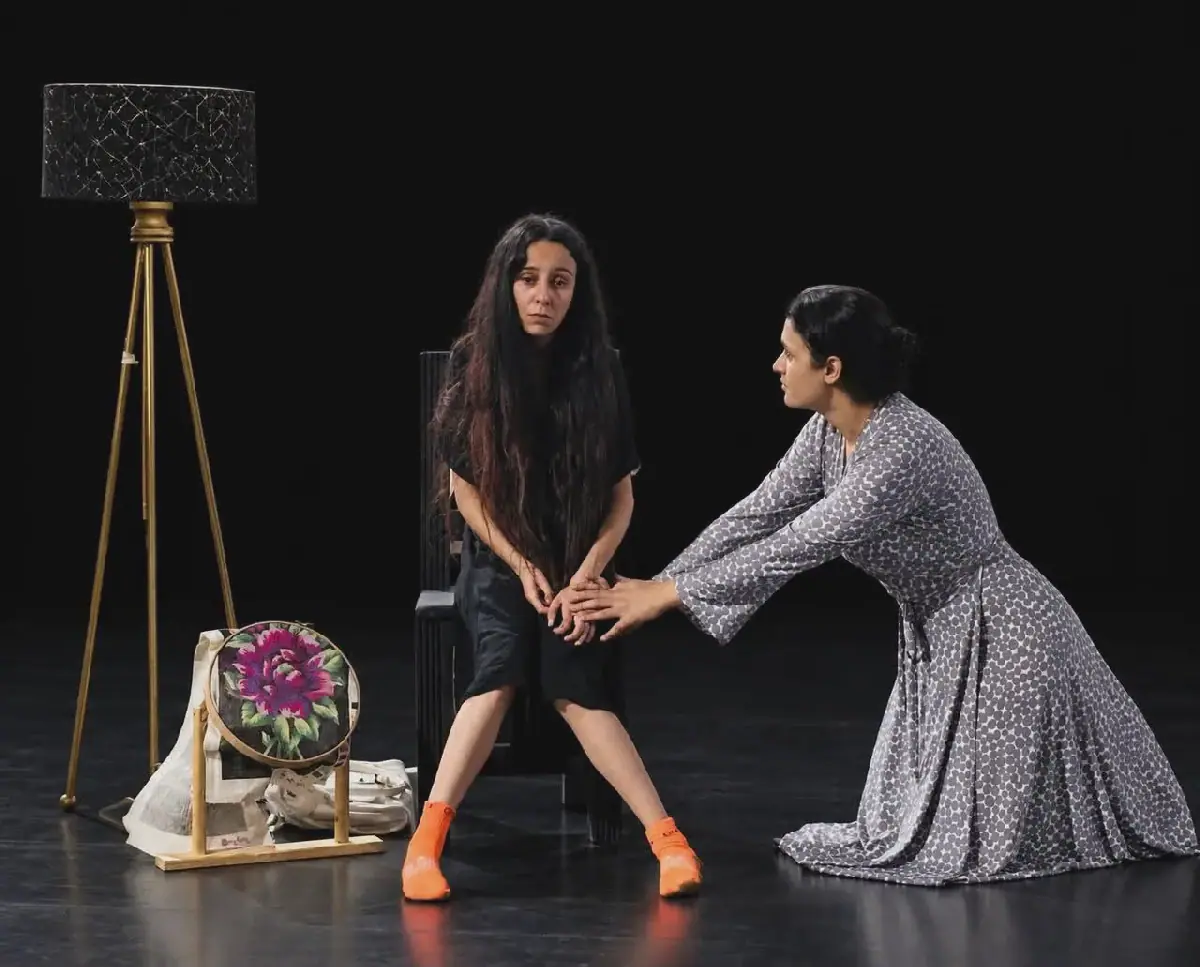
The Tunisian National Theater Festival, "Moasam Al-Ibdaa," recently featured a play titled "Al-Sabat" by director Munir Al-Arqi. The play explores the complexities of the mother-daughter relationship and the differences in perspectives and experiences between two generations. The story revolves around the lives of a mother, "Mabrouka," and her daughter, "Aml," as they navigate their relationships and confront their past.
The play, which was performed at the Festival's fourth edition, is an adaptation of the American playwright Marsha Norman's "Goodnight, Mother." The Tunisian production, written by Safia Al-Trabelsi, incorporates local elements and examines the impact of upbringing and social environment on individual personalities and choices. The play's title, "Al-Sabat," which translates to "shoe" in English, holds symbolic significance, representing the father's authority and its effects on family dynamics.
The play's narrative spans several decades, from the 1990s to the present day, allowing the audience to witness the transformations in Tunisian society and their impact on individuals and families. The story centers around Aml, a young woman who challenges her upbringing and seeks to express her own convictions, while her mother, Mabrouka, represents a generation that has learned to adapt to life's difficulties. The play highlights the psychological and intellectual distance between the two characters, as well as their shared need for communication and understanding.
The performances by Safia Al-Trabelsi as Mabrouka and Amal Al-Bajawi as Aml were well-received, bringing depth and nuance to their respective characters. The play's use of minimalist stage design, lighting, and music added to the overall atmosphere, allowing the audience to focus on the characters' emotional journeys. The production team, including set designer Sabri Atrous, lighting designer Youssef Bouajjaja, and costume designer Jamila Al-Madani, worked together to create a cohesive and impactful visual experience.
The play's exploration of family dynamics, personal identity, and the impact of past experiences on present relationships resonated with the audience. The use of video and choreography added an extra layer of depth to the performance, highlighting the complexities of human emotions and relationships. The play's themes of freedom, autonomy, and the struggle to overcome past traumas are particularly relevant in the Tunisian context, where social and cultural changes have had a significant impact on family structures and individual lives.
The production of "Al-Sabat" is a collaboration between Feniq Taher and Nabil production company, and it has been well-received by audiences and critics alike. The play's success is a testament to the vibrant and dynamic state of Tunisian theater, which continues to explore new themes and push boundaries. The festival, "Moasam Al-Ibdaa," provides a platform for Tunisian and international artists to showcase their work and engage with new ideas and perspectives.
The play's exploration of universal themes and its use of local elements have made it a standout production in the Tunisian theater scene. As the country continues to navigate its complex social and cultural landscape, productions like "Al-Sabat" offer a powerful reflection on the human experience and the importance of communication, empathy, and understanding. The play's impact will likely be felt long after the curtain falls, as audiences continue to grapple with its thought-provoking themes and messages.
Key points
- The play "Al-Sabat" explores the complexities of the mother-daughter relationship and the impact of past experiences on present relationships.