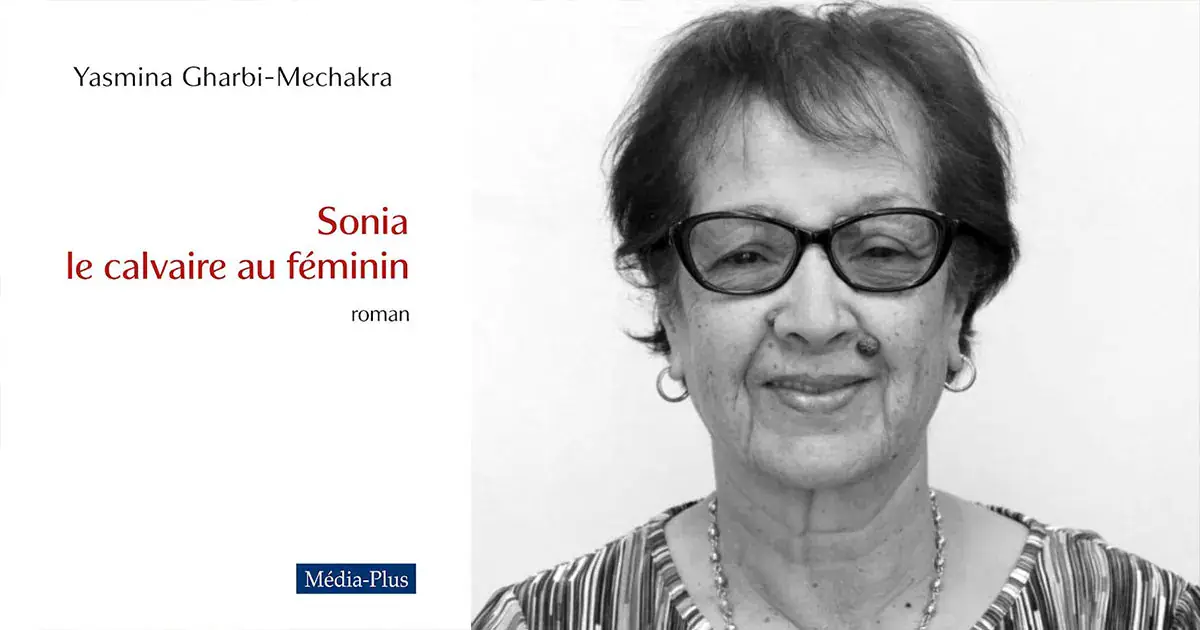
The book 'Sonia, le calvaire au féminin' by Yasmina Gharbi-Mechakra has been rediscovered by Tunisian readers after the author's passing on November 27, 2020. Written in 2017, the novel tells the story of Sonia, a teenager whose life is changed forever by an arranged marriage. The book sheds light on the mechanisms of domination that deny young girls the right to choose their own path in life. Gharbi-Mechakra's work is a powerful portrayal of the struggles women face in the face of domestic violence.
The story follows Sonia's journey as she navigates a life she did not choose. At 16, her future is decided by her family, with the justification that she is "apte au mariage, rien que de très normal et de très coutumier!" This phrase highlights the violence of a conception that sees young girls as people whose destiny can be decided without their consent. Sonia's experience is marked by physical violence, including a brutal scene where her husband's hand "s'aplatit sur mon visage et le sang gicla de mon nez… un coup de pied dans les côtes qui me plia en deux."
Despite being portrayed as a victim, Sonia is not reduced to her status. Throughout the story, she seeks ways to regain control of her life, a will that is constantly thwarted by family and social obstacles. The issue of bodily autonomy and maternity is also explored, as Sonia faces difficulties when trying to take control of her intimate life. The use of contraception becomes a matter of freedom, but one that is contested in her relationship.
The author does not shy away from exploring the complexities of women's lives in Tunisia. Gharbi-Mechakra's experience as a teacher and her work with women who have faced domestic and family violence inform her writing. Her engagement with organizations such as Rachda and the Nedjma listening center in Constantine gave her insight into the struggles women face.
Born in Meskiana, eastern Algeria, Gharbi-Mechakra grew up in a modest family and taught French for 34 years. Her commitment to women's rights is evident in her writing, which gives voice to the stories of women who have been silenced. 'Sonia, le calvaire au féminin' is a testament to her dedication to shedding light on the often-private struggles of women.
The book's narrative allows readers to engage with situations that go beyond Sonia's individual story. Gharbi-Mechakra's writing is nourished by the testimonies of women who have shared their experiences with her. By giving a narrative form to these realities, the author honors the women who have suffered in silence.
As readers rediscover 'Sonia, le calvaire au féminin', they are reminded of the importance of giving voice to women's stories. The book serves as a powerful reminder of the struggles women face in Tunisia and the need for continued support and advocacy. Gharbi-Mechakra's legacy lives on through her writing, which continues to inspire and educate readers.
Key points
- The book sheds light on domestic violence against women in Tunisia
- The author, Yasmina Gharbi-Mechakra, drew on her experience as a teacher and her work with women who have faced violence
- The story follows Sonia's journey as she navigates a life she did not choose and seeks to regain control of her life.