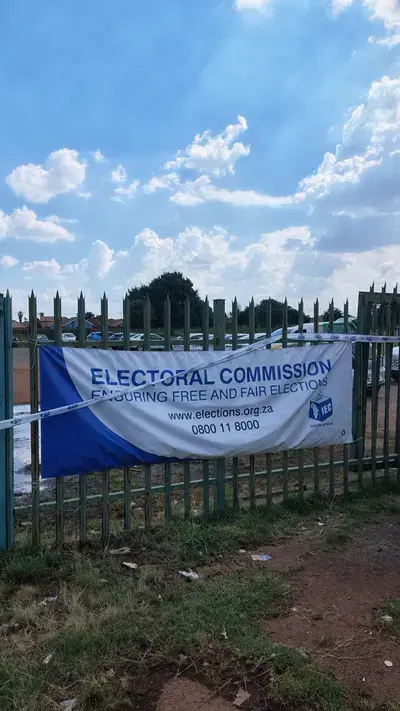
A recent survey by the Human Sciences Research Council (HSRC) has found that South African voters are overwhelmingly satisfied with the conduct of the 2026 local government elections. The survey, which sampled 13,198 people who voted on November 4, revealed that 81% of respondents trusted or strongly trusted the Electoral Commission of South Africa (IEC). However, this represents a decline from previous elections, with trust levels dropping from 85% in the 2024 national and provincial elections, 89% in the 2021 local government elections, and 91% in 2016.
The HSRC noted that trust in the IEC has gradually declined since 2016, in a general context of declining institutional trust in the country. Despite this, voters expressed confidence in the IEC's professionalism and competence in managing elections, as well as the fairness, impartiality, and independence of its operations. The survey also found that positive experiences of previous elections and the IEC's established track record contributed to voters' trust. Additionally, voters appreciated the helpfulness, courtesy, and professionalism of electoral officials.
The survey revealed that 90% of voters considered the election procedures free and 91% considered them fair. Furthermore, 95% of respondents were satisfied that their votes had remained secret, while 83% were completely or very confident that their votes would be counted accurately. The HSRC sampled 300 voting stations across the country and interviewed voters at, and in the vicinity of, the stations. The 13,198 completed interviews represented 88% of the target of 15,000.
The most positive assessments concerned the practical experience of voting. Almost all respondents (96%) said voting procedures were easy to understand, while 94% were satisfied with the ballot papers and 96% with the service provided by IEC officials. Voting was also generally convenient, with 90% of respondents saying it took them about half an hour or less to reach their voting station. This represents an improvement over earlier major elections, especially the 2009 local government elections.
Queue times improved markedly compared with the 2024 elections. More than three-quarters of voters (78%) said they waited no longer than 15 minutes to vote, compared with 60% in 2024. However, the survey found a weaker assessment of officials' impartiality than of their helpfulness. Although 79% said officials were helpful to a great extent, 65% said they were impartial to that extent. Seven percent of respondents said officials were not impartial.
The survey also found that perceptions of political tolerance during election campaigns remained positive. About 86% of voters considered political parties and candidates either very tolerant (63%) or somewhat tolerant (23%), up from 81% in 2011. However, information gaps remained, with 13% of voters saying they had too little information about the procedures and a further 13% saying they had far too little. Eastern Cape voters were most likely to report insufficient information.
The HSRC stressed that confidence in the administration of elections remained resilient, even as trust in the commission had declined over successive elections. The survey found that 96% of those interviewed said they were likely to vote in future elections. However, the HSRC cautioned that this reflected the intentions of people who had voted and could not be taken as representative of the wider adult population, including those who did not participate.
Key points
- Trust in South Africa's Electoral Commission has declined since 2016.
- Voter satisfaction with the 2026 local government elections remains high.
- Perceptions of political tolerance during election campaigns remain positive.
Reporting sources
- Shorter queues, high satisfaction — but voter trust in IEC slips · Mail & Guardian