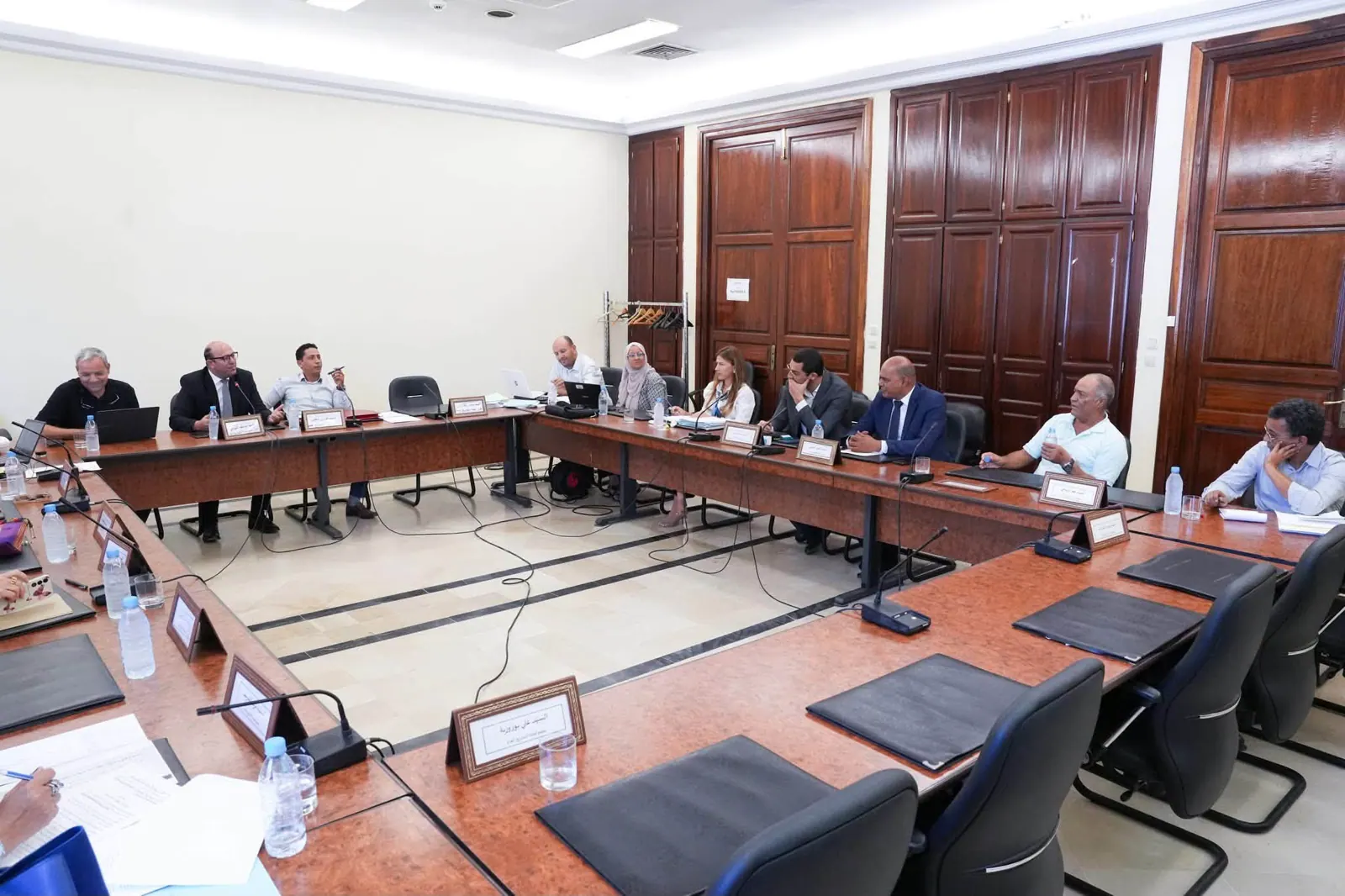
Tunisia's Legislative Committee in the House of Representatives held a session on Monday to review a proposed basic law regulating the profession of tax consultants. The session was attended by committee head Fawzi Deccas, his deputy Youssef Al-Tomi, and several committee members and non-members. According to a statement from the House of Representatives, the committee reviewed and voted on articles 22 to 44 of the proposed law.
The reviewed articles relate to conditions and procedures for practicing as a tax consultant, including registration on the table of the Order of Tax Consultants, whether as a trainee, member, or in the form of a professional company of tax consultants. Some articles also addressed the rights and duties of tax consultants. The committee's discussions included proposals to delete or re-order certain articles, based on the outcomes of a parliamentary academic day and a series of hearings organized for stakeholders.
The committee's work included in-depth discussions among representatives on the drafting of several articles, both in terms of form and content. These discussions reflect the complexities and nuances of regulating the tax consulting profession in Tunisia. The committee aims to finalize the law, which is expected to provide a clear framework for tax consultants operating in the country.
The proposed law is a significant step towards organizing the tax consulting profession in Tunisia. By establishing clear guidelines and regulations, the law aims to enhance the professionalism and accountability of tax consultants. This, in turn, is expected to improve the overall tax compliance and revenue collection in the country.
The committee will continue its work on Tuesday to review the remaining articles of the proposed law. The review process involves careful consideration of various aspects of the law, including its potential impact on the profession and the broader economy. Stakeholders, including tax consultants and business leaders, are closely following the developments.
The regulation of the tax consulting profession is a key aspect of Tunisia's efforts to improve its business environment and enhance tax compliance. The proposed law is part of a broader set of reforms aimed at promoting transparency and accountability in the country's tax system. Once enacted, the law is expected to have a positive impact on the country's economy.
The Legislative Committee's review of the proposed law on tax consultants is ongoing, with a focus on ensuring that the law is comprehensive and effective. The committee's work is crucial in shaping the future of the tax consulting profession in Tunisia. The law, once finalized, will provide a clear framework for tax consultants and contribute to the country's economic development.
Key points
- The Tunisian legislative committee is reviewing a proposed law to regulate the profession of tax consultants.
- The law aims to establish clear guidelines and regulations for tax consultants operating in Tunisia.
- The committee's work is expected to finalize the law, enhancing professionalism and accountability in the tax consulting sector.