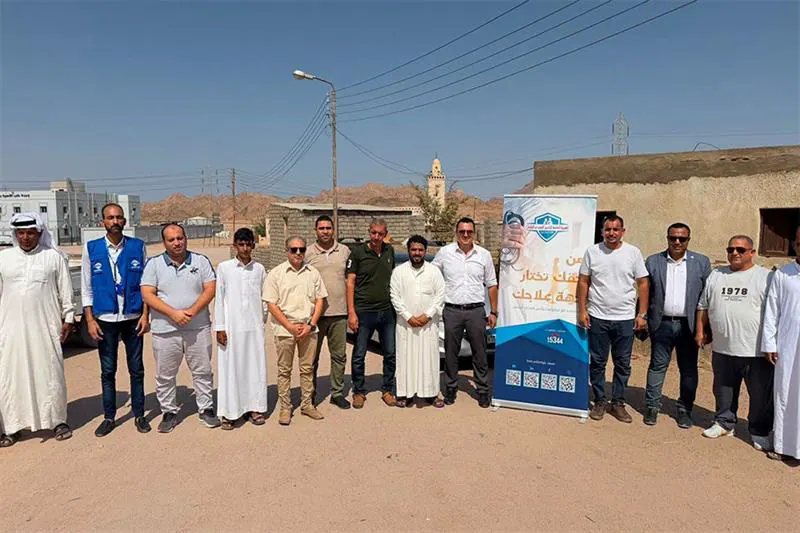
The Universal Health Insurance Authority (UHIA) announced that around 167,000 citizens in South Sinai benefited from the Universal Health Insurance System (UHIS) in the first half of 2026. This represents 92.4 percent of the governorate’s population. The coverage increase reflects continued efforts to expand healthcare and insurance services across South Sinai’s cities, valleys, and remote communities.
The range of medical services available through contracted private providers expanded significantly, to around 12,300 service categories from approximately 2,500. This represents an increase of 386 percent, according to the authority. The expansion aims to improve access to healthcare while maintaining financial protection for vulnerable groups.
The UHIA’s South Sinai branch issued around 5,200 medical approvals between January and June. These approvals covered treatment both inside and outside the governorate. Specialized services included corneal transplants, bone marrow transplants, organ transplants, and cochlear implants. Beneficiaries also received various procedures, including orthopaedic, ophthalmology, urological, and cardiac surgical procedures.
The insurance authority operated 22 service outlets across South Sinai’s cities, recording around 64,000 beneficiary visits during the six months. Tarek Ezzeddin, director-general of the UHIA’s South Sinai branch, emphasized the importance of cooperation among the system’s different bodies and partner organizations in bringing services closer to citizens.
The branch’s revenue grew by more than 153 percent compared with the first half of 2025. This growth was driven by increased citizen registration and updates to beneficiary records. Some insurance services were also made available through government technology centres, allowing residents to complete procedures closer to home and reducing travel and waiting times.
The UHIA’s South Sinai branch conducted 260 outreach visits to healthcare providers during the first half of the year. It also carried out around 40 regulatory field visits to assess provider performance and service quality. These efforts aim to strengthen private-sector participation and ensure high-quality services.
Egypt’s UHIS, established under Law No. 2 of 2018, aims to provide comprehensive healthcare coverage through a phased rollout nationwide. The system separates responsibility for financing, service provision, and accreditation among three authorities, with the state covering contributions for citizens unable to pay. Key points include:
Key points
- The UHIS covers 92.4% of South Sinai residents in the first half of 2026.
- The system provides comprehensive healthcare coverage through a phased rollout nationwide.
- The state covers contributions for citizens unable to pay.