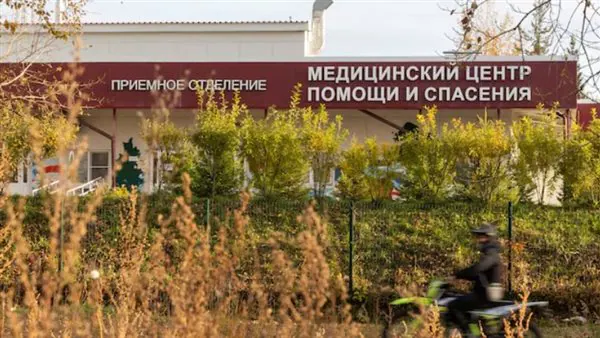
The World Health Organization (WHO) and the United States have called on Russia to provide additional information regarding the death of a researcher at a plague research institute in Irkutsk, Siberia. The 28-year-old researcher, Darya Shibelova, died on Friday at a hospital in the nearby city of Shelekhov. According to reports, Shibelova may have contracted pneumonic plague after an accident in the laboratory involving a broken test tube.
The US has formally requested information from the Russian government, with US Secretary of State Marco Rubio urging Moscow to share more details with the international community. Rubio stated that the US encourages Russia to be transparent and exchange more information with the world to ensure a proper and suitable response to the situation. Meanwhile, US President Donald Trump has announced plans to hold a phone call with Russian President Vladimir Putin to discuss the developments.
The Russian authorities have confirmed that Shibelova's cause of death has not been definitively determined and have denied reports of a document circulating online that mentions special measures to combat the plague. The Russian consumer protection agency, Rospotrebnadzor, stated that no pathogenic agents have been detected among those who came into contact with Shibelova, and the medical monitoring period for those who were in contact with her has been completed.
WHO Director-General Tedros Adhanom Ghebreyesus has stated that the organization has received information from Russian authorities indicating that no cases of plague have been reported recently in Irkutsk. However, Ghebreyesus emphasized that the WHO has requested additional information to clarify the cause of Shibelova's acute pneumonia and the measures taken to address the situation. He stressed the importance of timely, complete, and transparent information sharing in accordance with international health regulations.
The incident has raised concerns about the potential risks to public health, with China and Mongolia closely monitoring the situation. According to reports, around 200 people who came into contact with Shibelova have been placed under quarantine or monitoring. The Russian authorities have launched an investigation into the incident and have implemented preventive measures.
Pneumonic plague is a severe form of the disease that can be transmitted through the respiratory system and can lead to serious complications and lung failure if not treated promptly. The WHO has emphasized that the situation is being closely monitored, and a thorough assessment of the potential risks to public health is being conducted.
The Kremlin has not publicly commented on the incident, but the Russian authorities have assured that they are taking the situation seriously and are working to determine the cause of Shibelova's death. The incident has highlighted the importance of transparency and cooperation in responding to potential public health threats.
Key points
- The US and WHO have requested information from Russia on the death of a researcher at a plague research institute in Siberia.
- The Russian authorities have confirmed that the cause of death has not been definitively determined and have denied reports of special measures to combat the plague.
- The incident has raised concerns about potential risks to public health, with China and Mongolia closely monitoring the situation.