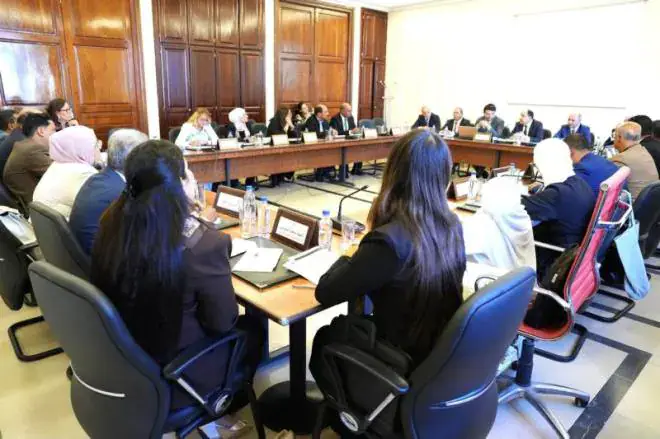
The committees on legislation and internal affairs of the Assembly of People's Representatives and the National Council of Regions and Districts held a joint session on November 3, 2026, to discuss the 2027 justice budget. The meeting included representatives from the Ministry of Justice, who presented an overview of the ministry's tasks, strategic directions, and judicial activity indicators. They also outlined the allocated credits for 2027 and ongoing and planned infrastructure and digital transformation projects.
The 2027 justice budget is estimated at 1.61% of the state's total public expenditures, representing an 8.43% increase compared to 2026. The budget is divided into three programs: Justice (42.12%), Prisons and Reform (50.97%), and Leadership and Support (6.92%). The budget allocation by expense type includes approximately 78.98% for rental expenses and around 120.4 million dinars for operating expenses.
The investment allocation has seen a significant increase, rising from around 90 million dinars in 2026 to 329 million dinars in 2027. This funding is primarily directed towards covering annual expenses for equipment and ongoing and new projects. The Ministry of Justice representatives reviewed completed projects from 2021 to 2026 and discussed ongoing or planned projects in the judicial and prison systems across the country.
Key projects for 2027 include digital transformation initiatives, such as digitizing judicial procedures and archives, and establishing integrated information systems. New court buildings are planned, including a Court of Cassation with an estimated cost of 250 million dinars and an initial court in Tunis for approximately 300 million dinars. Other projects involve developing an online judicial guidance system and enhancing the citizenship information system.
The Ministry of Justice is working on various projects to improve access to judicial services, including developing a civil affairs system and creating a portal for ministry services. A new information system for penal matters aims to digitize procedures, process files, and track decisions online. These initiatives are part of broader efforts to reform and develop the judicial system.
During the discussion, lawmakers focused on the current state of the judicial system, its ability to meet citizen expectations, and issues related to human resources, infrastructure, and digitization. They emphasized the need to improve working conditions in courts, upgrade infrastructure, and enhance archive security. Some deputies called for addressing shortages in certain courts, particularly regarding appointments.
The committees' discussions highlighted the importance of supporting the state's efforts to implement alternative penalties and stressed the need for closer collaboration between the legislative and executive branches, particularly in preparing or revising legal texts. The Ministry of Justice representatives acknowledged that judicial reform requires significant financial resources and major legislative changes.
Key points
- The 2027 justice budget has increased by 8.43% compared to 2026, focusing on infrastructure and digital transformation.
- New court buildings and digital projects are planned to improve access to judicial services.
- Lawmakers emphasized the need to address judicial system challenges, including human resources and infrastructure shortages.