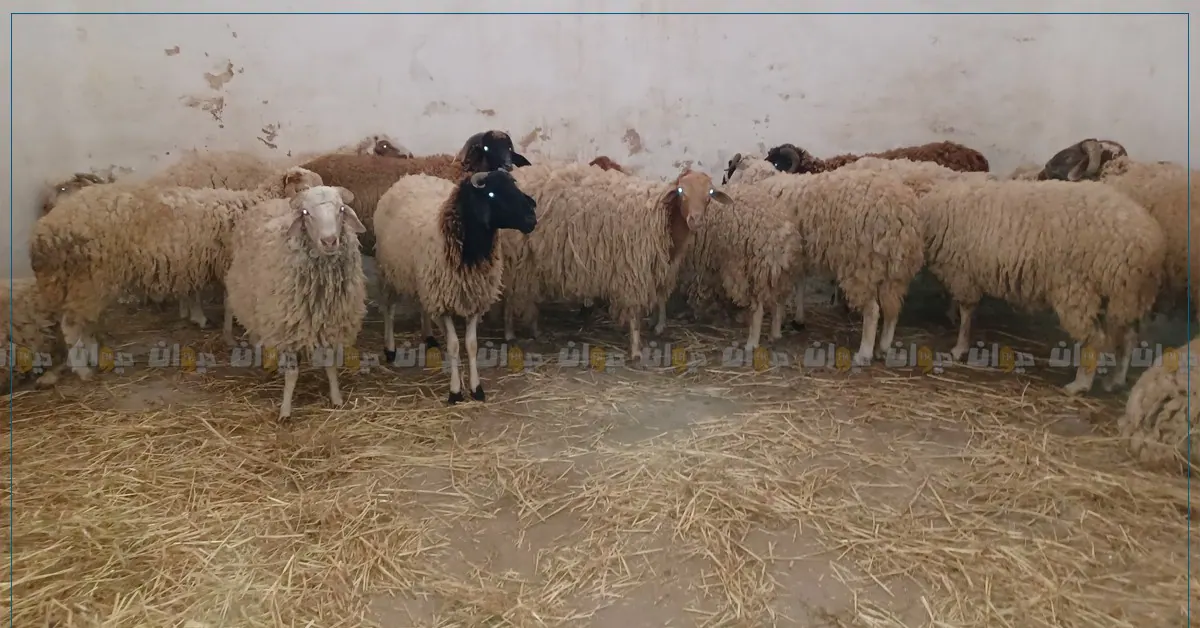
The livestock sector in the delegation of Nadhour, Zaghouan governorate, is experiencing a decline due to a shortage of animal feed and insufficient quotas allocated to farmers. Several livestock farmers told Diwan FM that the allocated feed quantities are insufficient to cover their herd's needs. They also pointed out that the high cost of livestock farming has led some farmers to sell their herds and gradually abandon the activity.
Mohamed Bouassabia, head of the local Union of Agriculture and Maritime Fishing in Nadhour, stated that the decline in livestock farming has led to a reduction in the number of females, which are essential for renewing the herd. He warned of the repercussions of this situation on meat production. Bouassabia emphasized that small farmers are the most affected, especially given the difficulty in obtaining loans and accumulating debts.
Bouassabia called for the provision of female livestock, a review of the feed system, and the introduction of financial facilities to help farmers maintain their herds and continue their activities. He also urged the activation of the National Feed Office's role and the extension of its services to Nadhour, stressing that farmers in the region have not felt the office's presence despite their need for feed at suitable quantities and prices.
The shortage of animal feed has significantly impacted livestock farmers in Zaghouan, who are struggling to maintain their herds. The situation is particularly challenging for small farmers, who are finding it difficult to cope with the high costs of livestock farming. The decline in livestock farming in the region is likely to have far-reaching consequences for the local economy and food production.
According to Bouassabia, small farmers are struggling to access loans and are accumulating debts, making it increasingly difficult for them to continue their activities. He emphasized the need for financial support and facilities to help farmers overcome these challenges. The situation requires urgent attention from the authorities to prevent further decline in the livestock sector.
The Zaghouan governorate is known for its agricultural production, and the decline of the livestock sector is likely to have significant impacts on the local economy. The authorities are urged to take measures to support livestock farmers and address the feed shortage. This includes providing financial facilities, reviewing the feed system, and activating the role of the National Feed Office.
The issue of feed shortage and its impact on livestock farming in Zaghouan highlights the need for sustainable solutions to support the agricultural sector in Tunisia. The government and relevant authorities must work together to address the challenges facing livestock farmers and ensure the long-term viability of the sector.
Key points
- The livestock sector in Zaghouan is facing a decline due to a shortage of animal feed and insufficient quotas allocated to farmers.
- Small farmers are the most affected by the shortage of animal feed and the high cost of livestock farming.
- The authorities are urged to take measures to support livestock farmers, including providing financial facilities and reviewing the feed system.