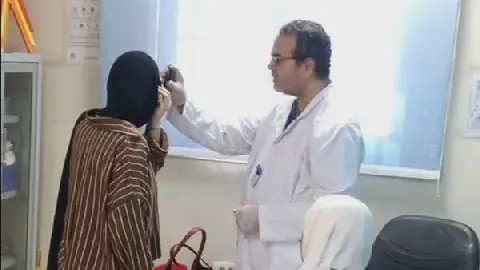
Tunisian pediatrician Dr. Mohamed Ayadi has raised concerns about the growing trend of parents relying on artificial intelligence (AI) to diagnose their children's illnesses. In a statement on the "Diwan FM" radio show "In 60 Minutes," Dr. Ayadi emphasized that while AI can provide general information, it is not a substitute for a medical professional. He noted that this phenomenon is becoming increasingly common in pediatric clinics.
Dr. Ayadi explained that AI consultations can be more neutral and reserved compared to information shared on social media groups, where personal experiences and unscientific recommendations about medications and medical products are often exchanged. However, he stressed that AI responses are only advisory and often come with warnings that they should not be considered a substitute for a doctor.
The pediatrician highlighted that AI relies on user-inputted data, which may be incomplete or inaccurate, especially if parents are not aware of the importance of certain symptoms or how to connect them. He provided an example of a child with a fever and mild cough, where AI might suggest a respiratory disease based on the parent's description. However, a doctor could discover other symptoms, such as abdominal pain, through a clinical examination, indicating a different diagnosis.
Dr. Ayadi also pointed out that AI models may not have accurate knowledge of all medications available in the Tunisian market, potentially leading to suggestions for drugs or alternatives that are not available in the country. This limitation can cause confusion and hinder effective treatment.
Furthermore, Dr. Ayadi warned that AI's presentation of extreme cases and rare side effects can instill fear in parents, potentially affecting treatment. He noted that this fear can lead to adverse outcomes, such as parents stopping medication prescribed by a doctor after reading about potential side effects, without understanding the doctor's risk-benefit analysis.
Dr. Ayadi emphasized that while AI can provide general information and advice, it cannot replace a doctor. He stressed that accurate diagnosis and treatment selection require direct clinical examination and comprehensive medical evaluation. The doctor's assessment allows for a more nuanced understanding of the patient's condition, which AI consultations cannot replicate.
In conclusion, Dr. Mohamed Ayadi urged parents to consult medical professionals when their children exhibit symptoms of illness, rather than relying solely on AI for diagnosis. He reiterated that AI is a tool that can provide guidance, but it is not a substitute for the expertise and personalized care provided by a doctor.
Key points
- Dr. Mohamed Ayadi warns against relying solely on AI for children's disease diagnosis.
- AI consultations can be misleading and may not account for all symptoms or available treatments.
- Direct clinical examination and medical evaluation are essential for accurate diagnosis and effective treatment.