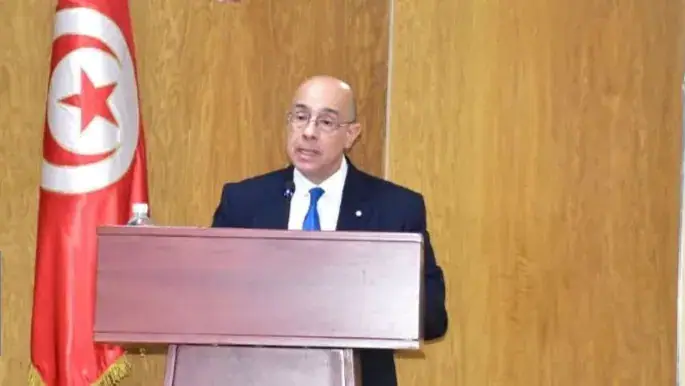
Tunisian Defence Minister Khalid Sehili has highlighted the strategic necessity of establishing a comprehensive national model to develop human capacities, keeping pace with scientific and technological advancements. This model aims to support the contribution of national competencies in addressing challenges and crises while promoting national belonging and comprehensive security. The minister made these remarks while overseeing the opening of the 44th session of the National Defence Institute on November 10, 2026.
During his address, Sehili reviewed several axes related to enhancing the national human and scientific assets, keeping pace with the technological revolution, addressing employment challenges, and the migration of competencies. He also discussed developing education, training, and scientific research systems, as well as anticipating future needs. The minister emphasized that investing in the Tunisian people, in terms of science, knowledge, efficiency, national awareness, represents a strategic choice to enhance the country's resilience.
Sehili pointed out that the topic of the 44th session, which focuses on establishing a national model for developing human capacities that keeps pace with scientific and technological advancements, holds significant strategic importance. This is because it goes beyond traditional approaches to human resource development, addressing one of the most significant determinants of a country's strength and its ability to protect its national interests. He added that preparing this model requires an objective diagnosis of the current situation, accurate anticipation of changes, and proposing practical mechanisms for implementation and evaluation.
The minister noted that the coincidence of addressing this topic with the activation of the Higher Council for Education and Training provides an opportunity to enhance integration between education system reform and building a comprehensive national vision for human capacity development. He also highlighted that this topic is being discussed in a global context characterized by rapid geopolitical, scientific, and technological changes that have reshaped the balances of power and influence between countries.
Sehili stressed that Tunisia, due to its geographical location in the Mediterranean region and its connections to the European economy and global markets, is not isolated from the repercussions of these changes. This situation necessitates enhancing the country's ability to adapt to these changes, reducing dependency in vital areas, and developing its technological and productive capabilities. He emphasized that Tunisia possesses significant human and scientific assets, accumulated through achievements in higher education, scientific research, and professional training.
The minister highlighted the importance of transitioning from a logic of addressing immediate needs to building future capacities and instilling a culture of strategic thinking and planning. This approach should be based on anticipating changes, forecasting possible paths, and preparing alternatives in advance, thereby enhancing the state's ability to protect its vital interests and ensure the independence of its national decision-making.
Sehili also emphasized the need to address employment challenges and the migration of competencies by developing a system for anticipating future professions and skills, improving school and university orientation, and enhancing applied training. He stressed that addressing the migration of competencies is not achieved merely by calling for individuals to stay, but by providing an environment that ensures equal opportunities and recognition of merit.
Key points
- The Tunisian Defence Minister emphasized the strategic importance of developing human capacities to address challenges and crises.
- A national model for human capacity development is necessary to keep pace with scientific and technological advancements.
- The model aims to promote national belonging, comprehensive security, and the contribution of national competencies in addressing challenges and crises.
Reporting sources
- Établissement de la Radiodiffusion-Télévision Tunisienne · Établissement de la Radiodiffusion-Télévision Tunisienne