The Czech Sokol movement, a patriotic gymnastics organization, gained significant attention in France during the late 19th century. Founded in 1860 by poet Miroslav Tyrš and his patron Jindřich Fügner, the movement aimed to strengthen the Slavic people through intense physical education and a shared cultural identity. Inspired by Swedish and German examples, the Sokols quickly gained popularity, with membership numbers growing from less than 1,000 in 1862 to 683,341 by 1934.
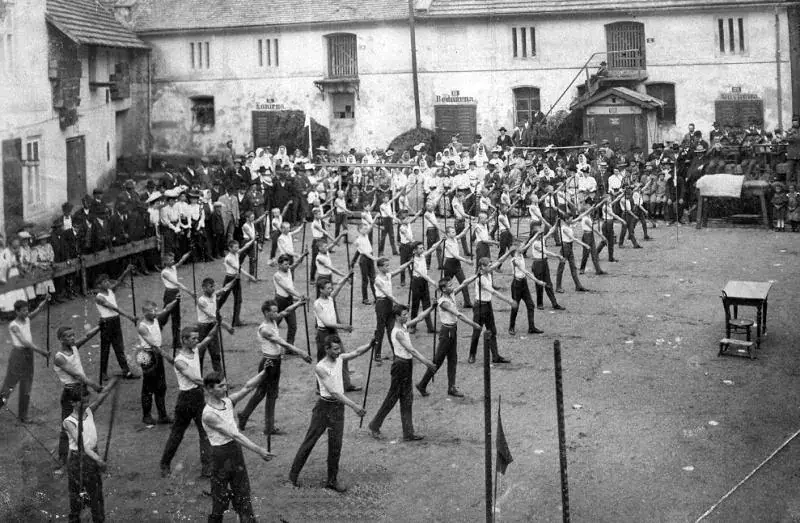
The Sokols' demonstrations, known as Slets, were highly impressive and often featured thousands of participants performing synchronized movements. These events were not only showcases of athleticism but also powerful demonstrations of patriotism and national pride. The French press was particularly captivated by the Sokols' performances, with many publications praising their collective displays of strength and unity. The movement's emphasis on physical education, fraternity, and humanism resonated with French values.
The Sokol movement was closely tied to the Czech nationalist movement, which sought to assert the country's identity and autonomy within the Austro-Hungarian Empire. The movement's founders were influenced by the ideals of the Enlightenment and liberal democracy, and the Sokols' emphasis on patriotism, solidarity, and self-improvement reflected these values. The movement's popularity extended beyond Czech borders, with many countries taking notice of the Sokols' innovative approach to physical education and national identity.
In France, the Sokols found support across the political spectrum. Nationalist groups, such as L'Action Française, praised the movement's emphasis on martial virtues and national strength. Meanwhile, left-wing publications like Le Populaire saw the Sokols as a symbol of national resilience and a model for defensive, pacifist, and antifascist patriotism. The movement's message of unity, solidarity, and collective effort resonated with many French citizens.
The Sokols' performances were characterized by their precision, discipline, and collective energy. Participants wore distinctive uniforms, consisting of a red shirt, brown trousers, and a black hat adorned with a falcon feather. The movement's leaders, including Miroslav Tyrš, emphasized the importance of physical education as a means of cultivating national pride, self-discipline, and civic responsibility.
The first Slet was organized in Prague in 1882, and the event was a huge success, attracting widespread attention and acclaim. The Sokols' demonstrations were often accompanied by music and choreographed movements, creating a spectacle that was both aesthetically pleasing and emotionally powerful. French journalist La Petite Gironde described the scene as "a gigantic checkerboard" with thousands of gymnasts moving in perfect synchrony.
The Czech Sokol movement's impact extended beyond the realm of sports and politics. The movement's emphasis on physical education, collective effort, and national pride influenced the development of modern gymnastics and sports movements across Europe. Today, the Sokol movement remains an important part of Czech cultural heritage, symbolizing the country's struggle for national identity and self-determination.
Key points
- The Sokol movement's emphasis on patriotism, solidarity, and physical education resonated with French values and influenced the development of modern gymnastics and sports movements across Europe.