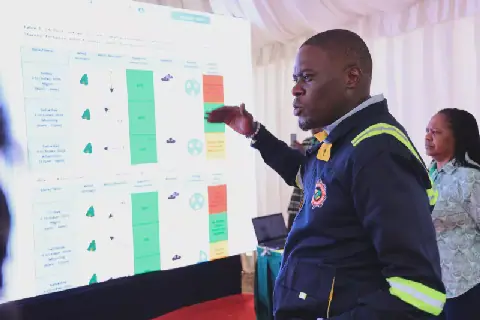
A delegation of thirty Tunisian companies has arrived in Guinea for a five-day visit to explore business opportunities arising from the Simandou 2040 project. The project, which aims to drive economic growth and development in Guinea, has earmarked $200 billion in investments over the next 15 years. The Tunisian companies, representing various sectors such as infrastructure, energy, industry, healthcare, food technology, and services, will engage in B2B meetings and discussions with Guinean economic actors.
The Simandou 2040 program is built around five pillars and identifies 14 priority sectors and 122 structuring projects. The program's ambitious goals include the construction of over 2,900 km of highways and 2,500 km of railway lines by 2040. Tunisian companies see potential for collaboration in areas such as energy, infrastructure, transportation, technology, and healthcare. With a large and diverse delegation, the Tunisian businesses aim to convert interest into tangible contracts and partnerships.
Despite the promising prospects, the success of the Tunisian mission will not be measured solely by the number of participating companies. Instead, the focus will be on the number of qualified B2B meetings, potential consortium formations, submitted offers, targeted calls for tenders, and ultimately, secured contracts and invoiced amounts. This approach is crucial, given that Tunisian companies are already exploring other African markets, including recent missions to Abidjan and Dakar.
The current mission to Guinea represents a test of Tunisia's African strategy, which aims to transition from a diplomacy of missions and B2B interactions to a logic of contracts and sustainable implantation. The challenge for Tunisian companies is to capitalize on the opportunities presented by Simandou 2040 and establish lasting partnerships with Guinean actors. The stakes are high, with the potential for significant economic benefits for both countries.
The sectors represented by the Tunisian delegation align with Guinea's identified needs, including energy, infrastructure, and healthcare. With a well-planned program of meetings and discussions, the Tunisian companies are poised to explore potential collaborations and partnerships. The Guinean market offers considerable potential, but converting this potential into concrete contracts will require sustained efforts and strategic planning.
As the mission progresses, the key performance indicators will shift from the number of participating companies to the value of contracts secured and the scope of partnerships established. The outcome of this mission will provide valuable insights into the effectiveness of Tunisia's African strategy and the capacity of its companies to compete in international markets.
Key points
- Thirty Tunisian companies are exploring opportunities in Guinea's $200 billion Simandou 2040 project.
- The project aims to drive economic growth and development in Guinea over the next 15 years.
- The success of the Tunisian mission will be measured by the number of secured contracts and partnerships established.