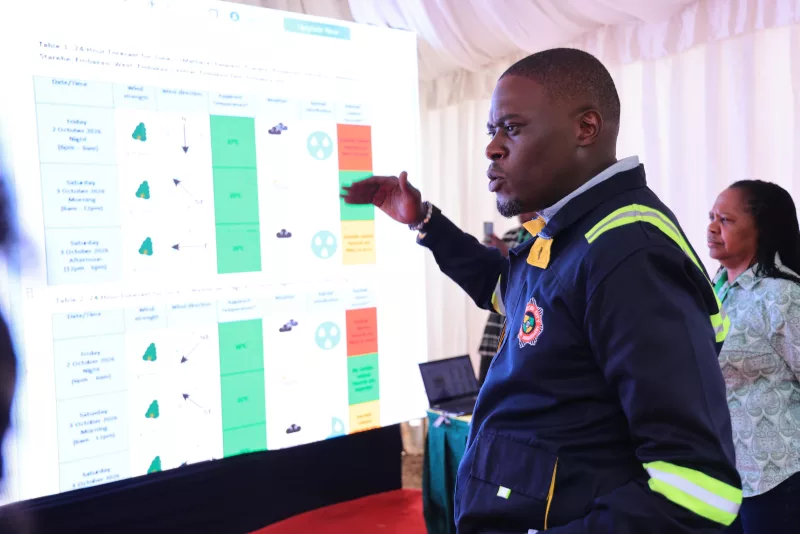
Nairobi Governor Johnson Sakaja has assured residents that the county has intensified Ebola preparedness and response measures across all 17 sub-counties following the confirmation of a case in the capital. Sakaja said Nairobi had strengthened disease surveillance, contact tracing, isolation capacity and emergency response systems to safeguard residents against the threat of an Ebola outbreak. The governor emphasized that the county is working closely with the Ministry of Health, national referral facilities and development partners to ensure a coordinated response.
According to Sakaja, 923 health workers and 1,598 Community Health Promoters (CHPs) have undergone specialised training on the early detection, identification and reporting of suspected Ebola cases. Additionally, more than 60 laboratory officers have been trained on safe sample collection and handling. The training aims to equip health workers with the necessary skills to identify and manage potential Ebola cases. This move is part of the county's efforts to strengthen its frontline health systems.
The county has activated and strengthened its response measures across Nairobi, with Rapid Response Teams deployed across the 17 sub-counties. The county Emergency Operations Centre is coordinating surveillance, case reporting, contact tracing and emergency interventions. Sakaja urged residents to remain alert, remain calm and cooperate with health teams. He emphasized that there is no need for panic, but residents must take necessary precautions and report suspected cases early.
As part of the heightened preparedness, Mama Margaret Uhuru Kenyatta Hospital has been designated as Nairobi's Ebola isolation facility. The county is working to strengthen the hospital's capacity to receive, isolate and manage suspected and confirmed cases. The county has also reinforced infection prevention and control measures across its health facilities, including training medical personnel on the proper use of Personal Protective Equipment (PPE).
The county has conducted simulation exercises at Mbagathi Hospital and Kenyatta University Teaching, Referral and Research Hospital (KUTRRH), alongside the Kenya Red Cross, to test the readiness of emergency response systems. Contact tracing has been initiated for 28 contacts linked to the deceased confirmed patient, as well as 27 passengers who travelled on the same flight. The county is working to identify and monitor individuals who may have been exposed to the disease.
According to the county's surveillance report, 22 suspected Ebola cases have been reported since May 16, 2026, across 11 of Nairobi's 17 sub-counties. The confirmed case involved a 39-year-old Kenyan man who had lived in the Democratic Republic of Congo (DRC) for seven years before travelling to Kenya through Uganda on October 3, 2026. The patient was admitted to a Nairobi hospital upon arrival, where samples were collected and subsequently tested positive for Ebola at the National Public Health Laboratory.
Beyond strengthening medical preparedness, the county has intensified public awareness campaigns to equip residents with accurate information on Ebola prevention, symptoms and the importance of seeking medical attention early. Residents have been urged to remain vigilant and seek immediate medical attention if they experience symptoms such as fever, severe headache, muscle pain, vomiting, diarrhoea or unexplained bleeding. The governor also cautioned residents against direct contact with the blood or body fluids of suspected Ebola patients and warned against handling the bodies of people suspected to have died from the disease.
Key points
- The county has intensified Ebola preparedness and response measures across all 17 sub-counties following the confirmation of a case in the capital.
- Nairobi has strengthened disease surveillance, contact tracing, isolation capacity and emergency response systems to safeguard residents against the threat of an Ebola outbreak.
- The county has designated Mama Margaret Uhuru Kenyatta Hospital as Nairobi's Ebola isolation facility and is working to strengthen its capacity to receive, isolate and manage suspected and confirmed cases.