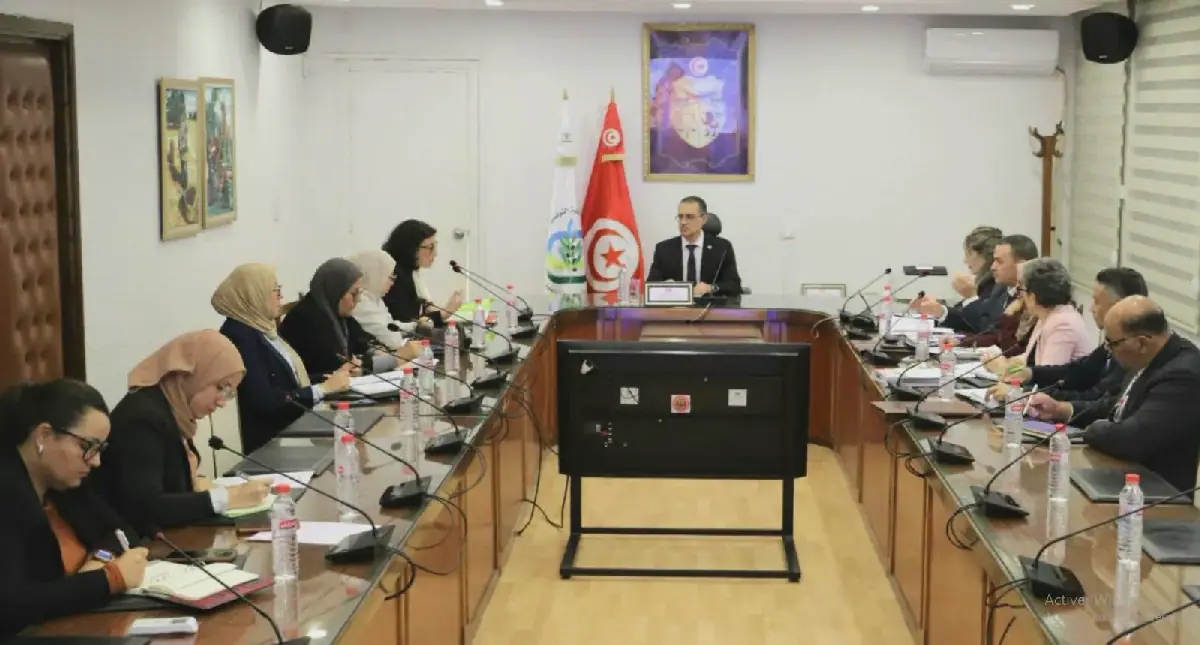
Tunisian Agriculture Minister Azeddine Ben Sheikh recently chaired a working session to review the distribution of seeds and fertilizers. The session aimed to assess the current system and explore ways to improve its efficiency. Ben Sheikh emphasized the need to expand irrigated areas and adopt a biometeorological map for distributing high-quality seeds. This approach will help tailor seed distribution to specific regional climate and environmental conditions.
The working session brought together representatives from relevant departments and structures to evaluate the current supply and distribution system. Discussions focused on mechanisms to enhance the management of agricultural inputs, ensuring their availability and timely distribution according to regional needs. This will contribute to optimal use of available resources, support productivity, and guarantee a smooth agricultural season.
Ben Sheikh highlighted the importance of prioritizing the expansion of irrigated areas and efficient use of available water resources. He stressed that this is crucial for supporting agricultural production, improving yields, and increasing productive capacity. The minister also emphasized the need to ensure sustainable use of water resources.
The adoption of Tunisia's biometeorological map as a primary scientific reference for seed distribution strategies was also emphasized. This map will help select suitable crop varieties that can adapt to prevailing climate conditions, reducing risks associated with climate fluctuations and improving crop yields. By using this map, the ministry aims to promote more effective and resilient agricultural practices.
Regarding the seed and fertilizer distribution system, Ben Sheikh called for improved planning, enhanced distribution mechanisms, and guaranteed delivery to beneficiaries within specified timelines. He also stressed the importance of strengthening coordination among stakeholders and monitoring distribution on the ground to meet farmers' needs and prevent disruptions to the agricultural season.
The minister also emphasized the need to establish and update a performance monitoring and evaluation guide for stakeholders in the grain system. This will help clarify roles and responsibilities, improve coordination, and assess progress. Enhanced information sharing among stakeholders will support swift decision-making and more effective management of the grain system.
The Tunisian government is taking steps to support the agricultural sector, including investments in infrastructure projects and initiatives to promote sustainable agricultural practices. The adoption of a biometeorological map for seed distribution is part of these efforts to improve agricultural productivity and resilience in the face of climate change.
Key points
- The Tunisian government is prioritizing the expansion of irrigated areas and efficient use of water resources to support agricultural production and improve yields.