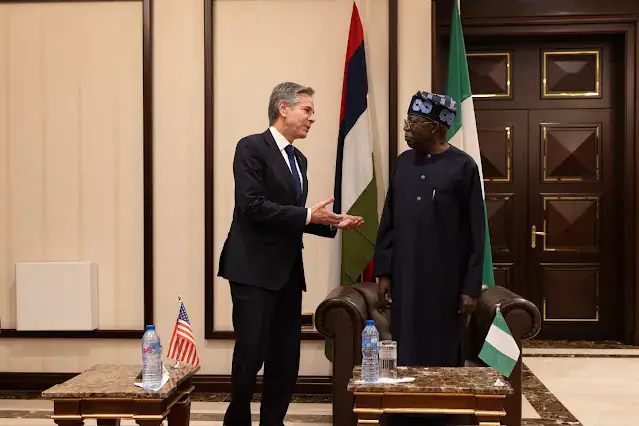
President Bola Tinubu has requested the National Assembly to approve $7.7 billion in external borrowing to help finance the 2026 budget. This revised loan bid replaces an earlier proposal for $20.5 billion and €1.05 billion. The request was made to support various sectors, including defence and security, transport, agriculture, power, education, and healthcare.
The 2026 Appropriation Act provides for ₦29.2 trillion in new borrowing to partly finance a deficit of approximately ₦31.4 trillion. The borrowing provision comprises ₦18.4 trillion from domestic sources and ₦10.79 trillion in external financing. The government plans to explore several funding channels, including multilateral and bilateral loans, commercial financing, International Monetary Fund facilities, bridge financing, and Eurobond issuance.
Tinubu's submission to the National Assembly sets out how the government intends to raise the money and the programmes it proposes to fund. The President identified areas that the borrowing would support, and the government will consider the costs, conditions, and time needed to obtain funds through each option. Eurobonds will receive particular attention due to their potential for quick completion.
The foreign-currency inflows from the loan will support external reserves, as the Central Bank of Nigeria will receive the proceeds on the Federal Government's behalf. This could contribute to naira stability. However, the timing of the borrowing and the government's ability to service additional debt have raised questions.
The programme's presenters on ARISE News called for a detailed account of the proposed expenditure and the benefits Nigerians should expect. They also questioned whether recurrent commitments and debt payments were leaving sufficient resources for infrastructure and public services. Figures from the first-quarter budget report illustrate the revenue pressures behind this discussion.
Tinubu defended his administration's education interventions, linking the student-loan programme to his experience financing his studies in the United States. He said the Nigerian Education Loan Fund had provided more than ₦372 billion in loans for institutional fees and upkeep. The President invited Nigerians to report failing services and projects in their communities.
The debate over spending and public welfare coincided with campaign activities by opposition presidential candidates. Atiku Abubakar of the African Democratic Congress promised action on insecurity and the reopening of land borders for legitimate commerce. Peter Obi of the Nigeria Democratic Congress condemned an attack on his convoy and vowed to press on with his campaign.
Key points
- President Tinubu requests $7.7bn in external borrowing to finance 2026 budget
- The loan will support various sectors, including defence, transport, and education
- The government's ability to service additional debt has raised questions amidst revenue pressures
Reporting sources
- Tinubu seeks $7.7bn in revised loan bid · Prime 9ja Online