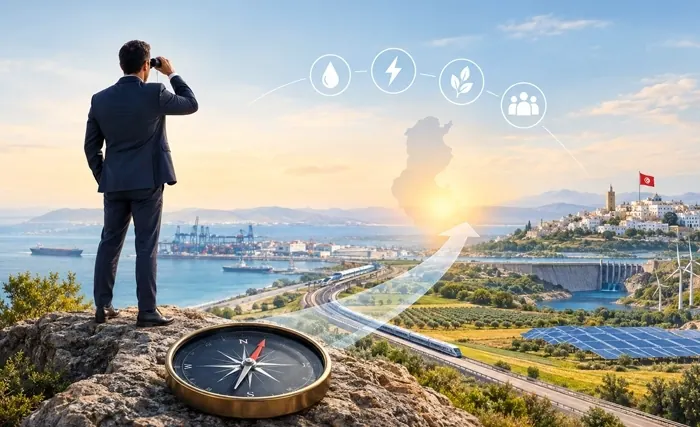
In a rapidly changing world, individuals, businesses, and countries are facing increased instability. To thrive, it's essential to anticipate and adapt rather than simply react. For Tunisia, this means prioritizing securing its fundamentals in water, energy, and food, even if it means relegating growth to second place. Diversifying partnerships and accelerating plan execution are also crucial. This approach will enable the country to navigate uncertain times effectively.
Tunisia has demonstrated resilience in the face of challenges and must continue to do so. Preserving financial balances is a top priority, particularly with rising international commodity prices. The country's public finances are under strain, making it essential to control the trade balance, focus public spending on essentials, and promote investment by increasing the competitiveness of the Tunisian site.
The 2026-2030 development plan should adopt a sustained pace to address these challenges. The success of this dynamic relies on two essential levers: a shock of administrative simplification and a surge in investments. Infrastructure development is critical, with numerous projects required in areas such as roads, bridges, ports, airports, and energy and water systems. These projects require significant investment and prioritization.
The plan has identified priorities, and execution must be accelerated. All aspects are interconnected, and infrastructure determines the security of water, energy, and agricultural production. Efficient administration is measured by the speed of response to these needs. The role of Tunisians is also crucial, as they must adopt a culture of rational consumption, master the use of resources, and preserve public goods.
The era of opulence and abundance is over, and Tunisia is entering a time of scarcity and responsibility. The country must take consciousness of this new reality, strengthen its fundamentals, and anticipate. This requires a new culture, with values of anti-waste and respect for nature. Tunisians must adapt to this new context and work together to build a more sustainable future.
The country's infrastructure is critical to its development, and investment in this area is essential. This includes projects such as road and bridge construction, railway network development, and port and airport modernization. These projects will not only improve the country's infrastructure but also boost economic growth and competitiveness.
Ultimately, Tunisia's ability to navigate uncertain times will depend on its ability to adapt and anticipate. By prioritizing its fundamentals, diversifying partnerships, and investing in infrastructure, the country can build a more sustainable future. The role of Tunisians is crucial in this process, as they must work together to adopt a new culture of responsibility and sustainability.
Key points
- Tunisia must prioritize securing its fundamentals in water, energy, and food to navigate uncertain times.
- The 2026-2030 development plan should adopt a sustained pace to address these challenges.
- Tunisians must adopt a culture of rational consumption, master the use of resources, and preserve public goods.