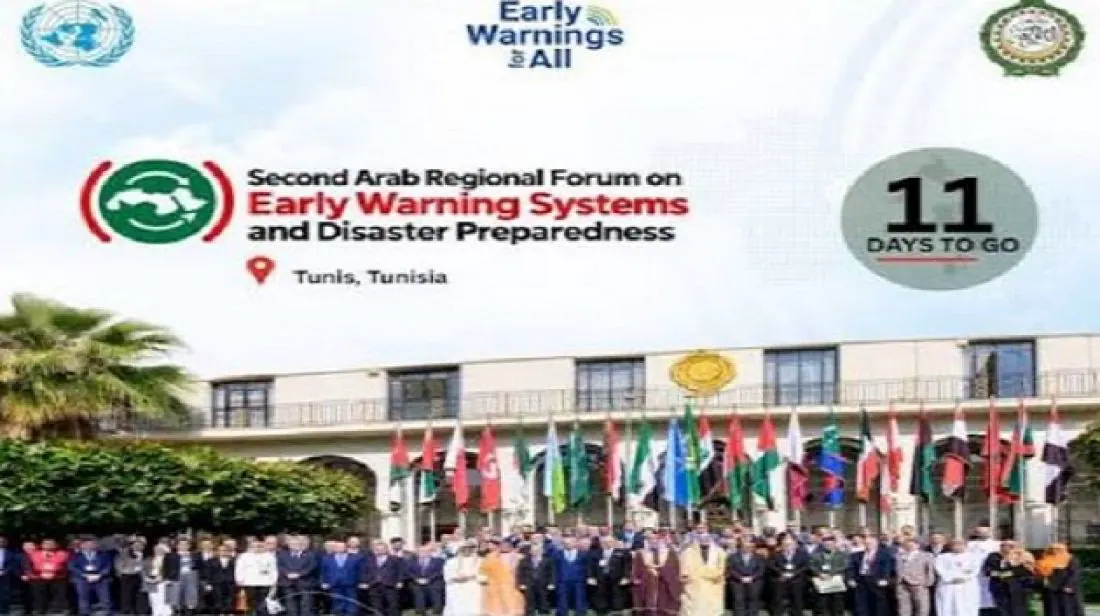
Tunisia is set to host the Second Arab Regional Forum on Early Warning and Disaster Preparedness on October 15-16, 2026. The forum will bring together representatives from Arab countries, regional and international organizations, and experts in disaster risk reduction and early warning. The event is organized in collaboration with the Arab League, the United Nations Office for Disaster Risk Reduction (UNDRR), the World Meteorological Organization, and other partners.
The forum's objectives include evaluating progress made in the Arab region in early warning and identifying gaps and practical actions to accelerate joint efforts. It will focus on four main areas of the United Nations' "Early Warnings for All" initiative: understanding disaster risks, monitoring and forecasting, disseminating warnings, and preparedness and response. The initiative, launched by the UN Secretary-General in 2022, aims to protect every person in the world from hazardous weather, water, and climate phenomena by effective early warning systems by the end of 2027.
According to the United Nations, 119 countries were covered by multi-hazard early warning systems in 2025, a 113% increase compared to 2015. However, significant gaps remain in many countries most exposed to disasters. The Arab region faces increasing climate and natural risks, including droughts, floods, heatwaves, sandstorms, and rising sea levels. Developing multi-hazard early warning systems and enhancing preparedness and response are crucial to protecting lives and property and supporting community resilience.
The Second Arab Regional Forum follows the first session held in Cairo on December 17-18, 2025, which focused on enhancing Arab coordination and developing a common roadmap for early warning and disaster preparedness. Tunisia's hosting of the event highlights the importance of cooperation, technology exchange, and financing in disaster risk reduction. The goal is to ensure timely warnings reach populations, particularly vulnerable groups and areas, and to translate early warnings into early action that saves lives and reduces economic and social losses.
The forum is expected to produce a regional statement outlining priorities, actions, commitments, and partnerships to accelerate the development of sustainable and multi-hazard early warning systems in Arab countries. Recommendations from the forum will contribute to upcoming regional and international consultations on the "Early Warnings for All" initiative. The event will also provide a platform for participants to share experiences and best practices in early warning and disaster preparedness.
The collaboration between the Arab League, UNDRR, and other partners underscores the commitment to reducing disaster risks and promoting resilience in the Arab region. By working together, countries can leverage resources, expertise, and technologies to strengthen early warning systems and enhance preparedness and response. The Second Arab Regional Forum on Early Warning and Disaster Preparedness is a critical step towards achieving the goals of the "Early Warnings for All" initiative and promoting a culture of disaster risk reduction in the region.
As the Arab region continues to face increasing climate and natural risks, the importance of effective early warning systems and disaster preparedness cannot be overstated. The Second Arab Regional Forum on Early Warning and Disaster Preparedness will provide a critical platform for countries to share knowledge, expertise, and experiences in addressing these challenges. By working together, countries can build a safer, more resilient future for all.
Key points
- The Second Arab Regional Forum on Early Warning and Disaster Preparedness will focus on four main areas of the United Nations' "Early Warnings for All" initiative.
- The forum aims to evaluate progress made in the Arab region in early warning and identify gaps and practical actions to accelerate joint efforts.
- The event is organized in collaboration with the Arab League, the United Nations Office for Disaster Risk Reduction (UNDRR), the World Meteorological Organization, and other partners.